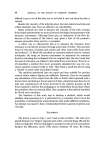
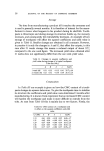
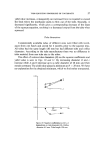
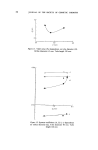
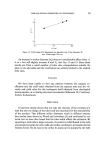
60 JOURNAL OF THE SOCIETY OF COSMETIC CHEMISTS front and only a smaller part of the moving content is actually extruded. The friction forces involved in this process as well as the energy required to break the structure of the toothpaste to exceed its yield value is of course greater for a large tube than for a small one. One conclusion must be that the tube and content cannot be looked upon separately but should be re- garded as a unit. A change in either of them results, from a rheological point of view, in a new product for which new squeeze tests must be done. Different degrees of annealing of the tube material has not been studied. Standard tubes were used, supplied by our tube manufacturer, who assured us that the annealing of the tube materials were the same. A natural follow-up of this investigation would be a panel test to establish what squeeze time and squeeze force the consumer can accept, and how much toothpaste he wants on his brush. Simple laboratory tests will then determine whether the product will be acceptable for squeezing. A small panel test among our laboratory staff indicated that the amount of toothpaste used to brush the teeth is about 1.4 g (range 0.8-1.9 g), which corresponds to about one millilitre. A serious drawback with the squeeze equation as it is now expressed is that one of the parameters used is the squeeze number. It would have been much more satisfying if instead a more measurable parameter was used, eg the degree of filling. With the present equation one can only calculate the outputs for consecutive squeezes at fixed squeeze force and squeeze time. If the degree of filling was used instead the history of the tube could be neglected with knowledge of how much of the contents was already used. ACKNOWLEDGMENTS I wish to thank Miss Ulla Ilebrand for her great patience with the tedious work of squeezing all the tubes necessary for this investigation. I also want o to thank Akerlund & Rausing AB, Hjo. Sweden for supplying tubes of different sizes. (Receired: 20th December 1974) REFERENCES (1) Mutimer, M. M. et al. Modern ointment base technology. II. J. ,4met. ?ham1. Ass. $ci. Ed. 45 212 (1956).

TUBE-SQUEEZING PROPERTIES OF TOOTHPASTE 61 (2) Marriott, R. H. Rheological measurements in the cosmetic industry. J. $oc. Cosmet. Chem. 12 89 (1961). (3) Langenbucher, F. and Lange, B. Prediction of the application behaviour of cosmetics from rheological measurements. Pharm. Acta. Heir. 45 572 (1970). (4) Block, M. Four methods for the characterization of dentifrices and other semisolids. J. $oc. Cosmet. Chem. 26 189 (1974). (5) Wood, J. H. et al. Problems in cosmetic rheology. J. $oc. Co,met. Chem. 15 564 (1964).
Purchased for the exclusive use of nofirst nolast (unknown)
From: SCC Media Library & Resource Center (library.scconline.org)