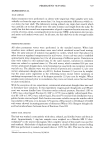
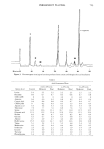
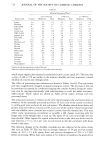
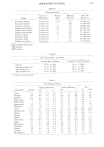
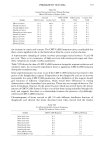
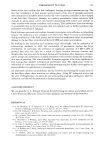
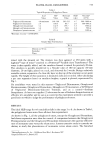
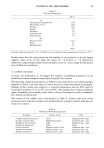
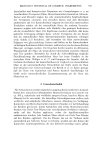
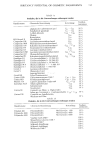
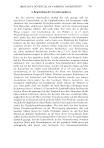
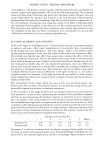
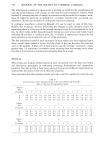
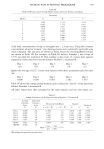
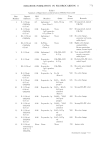
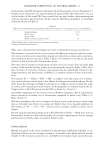
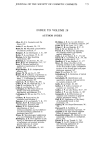
PERMANENT WAVING Table VII C¾stine Derivatives Formed During Perming (Moles/100 moles of Amino Acids) 727 Control CMT-CYSH Half-Cystine Cysteic Acid Sample Half-Cystine Cysteic Acid Final Final Final Salon acid wave 16.1 trace 1.2 13.7 0.5 Swatch acid wave 15.5 0.4 1.7 13.1 0.7 Swatch alkaline wave 15.5 0.4 0.3 15.4 0.6 Swatch acid wave 15.5 0.4 1.3 13.6 0.7 Salon glycerol ester wave 15.5 0.4 4.4 11.8 0.9 Swatch acid wave 14.4 0.5 0.9 13.2 0.4 Salon acid wave 15.6 0.5 1.1 13.6 0.6 Salon acid wave 16.4 0.3 1.4 14.9 0.4 Salon acid wave 16.0 trace 1.2 13.3 0.5 Salon acid wave 15.5 0.4 2.3 13.8 1.1 the increase in cysteic acid content. The CMT-CySH formation varies considerably but plays a more significant role in the final analysis than the cysteic acid production. A representative sampling of cystine recovery percentages varies between 70 and 90 per cent. There is no consistency of high recovery with certain perm types and, thus, these variations are results of other parameters. Table VIII shows the data of CMT-CySH formation during the separate reductive and oxidative steps. In every perm experiment there is significant CMT-CySH formation during the reoxidation step. Some experimentation was done to see if the CMT-CySH formation was related to the purity of the thioglycolate reagent. If impurities in the thioglycolic acid are in any way responsible for some CMT-CySH production, then distillation of the reagent should give fractions of different composition, which would show differences in waving characteristics when formulated into products. There was not enough of fraction I for perm formulation. Fraction II (the purest fraction which was tested) shows the lowest amount of CMT-CySH formed (58 per cent of that found using undistilled thioglycolic acid) and suggests that there is a relationship between the presence of polythiogly- colides and CMT-CySH formation. Chromatograms of lysine reacted at pH 9.0 with different distillation fractions of thioglycolic acid showed that lysine decreased most when reacted with the residue Table VIII S-Carboxymethylthio-Cysteine Formation (Moles/100 moles of Amino Acids) Sample CMT-CySH Midpoint CMT-CySH Final Salon acid wave 0.3 0.6 Salon acid wave 0.3 1.2 Salon acid wave 0.1 1.8 Salon acid wave 0.8 2.7 Swatch acid wave 0.3 1.3 Swatch acid wave 0.4 1.0 Swatch acid wave 0.3 1.2 Salon alkaline wave 0.6 1.0 Swatch alkaline wave 0.6 1.0

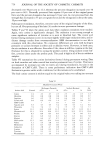
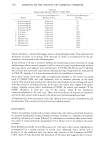
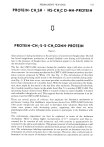
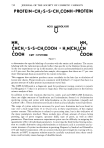
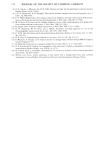
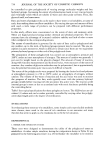
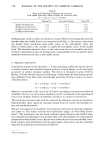
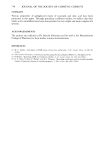
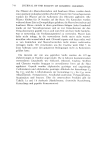
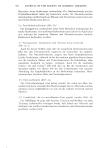
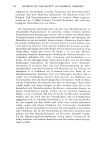
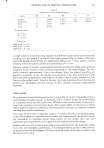
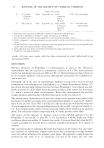
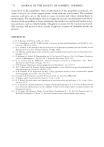
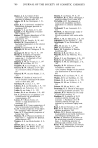
728 JOURNAL OF THE SOCIETY OF COSMETIC CHEMISTS Table IX Radioisotope Alkylation With 0 4-ICH•, C•'O2 H Per Cent Cystine Reduction-- Per Cent Cystine Reduction-- Sample Radioactive Tag Cold Tag 1. Acid wave tag # 1 40 per cent 36 Acid wave tag #2 41 per cent 35 Acid wave tag #3 22 per cent 20 Acid wave tag #4 44 per cent 30 Acid wave tag #5 44 per cent 29 2. Acid wave 45 per cent N.D. 3. Acid wave 52 per cent N.D. 4. Acid wave 25 per cent N.D. 5. Alkaline wave 63 per cent N.D. 6. Alkaline wave 30 per cent N.D. 7. Alkaline wave 22 per cent N.D. 8. Glycerol ester 37 per cent N.D. 70 per cent N.D. which, therefore, contains the largest amount ofpolythioglycolides. This indicates that thiolation of lysine is occurring. This decrease in lysine is accompanied by the ap- pearance of a new peak in the chromatogram. It was desired to devise a sensitive method for monitoring cystine reduction by using radioisotopes where several samples could be run and counted simultaneously without the long amino acid analyzer time involvement. C•4-ICH.•C•O2H was used to alkylate the cysteine and numerous experiments utilizing this type of approach are summarized in Table IX. Samples 2 to 8 were monitored solely by scintillation counting. Since these values seem quite high, an experiment (Sample 1) was carried out using both C•4-ICH2C•O2H and cold iodoacetic acid to monitor portions of the same swatch. This swatch was divided into 10 portions and 5 labeled with cold tag only and 5 with the inclusion of radioactive tag. In all cases, the values were higher with radioi- __ sotope counting versus direct monitoring of SCMC by amino acid analysis. X for SCMC alkylation is 30.0 per cent of the cystine, while X for radioactive carboxymethylation is 38.2 per cent. There was no evidence of reaction in iodoacetic acid with other amino acids as seen by the amino acid chromatographs and data. All hydrolysates from permanent wave hair showed trace amounts of lanthionine and lysinoalanine. This was present in both acid and alkaline waves. DISCUSSION Amino acid analysis results indicate that cystine is the only amino acid in hair keratin to be changed significantly during permanent waving. Contrary to a simplistic mechanism involving reduction of cystine followed by subsequent reoxidation after wave forma- tion, there is some permanent degradation (10 to 30 per cent in our studies) ofcystine residues. Both Robbins and Kelly (6) and Miyazawa eta/. (16) report that cystine degradation is accompanied by a similar increase in cysteic acid. Although, some cysteic acid is produced in the oxidation step, the major side reaction is the formation of CMT- CySH. Zahn (5) has discussed the formation of the latter but suggests that it is an ar-
Purchased for the exclusive use of nofirst nolast (unknown)
From: SCC Media Library & Resource Center (library.scconline.org)