J. Soc. Cosmet. Chem., 28, 733-740 (December 1977) Development of water-in-oil emulsifiers and their application to cosmetic emulsions JUSTIN P. MCCARTHY, STEVEN J. LABRUTO, LEE R. MORES, AND MITCHELL L. SCHLOSSMAN, Maimstrom Chemicals, Cosmetic Specialties Group, Emery Industries, Inc., 1501 West Elizabeth Avenue, Linden, NJ 07036. Received February 3, 1977. Presented before the SCC New York Chapter January 5, I977. Synopsis The literature contains many references on the wide range of useful emulsifying agents for OIL-IN-WATER EMULSIONS. On the contrary, little has appeared in the area of new emulsifiers for stabilizing WATER-IN- OIL SYSTEMS. It is generally known that it is far more difficult to prepare stable w/o emulsions than those of the o/w type. Polyglycerol esters having lipophilic surface activity derived chiefly from isostearic and oleic acids were pre- pared and characterized. A chemical description of these surfactants and other isostearic surfactants will be reviewed. Their physical and chemical properties are assessed as water-in-oil emulsifiers. Emulsifier efficiency is compared in the stabilization of simple w/o emulsions. Stability testing techniques are discussed. Applications of these unique emulsifiers in preparing stable aesthetic functional w/o cosmetic emulsions are demonstrated. INTRODUCTION Polyglycerol esters having lipophilic surface activity derived from isostearic and oleic acids were prepared. These esters, due to their chemical and physical properties, constitute a series of nonionic emulsifiers of the water-in-oil type. It is generally ac- cepted by the cosmetic chemist that these emulsion types are the most difficult to stabi- lize. In this study, the following parameters were evaluated: (a) spreading coefficients and their relation to emulsion stability (b) Nessler tube* separation studies and their relation to stability and, lastly, (c) cosmetic emulsion applications utilizing these unique surface active agents. CHEMICAL DESCRIPTIONS Polyglycerol esters are simply prepared through the polymerization of glycerin followed by simple esterification with a fatty acid. The polymerization of glycerin can *#45310, Kimble Glass Inc. 733

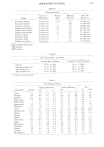
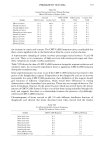
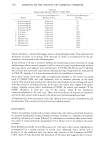
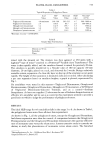
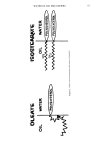
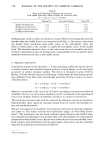
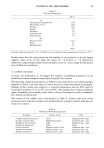
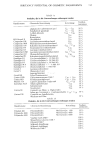
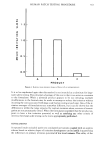
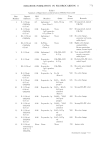
734 JOURNAL OF THE SOCIETY OF COSMETIC CHEMISTS be controlled to give polyglycerols of varying average molecular weights and free hydroxyl groups. Increasing the extent of polymerization leads to very viscous liquids and eventually solids which are soluble in water and other polar solvents. They, like glycerol itself, are humectants. Fatty acid esters ofpolyglycerols can be made to have water or oil solubility, or some of each, thus making them excellent emulsifiers. By varying the type and amount of fatty acid used, a wide range of products can be prepared with different performance properties. In this study, efforts were concentrated on the esters of oleic and isostearic acids. These are liquid products having similar chemical and physical properties. The iso- stearates have the advantage of increased oxidative stability and lack of odor or taste when compared to the corresponding oleates. The extent of esterification is governed by the ratio of fatty acid to polyglycerol and any number, up to the total, of hydroxyl groups present may be reacted. The one ex- ception is a pure monoester, which is difficult to obtain since there are two equivalent primary hydroxyl groups at either end of the polyglycerol chain. The preparation of these polyglycerols was carried out at atmospheric pressure and 260øC under an inert atmosphere of nitrogen. The amount of catalyst was generally 1 per cent by weight based on the glycerin charged. The amount of water of reaction, along with viscosity measurements and hydroxyl value, were measures of the extent of reaction. Any number of glycerin molecules may be polymerized, but at approximately ten, the polymer becomes quite viscous and is difficult to handle. The esters of the polyglycerols were prepared by heating the desired acid and polymer at atmospheric pressure to 210 to 230øC under an atmosphere of nitrogen, without catalyst. The volume of the water of reaction and the acid value was used to monitor the progress of reaction. The fatty acids typically react with the primary hydroxyl groups initially before reacting with the secondary less active ones. The reaction at the internal groups is more or less on a random basis with steric hindrance probably being the controlling factor. Table I lists typical specifications for these polyglycerol esters. The HLB values are cal- culated (1) values and can be rather precisely controlled by varying either the polygly- cerol chain length and/or the degree of esterification. EVALUATIONS In evaluating these esters as w/o emulsifiers, some simple easily reproducible methods were chosen, since work in the area of w/o emulsions is not extensive and many theories that seem to apply to o/w emulsions do not fit the w/o situation. EXPERIMENTAL I. NESSLER TUBE SEPARATION STUDIES These tests were designed to demonstrate the utility of the polyglycerol esters as emulsifiers. A rather simple emulsion, having the composition shown in Table II, was prepared by the following procedure: in a 250 ml beaker the emulsifier to be tested is
Purchased for the exclusive use of nofirst nolast (unknown)
From: SCC Media Library & Resource Center (library.scconline.org)