J. Soc. Cosmet. Chem., 28, 765-774 (December 1977) Malodor formation in nitromethane stabilized trichloromonofluoromethane blends S. TEMPLE 'Y: and R. G. HIRSCH, "Freo," Prod//ct.• Laboratory' and Engineering Physic.• Laboratory, E. I. d/• Pont de Nemo•m & Company Wilmington, De/aware. Received Janary 14, 1977. Synopsis Methyl isocyanide has been identified as the MALODOROUS compound formed from NITROMETHANE stabilized TRICHLOROMONOFLUOROMETHANE (Propellant 11) in iron or steel containers. Oxygen, water, and iron are required for isocyanide formation. Water must be present as a separate phase, i.e., above its saturation level in the blend. Methyl isocyanide forms from reaction of methylamine, the reduction product of nitromethane and the free radical intermediates obtained by reductive dechlorination of propellant 11. The presence of a separate water phase in propellant 11 may not be detected if dechlorination of the propellant and corrosion of the metal are occurring. INTRODUCTION Nitromethane, CHaNO2, has been successfully employed as a stabilizer in aerosol blends for over a decade (1). It is specifically effective in minimizing deterioration of al- cohol based products formulated with propellant 11 blends, as well as preventing container corrosion. The reaction causing deterioration and corrosion in the above formulations has been shown to be free radical in nature, with reduction of propellant 11 to give HC1 and acetaldehyde (2,3): I. CC1,F + CHgCH2OH--• HC1 + CHaCHO + CHC12F The HC1 causes can corrosion and acetaldehyde reacts with the formulation in- gredients to cause product deterioration. Nitromethane is believed to work as a free- radical reaction inhibitor, presumably by reacting with the initial radicals to produce a more stable, less reactive species. However, the actual mechanism is not certain, for several other inhibitors of such reactions are not as effective (as pointed out in (1-3)). Several isolated instances of realodor formation from propellant 11/nitromethane blends have occurred in bulk storage facilities. The odor was described as garlic-like or pyridine-like by Marchio and Quick (4), who reported that a combination ofpropellant •Present address: E. I. DuPont de Nemours, Technical Labs, Chamber Works, Deepwater, NJ 08023. 765

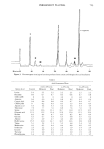
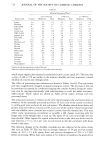
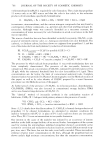
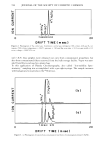
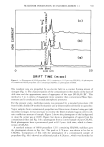
766 JOURNAL OF THE SOCIETY OF COSMETIC CHEMISTS 11/nitromethane/iron/H,•O is required for odor formation. They claim that propellant 11 serves only as an HC1 source and that the odor is due solely to the reduction products of nitromethane, specifically formaldoxime: II. CHaNO,• + Fe + 3HC1-- CH,• = NOH ß HC1 + FeCI,• + H,•O its tautomer, nitrosomethane, and the various nitrogen compounds that may form by condensation of these compounds, e.g., pyridine and other foul smelling nitrogen he- terocycles. Although water was correctly identified as a necessary reactant, the concentration of water necessary for odor formation in actual occurrences in the field was not specified. The source of malodor has now been identified as methyl isocyanide, CHaNC, a com- pound of extremely intense odor, i.e., having an extremely low odor threshold. The carbenic, or divalent carbon, has been shown to originate from propellant 11, and the rest of the molecule from methylamine by reduction of nitromethane III. CClaF Fe/H,•O/O,• CCI,•F' [or possibly CC1F:] + CI' IV. CI' + HOH-- HC1 + [OH' ] V. CHaNO,• + 6HC1 + 3Fe-- CHaNH,• + 3FeCI,• + 2H,•O VI. CHaNH,, + CCI,•F-- ["reactive complex"]-- CHaNC + HC1 + HF The processes by which radicals from propellant 11 react with methylamine have not been completely characterized. The presence of the isocyanide, however, is unequivocal. The actual concentration of CHaNC, estimated from field studies is 10 to 20 ppb, while the estimated threshold limit for odor detectability is 0.1 ppb. These concentrations are far below the limit of conventional analytical tools. Complete characterization was provided by Plasma Chromotography (see the Methods section of this paper) as well as by odor identity of CHaNC prepared by a tested literature procedure (see the Methods section of this paper). As further proof of the presence of CHaNC, its reduction product, dimethylamine, CHaNHCHa (DMA), was also detected in contaminated storage facilities. DMA serves as a characterizing derivative of CHaNC (5). The "classical" method of isocyanide synthesis is the carbylamine reaction of haloforms, CHXa (X = halogen) with primary amines in the presence of caustic: VII. CHCla K-• CCI,,.: + KCi + H20 VIII. RNH,• + CCI,,-- [reactive intermediate]-- RNC + 2HC1 Since (1,2,3) clearly show that fiuorocarbon 21, CHCI,•F, is formed during reduction of propellant 11 by ethanol formulations, we attempted to simulate conditions for malodor formation with FC-21 in place of P-11 and could not detect any isocyanide odor. Thus, FC-21 is not an intermediate in isocyanide formation. Our interest in the cause of the malodor was initiated by an occurrence of intense malodor at the bulk storage facilities of an aerosol loader. Investigation of the system used for storing the nitromethane stabilized propellant showed a potentially active system for corrosion and oxidation-reduction reactions several different metals (cop- per, iron, zinc). The lines, but not the tank, were badly corroded. There was indirect evidence of prior water contamination in the lines, although the propellant had not shown unduly high moisture concentrations less than the saturation concentration.
Purchased for the exclusive use of nofirst nolast (unknown)
From: SCC Media Library & Resource Center (library.scconline.org)