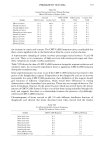
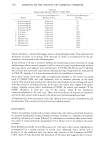
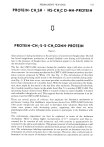
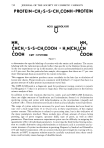
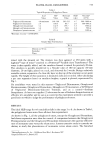
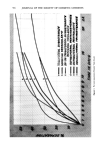
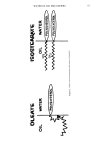
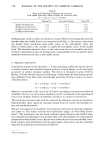
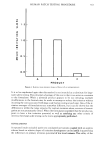
PERMANENT WAVING 731 Stress-strain data confirm that hair undergoes damage during permanent waving. The fact that reoxidation of thiol groups restores much of the loss of strength associated with disruption of disulfide bonds verifies the role of cystine crosslinks in the strength of the hair fiber. However, attempts to correlate quantitative cystine reduction with changes in stress-strain curves necessitates monitoring with amino acid analysi• or some method with similar sensitivity and accuracy. This publication does not attempt to accomplish this, as the stress-strain data are included only as further evidence that permanent waved hair is damaged. Both hydrogen peroxide and sodium bromate were shown to be effective in rebonding lotions. Air oxidation is not complete even after 24 h. There is cysteic acid formation during reoxidation of the thiol groups and increased neutralization times incur greater damage to the hair fiber as monitored by both SEM and amino acid analysis. By looking at the reduction and oxidation steps individually, and by utilization of radioisotope methods as well, the mechanism of permanent waving has been reevaluated. In particular, the presence of significant amounts of CMT-CySH in perreed hair may not only be a result of direct reaction between cysteine and thioglycolate but may also be formed during acid hydrolysis after thiolation of lysine amino groups and subsequent crosslink formation with cysteine during the neutraliza- tion step of perming. The mixed disulfide formation appears to be more significant in acid waving than alkaline waving from preliminary data. The implication of the in- troduction of a new type of crosslink during perming requires further investigation to assess whether its contribution is advantageous. An important question in permanent waving involves ascertaining the actual areas in the hair fiber where these reactions are taking place. Using H a -iodoacetic acid to tag the sites of thioglycolate reactions, we are using radioautography methods to show lo- calization, and this will be presented in a subsequent paper. ACKNOWLEDGMENT We are grateful to A. Edward Newsom for performing the amino acid analysis and to Cindy Bruyn and Marjorie Tyson for their assistance in treatment of the swatches. REFERENCES (1) J. H. Bradbury, G. V. Chapman, N. L. R. King, and J. M. O'Shea, Keratin fibers Ill. Amino acid analyses of histological components, Aust. J. Biol. Sci., 23, 637 (1970). (2) R.J.M. Gold and C. R. Scriner, The amino acid composition of hair from different racial origins, C/in. Chim. Acta, 33,465-6 (1971). (3) M. van Sande, Hair amino acids: normal values and results in metabolic errors, Arch. Dis. Childhood, 45,678-81 (1970). (4) J. Menkhart L. J. Wolfram, and I. Mao, Caucasian hair, negro hair, and wool: similarities and dif- ferences, J. Soc. Cosmet. Chem., 17,769-87 (1966). (5) H. Zahn, T. Gerthsen, and M. L. Kehren, Amnendung schwefel-chemischer analysenmethoden auf dauergewilltes haar, J. Soc. Cosmet. Chem., 14, 529-43 (1963). (6) C. R. Robbins and C. Kelly, Amino acid analyses of cosmetically altered hair, J. Soc. Cosmet. Chem., 14, 555-65 (1969). (7) A. Sch6berl, Uber die thioglykolsa/ire behandlung yon haaren und die wiedererzengung yon disulfidgruppen, Naturwissenschaften, 40, 390 ( 1950).

732 JOURNAL OF THE SOCIETY OF COSMETIC CHEMISTS (8) K. E. Schulte, I. Mleinek, and H. D. Habl, Beltrag zur frage der thioglykolsaf. ire-retention im haar, Parf•m. Kosmet., 45, 87 (1964). (9) J.P. E. Human and P. H. Springell, The reaction between thioglycolate and wool proteins, Aust. J. Chem., 12,508 (1959). (10) F. H. White, Regeneration of enzymatic activity by air-oxidation of reduced ribonuclease with observa- tions on thiolation during reduction with thioglycolate, J. B/o/. Chem., 235,383-9 (1960). (11) M. H. Horn, D. B. Jones, and S. J. Ringel, Isolation of a new sulfur containing amino acid (lanthionine) from sodium carbonate-treated wool, J. B/o/. Chem., 138, 141 (1941). (12) K. Ziegler, New crosslinks in alkali-treated wool, J. B/o/. Chem., 239, 2713-4 (1964). (13) D. H. Spackman, W. H. Stein, and S. Moore, Automatic recording apparatus for use in the chromatography of amino acids, Aria/. Chem., 30, 1190-1206 (1958). (14) C. H. W. Hirs, Reduction and S-carboxymethylation of proteins, Methods in Enzymology, Vol. 11, 1967, Pp. 199-203. (15) R. D. Cole, S.-Aminoethylation, Methods in Enzymology, Vol. 11, 1967, Pp. 315-317. (16) F. Miyazawa, F. Nozaki, and T. Tamura, Studies on damaged hairs, Presented Eight IFSCC Congress, London, England, 1974. (17) K. Hirayama, Some cysteine conjugates in hair, Physiol. Chem. Physics, 1,377-82 (1969). (18) R. S. Asquith and P. Carthew, An investigation of the mechanism of alkaline degradation ofcystine in intact protein, Biochem. Biophys. Acta, 278, 8-14 (1972). (19) D. Sanford and F. L. Humoiler, Determination of cystine and cysteine in altered human hair fibers, Anal. Chem., 19,404-6 (1947). (20) Protein wave lotion: tensile properties of hair waved with a thioglycolate lotion plus a protein hydrolysate, Technical Bulletin, Personal Care Division, Inolex Corporation, Chicago, Illinois.
Purchased for the exclusive use of nofirst nolast (unknown)
From: SCC Media Library & Resource Center (library.scconline.org)