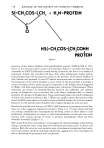
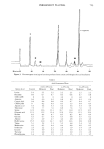
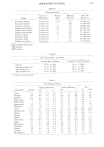
PERMANENT WAVING 719 EXPERIMENTAL HAIR SAMPLES Salon treatments were performed on ,clients with virgin hair. Hair samples were indi- vidually cut from the nape not more than 3 in. long to minimize differences which oc- cur down the hair shaft. The laboratory testing utilized one virgin hair swatch which was carefully cut so that all hairs were the same distance and length from the scalp. To verify that this hair swatch was representative of good competent keratin structure, the criteria of stress-strain, scanning electron microscopy (SEM), polarization microscopy, and amino acid analysis were used. In all cases, the hair shaft was in the average keratin range. PERMING PROCEDURES All salon permanent waves were performed in the standard manner. When hair swatches were utilized, procedures were used which simulated actual head waving. Thus the same amount of solution was applied to curlers, which were then placed in salon dryers at regulated temperatures for acid waves. A test curl was used to establish optimal perm time (designated as t) for all processing of different perms. Variations in time were related to this optimal time. In the same manner, variations in oxidation times are related to optimal times (t). The acid waves, which contained 8.4 per cent (wt/wt) ammonium thioglycolate, were formulated as usual with one exception: protein was left out. The alkaline wave was also devoid of protein and contained 4.2 per cent (wt/wt) ammonium thioglycolate at pH 9.4. Sodium bromate (12 per cent by weight) was the usual active ingredient in the reforming lotion except where variations in oxidizing incorporated the use of hydrogen peroxide (2.9 per cent by weight). When samples were removed prior to reoxidation, they were not rinsed, since this was found to cause reoxidation. With the exception of one experiment, commercial ammonium thioglycolate was used to formulate wave solutions. In this experiment reagent grade thioglycolic acid (98 per cent) was vacuum distilled into 4 fractions under reduced pressure. Fraction I (105 to 110øC) was a clear liquid Fraction II (100 ø to 125øC) was a slightly yellow liquid Frac- tion III (130 to 134øC) was a yellow liquid, Fraction IV (residue from distillation) was a golden brown viscous liquid. Each fraction was water soluble except the residue which was soluble in 3M urea or in dioxane. UV spectra of Fractions I to III diluted 1/10,000 with water showed increasing amounts of thioester (White (10)). Reagent thioglycolic acid had an absorbance between those of Fractions II and III. AMINO ACID ANALYSIS The hair was washed consecutively with ether, ethanol, and distilled water and then air dried. Approximately 1 mg hair samples were weighed on a Metder ME 22 elec- trobalance • to the nearest microgram. One complete strand of the swatch was used for each analysis. Hydrolysis of duplicate hair samples in double distilled constant boiling HCI was performed in sealed evacuated tubes at 110øC for 48 h. This was the time de- *Mettler Instruments Corp., Princeton, NJ 08540.

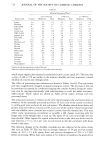
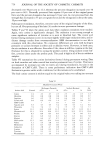
720 JOURNAL OF THE SOCIETY OF COSMETIC CHEMISTS termined for the best compromise between complete hydrolysis and optimal recovery of amino acids. Analysis was carried out on a Beckman 121Mñ amino acid analyzer ac- cording to the general procedure of Spackman et a/.(13). Amino acid peaks were in- tegrated with a systems AA integrator. In order to determine S-aminoethylcysteine (SAE-CySH), a 15-cm short column was used and SAE-CySH eluted between lysine and histidine. STRESS-STRAIN TESTING Stress-strain measurements were made by suspending a single hair fiber, 1.6 cm long, between a set of clamps. Force, applied to one end by a constant speed motor, elongates the fiber at a rate of 1.5 per cent/sec., while being monitored on the other end by a strain-gauge transducer.++Stress versus strain graphs were plotted on an XY Recorder. • Ten hairs were tested and averaged. CMT-CySH, LYSINOALANINE, AND LANTHIONINE IDENTIFICATION The peak which elutes between serine and glutamic acid was shown to be different than methionine sulfone or homoserine by spiking a permanent wave hydrolysate contain- ing this peak with known standards. To establish that it was the suspected mixed disulfide of thioglycolic acid and cysteine, a laboratory synthesis was carried out under conditions which should trap this intermediate. Equal molar amounts of thioglycolate and cystine were reacted for 30 min at pH 5.0, and then the solution was lyophilized and dissolved in 2 ml ofpH 2.2 citrate buffer. This was run alone on the analyzer and also used as a spike. The CMT-CySH peak eluted coincidentally with the unknown permanent wave peak. The KF for alanine was used in the experiments to calculate CMT-CySH. Lysinoalanine and lanthionine were identified by comparison with stan- dards. RADIOACTIVE LABELING Sample hair bundles were taken from scalps before permanent wave treatment, after reduction prior to rinsing and after permanent wave treatment. The amino acid com- position was determined on the before and after samples. Reduced hair was im- mediately immersed into the reaction solution which had been flooded with dry nitrogen for 15 min. Carboxymethylation with 1-C TM iodoacetic acid in the presence of cold iodoacetic acid was then carried out according to the procedure of Hits (14), ex- cept the time was increased to 2« h to allow for sufficient penetration into the hair shaft. Afterward, the hair was carefully washed 7 times with distilled H20 for a period of 15 min/wash with gentle stirring. A number of control experiments showed this washing procedure to be more than adequate for removal of unreacted iodoacetic acid trapped in the hair strands. Air dried C TM tagged hair samples were weighed accurately on a Mettier ME 22 electrobalance to approximately 4.000 mg and placed into glass scintillation vials. Distilled water (0.2 ml) was added to each vial and allowed to q•Spinco Division of Beckman Instruments, Inc., Palo Alto, CA 94340. 5:•Stathan Instruments, Inc., Oxnard, CA 93030. *Hewlett Packard, Inc., Palo Alto, CA 94303.
Purchased for the exclusive use of nofirst nolast (unknown)
From: SCC Media Library & Resource Center (library.scconline.org)