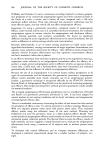
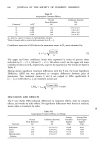
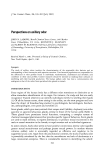
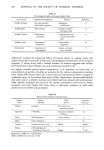
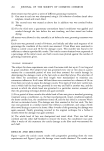
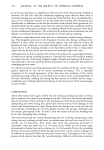
VEHICLE EFFECT ON ANTI-PERSPIRANT ACTIVITY 181 EXPERIMENTAL 1. FORMULATIONS A number of preliminary formulations were tested and compared for physical and chemical compatibility, stability, and cosmetic appeal. Twenty percent aluminum chlorhydrate was used as the active agent. Aluminum chlorhydroxy allantoinate in concentrations of 0.25% was added to the formulations for its beneficial therapeutic and cosmetic properties. These ingredients were incorporated into four widely used vehicular forms: a cream base, an aqueous roll-on lotion, a solid stick, and a hydroalcoholic base such as one used in the manual pump sprays (8-11). One product from each vehicular form was selected for use as the test antiperspirant. All test products were formulated to provide 100 mg of active ingredient per 500 mg of test antiperspirant product. The test antiperspirant formulas are listed in Table I. Table I Test Antiperspirant Formulas %, weight Solid Stick Crodesta A 10 ©• 38.5 Procetyl AWS ©• 9.6 MicroDry, Ultrafine ©2 38.5 Alcohol soluble aluminum chloryhydroxy allantoinate 3 0.5 Crodamul IPM ©• 12.9 100.0 Cream Cetyl alcohol 5.00 Arlacel 165 ©4 5.00 Distilled Water 49.75 Aluminum chlorhydroxy allantoinate 3 0.25 Chlorhydrol, 50% w/w solution ©2 40.00 Lotion Veegum ©5 1.00 Distilled water 50.75 Arlacel 165 ©4 8.00 Chlorhydrol, 50% w/w solution ©2 40.00 Aluminum chlorhydroxy allantoinate 4 0.25 Hydroalcoholic Solution Ethanol, 95% 50.00 Arlamol E •4 5.00 Chlorhydrol, 50% w/w solution ©• 40.00 Alcohol soluble aluminum chlorhydroxy allantoinate 3 0.25 Distilled water 4.75 •Croda, Inc., New York, New York. 2Reheis Chemical Co., Berkeley Heights, New Jersey. •Schuylkill Chemical Co., Philadelphia, Pennsylvania. 4ICI Americas Inc., Wilmington, Delaware. 5R. T. Vanderbilt Co., Inc., New York, New York.

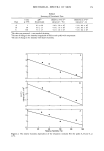
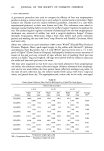
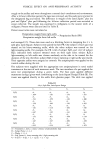
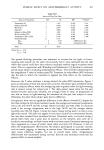
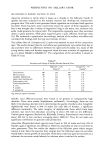
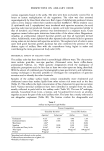
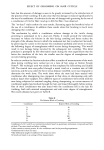
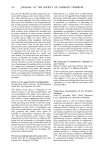
182 JOURNAL OF THE SOCIETY OF COSMETIC CHEMISTS 2. TEST PROCEDURE A gravimetric procedure was used to compare the efficacy of four test antiperspirant products during a normal work day in each subject's normal work environment. Eight subjects (six females and two males) followed guidelines, described in a nine-week experimental protocol, at their own homes and jobs. The volunteers were asked to maintain normal bathing habits except for the axillary hygiene regimen throughout the test. The axillary hygiene regimen consisted of abstaining from non-test antiperspirant/ deodorant use, removal of axillary hair with a surgical depilatory Surgex* (Cooper Scientific Corporation, Watertown, Mass.), three days before each sweat collection period, and washing the area with Ivory* soap (Proctor and Gamble, Cincinnati, Ohio) and water only. Sweat was collected on tared absorbent 100% cotton Webril* (KendallFiber Products Division, Walpole, Mass.) pads taped snugly to the axillae with Dermicel* (Johnson and Johnson, New Brunswick, NJ.). A 4-ply Webril* pad was sewn onto a 2 x 4 inch piece of Ziploc* (Dow Chemical Company, Indianapolis, Indiana) to ensure retention of sweat on the pad and easy removal of tape without loss of padding. Each pad was sealed in a Ziploc* bag and weighed. All bags were labeled with the subject's name and the axilla and date each pad was to be worn. The tests were organized so that there was a two-week abstinence from antiperspirant use before the treatment sweat collections began. Subjects abstained from antiperspi- rant use for one week before the three pretest sweat collection readings v, ere made. At the start of each collection day, the subject washed both axiilae with Ivory* soap and water, and patted them dry. The appropriate pad, cotton side to the body, was taped Table II Pretest Sweat Collection Data Used for Blocking 4 by 4, Split Plot, Latin Square Sweat Collection Dates 4-4-78 4-5-78 4-6-78 Right Left Right Left Right Left Average Subject (mg) (mg) (mg) (mg) (mg) (mg) PR* B•D•(PR) 208.0 304.0 564.3 540.3 707.4 898.5 0.684 1.044 0.787 0.838 B•D2(PR ) 115.2 116.2 157.4 231.6 71.1 78.1 0.991 0.680 0.910 0.860 B2D•(PR) 237.2 192.2 56.3 34.2 555.4 262.2 1.234 1.647 2.118 1.666 B2D•(PR) 490.5 293.3 554.0 236.0 230.3 80.1 1.672 2.347 2.875 2.298 B3D•(PR ) 1,257.4 1,202.1 289.3 298.9 865.8 916.2 1.046 0.%8 0.945 0.986 B3D2(PR ) 836.0 630.0 468.1 710.2 %.5 119.6 1.327 0.659 0.807 0.931 B4D•(PR) 1,742.2 1,614.2 1,482.7 1,255.6 1,567.2 781.1 1.079 1.181 2.006 1.422 B4D•(PR ) 520.8 2%.4 1,375.6 970.4 1,592.3 918.2 1.757 1.418 1.734 1.636 Perspiration weight right axilla *PR = Perspiration Ratio = Perspiration weight left axilla
Purchased for the exclusive use of nofirst nolast (unknown)
From: SCC Media Library & Resource Center (library.scconline.org)