VEHICLE EFFECT ON ANTI-PERSPIRANT ACTIVITY 191 5. Vehicle plays an important role in the cosmetic appeal and personal acceptance of an antiperspirant, which, even though these are subjective responses, may influence antiperspirant efficacy results to a limited extent. REFERENCES (1) E. Jungermann, Antiperspirants: New trends in formulation and testing technology, J. Soc. Cosmet. Chem., 25,621-638 (November 1974). (2) XV.J. O'Malley and J. E. Christian, An evaluation of the ability of antiperspirant compounds to reduce perspiration flow,J. Am. Pharm. Assoc., Sci. Ed., 49, 402-404 (1960). (3) T. A. Bakiewi•ca, A critical evaluation of the methods available for measurement of antiperspirancy,J. Soc. Cosmet. Chem., 24, 245-258 (April 1973). (4) M. XV. Steed, Evaluation of antiperspirant preparations under normal conditions of use,J. Soc. Cosmet. Chem., 26, 17-28 ((January 1975). (5) M. Bart, Percutaneous absorption,J. Pharm. Sd., 51,395-409 (1962). (6) A Kligman, Topical pharmacology and toxicology of dimethyl sulfoxide. Part I.,J. Am. Med. Ass., 193,796-802 (1965). (7) E. S. Bretschneider, A.M. Rubino, andJ. J. Margres, Antiperspirant efficacy,J. Soc. Cosmet. Chem., 28, 441-446 (August 1977). (8) "Antiperspirants and Deodorants Formulary," LD-134, ICI America, Inc., Wilmington, Delaware (March 1972). (9) "Veegum Formulary," Bulletin No. 125, R. T. Vanderbilt Company, Inc., Norwalk, CT (n.d.). (10) K. F. Neulinger, Use of sugar esters in cosmetic sticks, Cosmetics and Toiletties, 92, 65-66 (July 1977). (11) "Arlamol E., "No. 102-15, ICI Americas Inc., Wilmington, Delaware (1977). (12) W. G. Fredell and R. R. Read, Antiperspirant-axillary method of determining effectiveness, Proc. Sci. Sect. Toilet Goods Ass., 15, 23-27 (1951). (13) P. A. Majors and J. E. Wild, The evaluation of antiperspirant efficacy--influence of certain variables,J. Soc. Cosmet, Chem., 25,139-152 (March 1974). (14) W. M. Wooding and P. Finklestein, A critical comparison of two procedures for antiperspirant evaluation,J. Soc. Cosmet. Chem., 26, 255-275 (May 1975). (15) G. W. Fredell and J. Longfellow, Report on evaluating antiperspirant and deodorant products,J. Soc. Cosmet. Chem., 9, 108-111 (1958). (16) J. L. Myers, Fundamentals of Experimental Design, 2nd ed., Allyn and Bacon, Inc., Boston, 1972, pp. 259-302. (17) G. W. Snedecor and W. G. Cochran, Statistical Methods, 6th ed., Iowa 1967, pp. 369-374. (18) National Weather Service, State Airport, Warwick, Rhode Island (April-May 1978). (19) H. H. Relier, Factors affecting axillary sweating,J. Soc. Cosmet. Chem., 15, 99-110 (1964). (20) Federal Register, 43, 46694-46732 (1978).

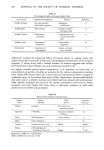
j. Soc. Cosmet. Chem., 34, 193-202 (July 1982) Perspectives on axillary odor JOHN N. LABOWS, Monell Chemical Senses Center, 3500 Market Street, Philadelphia, PA 19104, KENNETH J. McGINLEY and ALBERT M. KLIGMAN, Duhring Laboratories, Department of Dermatology, University of Pennsylvania, Philadelphia, PA 19104. Received March 1, 1981. Presented at Society of Cosmetic Chemists, New York Chapter, April 1, 1981. Synopsis The study of axillary odors involves the characterization of the responsible skin bacteria and an understanding of their interaction with apocrine secretion. Two bacterial populations are responsible for the differences in odor profiles found in individuals. Androstenone, androstenol and isovaleric acid contribute to these odor profiles. Control measures should be directed at masking these odorants or interfering with their bacterial production. The human axillary odor may have a communicative role analogous to that of the odors from specialized skin glands in animals. INTRODUCTION Every region of the human body has a different odor sometimes so distinctive as to allow immediate identification of its origin. For instance, the scalp and feet are easily recognized. Trained observers can identify individuals merely by smelling their hands (1). Of all the human scents, those arising in the axillae, are the most pungent and have been the object of broadreaching studies by psychologists, bacteriologists, biochem- ists, anthropologists, even poets and novelists (2). Scent glands, which give many animals their unique smell (rabbity, elephanty), are either apocrine or apocrine-sebaceous glands, similar to those of the human axilla (Table I). These glands have prominent social functions, comprising a complex system of chemical messages (pheromones) that provoke specific types of behaviors. Scent glands are used to mark territory, to express dominance, to produce sexual excitement in the male or sexual attraction in the female, to repel enemies and as individual signatures. In some cultures, body odor seems to have positive connections intense odor signifies greater sexual attractiveness and perhaps greater sexual powers. In modern western cultures, axillary odor is universally regarded as offensive and repulsive to be suppressed at any cost. Apart from the psychosocial contexts, the study of axillary odor is powerfully stimulated by the fact that the manufacture and sale of deodorants is a large commercial enterprise. There is considerable interest in identifying the odorif- 193
Purchased for the exclusive use of nofirst nolast (unknown)
From: SCC Media Library & Resource Center (library.scconline.org)