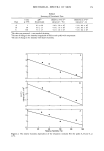
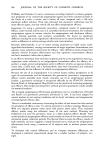
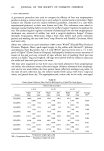
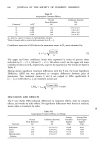
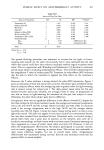
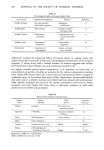
200 JOURNAL OF THE SOCIETY OF COSMETIC CHEMISTS Table VI Steroids Found in Human Axillae Steroid Sample Reference Axillary Hairs and sweat 40 Androst-4-ene-3, 17-dione Androsterone (sulphate) DHA (sulphate) Cholesterol Androst-4-ene-3, 17 dione Pregn-5-en-3/•-ol-20-one 5c•-androst-16-en-3c•-ol 5c•-androst-16-en-3-one Androsterone (sulphate) DHA (sulphate) Cholesterol Axillary Sweat 41 Axillary Sweat 42 Axillary Sweat 24, 43 Apocrine Secretion 25 dominant odor and in odor description studies has been labeled urine, sweaty, perspiration, or animal (23). Recently investigators utilizing radioimmunoassay tech- niques have demonstrated differences in concentration of androstenone in male (3-310 ng) and female (3.5-11 ng) subjects (24). These results correlate well with the overall sex differences in bacteriology discussed above. In pure apocrine secretion we have demonstrated the presence of two sulfated steroids, androsterone sulfate and dehydroepiandrosterone sulfate (25). Whether either of these are precursors of the odorous steroids is unknown (26). The cholesterol, steroids, and proteinaceous (10%) substances present in apocrine secretion provide a unique substrate for bacterial growth and odor development. Other substances in the axilla originating from the sebaceous and eccrine glands may contribute indirectly to the total odor profile. Sebum intermingles with apocrine secretion in the follicular infundibulum and contains about 10% squalene, a material which fragrance formulators use as a "fixative" to make the odor more durable. Interestingly, the sebaceous gland of the musk deer produces many androgen steroids in addition to lipids and the odorous muscone (27). That secretion is valued both in perfumery for its musk odor and as an important drug for its various pharmacological effects. Finally, in vitro incubation of apocrine secretion and micrococci produces a sweaty odor which has been identified as isovaleric acid by odor concentration and analysis by gas chromatography-mass spectrometry (44). A similar incubation of apocrine secretion with diphtheroids produces the typical acrid odor, though fresh bacterial isolates are needed to obtain consistent results. Isovaleric acid was detected in the gas chromato- graphic profile but the main odor components, presumably steroids, have not as yet been characterized in these cultures. In the case of these steroids, particularly androst-16-en-3-one, the sensitivity of the much underrated human nose exceeds that of the instrument. SUMMARY: The study of axillary odors presents an interesting paradox. Knowledge of the responsible bacteria and an understanding of their interaction with apocrine secretion will lead to alternative and possibly better methods of odor control. It is clear we are dealing with two bacterial populations and consequent differences in odor profiles.

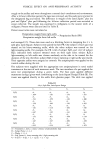
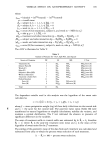
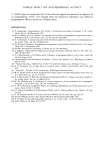
PERSPECTIVES ON AXILLARY ODOR 201 Androstenone, androstenol, and isovaleric acid are contributing a large part of this odor profile. Thus control measures should be directed at masking these odorants or interfering with their bacterial production. The finding of these two steroids, which incidentally play a key role in the sexual life on the boar (28), as contributors to human axillary odor is also suggestive of a role, possible vestigial, for olfactory communica- tion in humans. ACKNOWLEDGMENTS This research was supported in part by Public Health Service grant 2 RO! AM 26195-03 from the National Institute of Arthritis, Metabolism, and Digestive Diseases. REFERENCES (1) P. Wallace, Individual discrimination of humans by odor, Physiol. and Behav., 19, 577-579 (1977). (2) B. Brady, The sexual significance of the axillae, Psychiatry, 38, 278-289 (1975). (3) A. Dravnieks, Evaluation of human body odors: methods and interpretations, J. Soc. Cosmet. Chem., 26, 551-557 (1975). (4) R. L. Ellin, R. L. Fart, F. W. Oberst, C. L. Crouse, N. B. Billups, W. S. Koon, N. P. Musselman, F. R. Siddell, An apparatus for the detection and quantitation of volatile human effluents, J. Chromatogr., 100, 137-152 (1974). (5) J. N. Labows, G. Preti, E. Hoelze, J. Leyden, A. Kligman, Axillary odors: compounds of exogenous origin, J. Chromatogr.--Biomed. Applic., 163, 294-299 (1979). (6) G. D. Price, N. Smith, D. A. Carlson, The attraction of female mosquitos to stored human emanations in conjunction with adjusted levels of relative humidity, temperature and carbon dioxide, J. Chem. Ecol., 5 (3), 383-395 (1979). (7) S. Sastry, K. Buck, J. Janak, M. Dressier, G. Preti, "Volatiles emitted by humans," Biochemical Applications of Mass Spectrometry, G. Waller and O. C. Dermet, Wiley, p. 1086-1133 (1980). J. N. Labows, K. J. McGinley, J. j. Leyden, G. F. Webster, Characteristic 7-Lactone odor production of the genus Pityrosporum, Appl. and Environ. Micro., 38, 412-415 (1979). J. Hurley, W. Shelley, The human apocrine gland in health and disease, Thomas, Springfield, Illinois (1960). A. Corn'fort, "The likelihood of human pheromones," In: Pheromones, ed., M. C. Birch, (North- Holland Publishing Co., 1974) pp. 386-396. I. Bloch, Odoratus Sexualis (Panurge Press, New York, 1934). M.J. Russell, Human olfactory communication, Nature, 260, 520-521 (1976). R. L. Doty, "A review of recent psychophysical studies examining the possibility of chemical communication of sex and reproductive state in humans," In: Chemical Signals in Vertebrates, Eds. D. Muller-Schwarze and M. M. Mozell (Plenum Press, New York, 1977) pp. 273-286. B. Holdt, M. Schleidt, The importance of human odour in nonverbal communication, Z. Tierpsychol., 43, 225-238 (1977). N. Morris, R. Udry, Pheromonal influences on human sexual behavior: An experimental search, J. Biosoc. Sci., 10, 147-157 (1978). J. Cowley, A. Johnson, B. Brooksbank, The effect of two odorous compounds on performance in an assessment-of-people test, Psychoneuroendocrinology, 2, 159-172 (1977). M. Kirk-Smith, D. Booth, D. Carroll, P. Davies, Human social attitudes affected by androstenol, Res. Comm. in Psychol., Psyvhiatry and Behavior, 3, 379-384 (1978). M.J. Russell, G. M. Switz, K. Thompson, Olfactory influences on the human menstrual cycle, Pharmac. Biochem. Behav., 13, 737-738 (1980). J. E. Amoore, P. Pelosi, J. L. Forrester, Specific anosmias to 5o•-Androst-16-en-3-one and 0)-Pentadecalactone: The urinous and musky primary odors, Chemical Senses and Flavor, 2, 401-425 (1977). H. S. Koelega, Preference for and sensitivity to the odours of androstenone and musk, in Oilaction and Taste VII. H. van der Starre, ed., (Information Retrieval Inc. N.Y., 1980) p. 436. (8) (9) (10) (11) (12) (13) (14) (15) (16) (17) (18) (19) (20a)
Purchased for the exclusive use of nofirst nolast (unknown)
From: SCC Media Library & Resource Center (library.scconline.org)