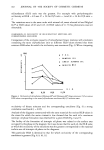
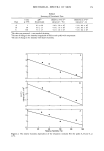
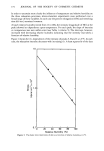
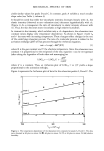
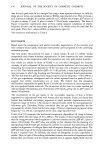
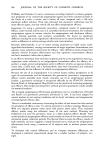
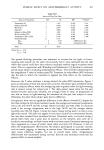
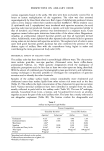
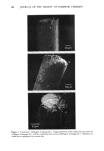
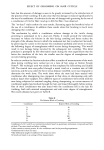
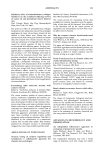
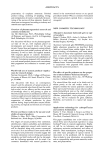
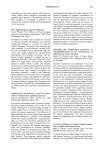
204 JOURNAL OF THE SOCIETY OF COSMETIC CHEMISTS A c ß ß ', ' , 20pm Figure 1. Scanning electron micrograph of transverse cross-sections of human hair showing the three basic components: (A) the cuticle, (B) the cortex, (C) the medulla. The observation by Garcia et al. (2) of a pattern of cuticle wear related to the distance from the root relative to the overall length rather than simply to the distance from the root excludes age per se as a major factor in cuticle wear. This view is also supported by the observation of a lock of Jane Austen's hair by Swift (8). This lock was at least 150 years old and was thought to have received minimal handling. It was found to display minimal cuticle damage for most of its length. Studies of the effect of grooming have concentrated on the processes of combing and brushing. Swift and Brown (7) examined the same hair fibres before and after combing and found a cuticle removal rate of 5/am per 2000 comb strokes. They postulated that this accounted for some but not all of the observed cuticle damage, attributing the remainder to such factors as handling, exposure to sunlight, and washing. Later, Garcia et al. (2) showed that the pattern of cuticle removal from root to tip of hair fibres was similar to that of the forces present in the hair during combing. Both increased from root to tip as a function of the relative position along the hair with respect to its overall length. This would seem to indicate that the average rate of cuticle removal calculated by Swift and Brown (7) probably does not adequately account for the effect of combing as it does not take into account any variation in the forces along the length of the hair. In addition, the process of wet-combing out of knots after washing was not considered by them. Brown and Swift have examined the process of combing out knots directly under the scanning electron microscope (3). Definite lifting and breaking of the cuticle scales was observed by the tangling of hair during combing. A greater ease of splitting was observed at the tip end compared to the root end and this was attributed to the greater degree of weathering, i.e., exposure to sunlight, that had been received at the tips. Okumura et al. (6) have studied the physical and chemical damage done to hair by dry brushing. They observed that the cuticle scales were lifted away and stripped off by the

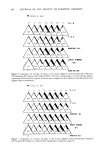
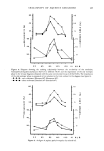
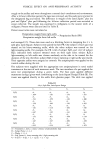
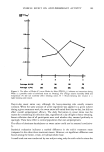
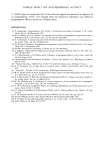
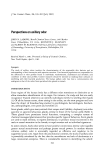
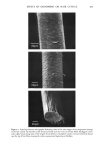
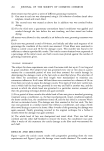
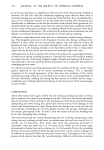
EFFECT OF GROOMING ON HAIR CUTICLE 20• 20pm 201am 20pm Figure 2. Scanning electron micrographs illustrating three of the main stages of the progressive damage to the hair cuticle. (a) Smooth cuticle structure found near the root end of hair fibres (b)Jagged cuticle scale edges found along most of the length of hair fibres (c) Complete cuticle removal sometimes found near the tip of hair fibres, leaving the cortex exposed and beginning to fibrillate.
Purchased for the exclusive use of nofirst nolast (unknown)
From: SCC Media Library & Resource Center (library.scconline.org)