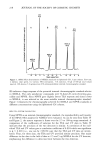
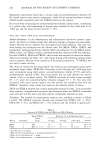
224 JOURNAL OF THE SOCIETY OF COSMETIC CHEMISTS As part of an overall program to develop methods for detecting NDELA in cosmetic matrices (16,19), the work reported here was designed to develop and validate methods for the extraction and cleanup of NDELA in several specific cosmetic ingredient matrices. EXPERIMENTAL APPARATUS The isocratic high performance liquid chromatography (HPLC) system consisted of a single Waters Associates (Milford, Mass.) Model 6000A pump, Waters Model U6K injector, Carle Instruments (Anaheim, Calif.) Model 2025 four-way micro-switching valve, Waters Model 440 UV detector operated at 254 nm, and a Thermo Electron Corporation (Waltham, Mass.) Thermal Energy Analyzer (TEA) Model 502. The UV and TEA detectors were used in series, the UV used first. The TEA was operated at a furnace temperature of 550øC, argon and oxygen pressures were 0.5 torr, photomul- tiplier voltage was 1475 V DC, and the cold trap was dry ice/isopropanol. The columns were Waters p•Bondapak CN (300 x 4 mm ID) a Laboratory Data Control (Riviera Beach, Fla.) 5 p•m Spherisorb CN (250 x 4.6 mm ID) with a Whatman (Clifton, N.Y.) Co:Pell octadecyl silane guard column and a Laboratory Data Control 5 •m Spherisorb Silica (250 x 4.6 mm ID) column. Unless otherwise specified, flow rates were 2 ml/min isooctane/methylene chloride/methanol (75/19/6 volumetric ratios are used throughout this paper). The micro-switching valve was placed in the system between the UV detector and the TEA detector to permit the analyst to switch the column eluent from the TEA detector to waste when desired. Radioactive decay rates were obtained using a Packard Tri-Carb liquid scintillation counter (Packard Instrument Company, Downers Grove, Ill.). REAGENTS All solvents were HPLC "distilled in glass" grade (Burdick and Jackson, Muskegon, Mich.) and filtered prior to use in the HPLC system. The •4C-NDELA was obtained from Dohm Products, Inc. (North Hollywood, Calif.) Cosmetic ingredient matrices were supplied by the sponsor (see Acknowledgements). RECOVERY CORRECTION USING •4C-NDELA Duplicate weighed aliquots of each sample were spiked with 200 p•l of 130 ng/ml 14C- NDELA (10 mCi/mmol) in 4% methanol/methylene chloride. Following all extraction and cleanup steps, a quantitative aliquot (generally 1.0 ml of 5) was transferred to a scintillation vial containing 15 ml Aquasol universal cocktail and counted for 10 min (or adequate time to get sufficiently precise counting statistics) using a liquid scintil- lation counter. Appropriate blanks and controls (aliquots of the original •4C-NDELA spiking solution) were also counted with the samples for background correction and calculation of percent recovery. PROCEDURE HPLC-TEA a,alysis. All extracts were analyzed by isocratic HPLC-TEA using isooc- tane/methylene chloride/methanol (75/19/6 v/v/v) on a 5 p• Spherisorb CN column.

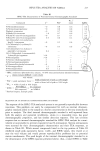
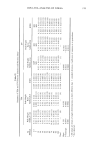
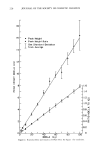
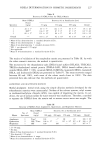
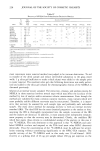
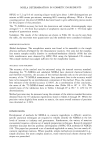
NDELA DETERMINATION IN COSMETIC INGREDIENTS 225 NDELA was quantitated by comparison of peak heights of the unknown and external standards and corrected for recovery using •4C-NDELA, as described above. The average of duplicate analyses was reported if the concentrations found in two duplicates agreed within 10% if not, the sample was reanalyzed. The HPLC-TEA procedure has been described in detail previously (19). Monoethanolamine (MELA) diethanolamine (DELA), and triethanolamine (TRELA) ma- trices. Duplicate weighed (--1 g) samples were thoroughly mixed with 8.8 ml ethyl acetate. Next, --3 g anhydrous sodium sulfate were added, with mixing, to remove water. After the sample was allowed to stand for 1 hr to remove water, it was analyzed by HPLC-TEA. Morpholine matrices. Duplicate weighed (-- 1 g) samples in a culture tube were diluted with 9 ml methanol/methylene chloride (2/98), mixed, and analyzed. Amphoteric and quaternium matrices. Duplicate weighed (--1 g) samples were spiked with •4C-NDELA. The sample was diluted with --2 ml methanol and slurried with --4 ml silica gel. The methanol was evaporated under a gentle stream of dry, purified nitrogen, and the sample desiccated in vacuo overnight or until all the water was removed. A liquid chromatographic column was prepared by slurry packing 3.5 g silica gel in methylene chloride. The dried sample was transferred to the column with methylene chloride rinses (total --50 ml) to complete the transfer. The methylene chloride, fol- lowed by 50 ml acetone/methylene chloride (10/90) was eluted through the column to waste. The NDELA was eluted from the column using 60 ml acetone/methylene chlo- ride (60/40), and collected in a beaker. The sample was concentrated under a stream of nitrogen on a hot plate, transferred to a culture tube with acetone washes, and evaporated to dryness under a stream of nitrogen. The residue was dissolved in 5.0-ml HPLC eluent and analyzed. RESULTS AND DISCUSSION COLUMN CHROMATOGRAPHIC CLEANUP An objective of this study was to develop a scheme which utilized a matrix-specific extraction and, where necessary, a general cleanup technique. A cleanup technique which is common to all matrices may be more thoroughly validated and is easier to execute in the laboratory. The cleanup technique which was judged most suitable was silica column chromatography, based upon the good chromatography on silica gel observed with HPLC (18). To determine the solvent polarity required, NDELA was eluted from a silica gel column with various ratios of acetone/methylene chloride (% acetone/% methylene chloride). No NDELA was detected in 50 ml each of 0/100, 25/ 75, or 33/67. About 95% of the NDELA eluted in 50 ml of 50/50 and the remainder in an additional 50 ml of 50/50. No NDELA was observed in 50 ml of 75/25 or 100/0. A similar experiment using isopropanol/methylene chloride (% isopropanol/% methy- lene chloride) was conducted. Most of the NDELA eluted with 20/80 and 30/70, but smaller amounts were found in 40/60 and 50/50 eluents, indicating smearing of the NDELA on the column. Thus, isopropanol/methylene chloride was less satisfactory than acetone/methylene chloride.
Purchased for the exclusive use of nofirst nolast (unknown)
From: SCC Media Library & Resource Center (library.scconline.org)