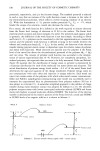
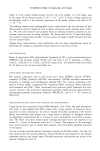
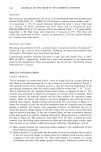
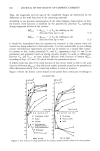
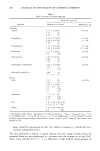
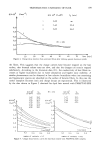
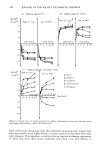
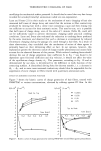
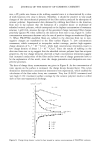
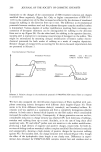
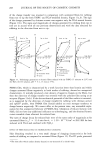
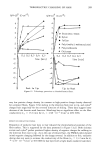
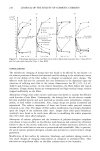
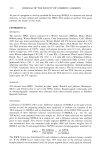
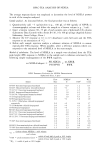
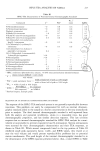
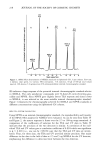
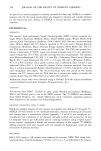
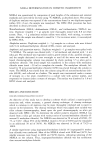
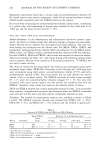
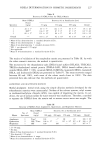
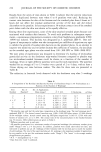
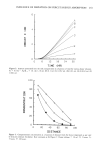
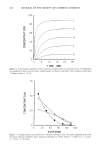
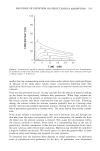
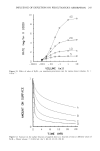
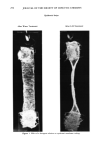
242 JOURNAL OF THE SOCIETY OF COSMETIC CHEMISTS z r• Z W U Z U 8O 8O 4O 2O 0 5 12 •8 24 30 TIME (HR) Figure 4. Concentration (mg/ml) in stratum corncum compartments as a function of time. Compartments are numbered in order with the lowest number being the dosest to the donor. Rate constants as For Figure 2. Donor volume = 10 ml. 8O Z o 40 Z Z 20 0 I I I I I I I I-- i I 0 20 40 60 BO 100 DISTANCE Figure 5. Compartmental concentration as a function of distance from the donor (expressed as per cent of stratum corneum thickness). Rate constants as for Figure 2. Donor volume = 0.0032 mi. [•, 2 hours. A, 5 hours. V, 20 hours.

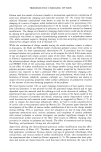
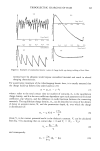
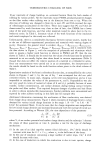
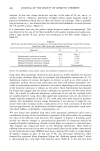
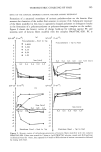
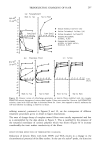
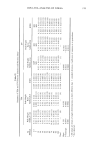
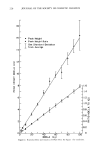
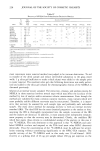
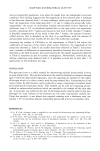
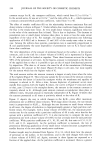
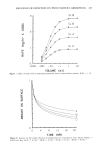
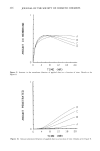
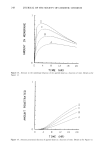
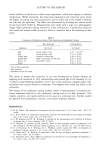
INFLUENCE OF DEPLETION ON PERCUTANEOUS ABSORPTION 243 Z O n• Z •_• Z 0 •_• lOO 8o 6o 2o 1 0 6 12 18 24 30 TIME (HR) Figure 6. Concentration (mg/ml) in stratum comeurn compartments as a function of time. Compartments are numbered in order with the lowest number being the closest to the donor. Rate constants as for Figure 2. Donor volume = 0.0032 mi. smaller than the corresponding steady-state values under infinite dose conditions (Figure 4). Because of the small donor volume, donor concentration following finite dose application falls from the start of the experiment as material enters the stratum corneum. From the data presented thus far, we may conclude that the amount of material making up the donor can significantly influence skin penetration. When large volumes are applied to the skin, the amount of permeant lost via transport is so small relative to the vehicle content that donor concentration does not change over time. Following dosing, the amount within the stratum corneum gradually rises to a limiting value and the concentration gradient approaches linearity. During the same time period, the rate of penetration approaches a constant value. The entire system thus reaches a steady state. If the donor volume is extremely small, then loss of permeant into and through the skin may cause the donor concentration to fall. As a consequence, the transfer rate from the donor into the stratum corneum is reduced. This causes the concentration within the stratum corneum to decline, which leads to a corresponding drop in the rate of penetration. Another consequence is that stratum corneum concentrations do not reach the same values as under infinite dose conditions. Depletion may therefore be considered a negative feedback mechanism. We would expect it to have the greatest effect in those situations where partitioning and transport are most extensive. To determine how the depletion effect depends on model parameters, two additional series of simulations were performed. In the first, all parameters were maintained
Purchased for the exclusive use of nofirst nolast (unknown)
From: SCC Media Library & Resource Center (library.scconline.org)