j. Soc. Cosmet. Chem., 37, 73-87 (March/April 1986) Use of Fourier transform infrared spectroscopy with attenuated total reflectance for in vivo quantitation of polydimethylsiloxanes on human skin HELEN M. KLIMISCH and GRISH CHANDRA, Dow Corning Corporation, 2200 West Salzburg Road, Midland, MI 48640. Received September 6, 1985. Presented at the Annual Scientific Seminar of the Society of Cosmetic Chemists, St. Louis, Missouri, May 9-I0, 1985. Synopsis A quantitative in vivo ATR/FTIR method to determine the concentration of ingredients on human skin has been developed. The key parameters for control of the method are prism selection, skin/prism contact, and quantitation by band ratio using the Amide II protein band from skin as an internal standard. Methods for controlling these parameters were developed. A test procedure was developed to measure soap wash resistance of polydimethylsiloxane (dimethicone) fluids. The results from these experiments indicate that dimethicone substantivity increases with increasing polymer molecular weight. Other personal care ingredients can also be evaluated with this technique. The primary criterion is presence of a distinctive absorption band in the molecule's IR spectrum and, as an example, mink oil data are presented. Finally, the utility of a substantivity aid for enhancing the soap wash resistance of a personal care ingredient was demonstrated using mink oil. INTRODUCTION Since the first silicone-containing lotion was introduced over 30 years ago, silicones have grown increasingly important in skin-care formulations. The silicone material pri- marily used has been polydimethylsiloxane whose CTFA name is dimethicone. The reasons for using dimethicones in personal care products can be attributed to the phys- ical properties of the polymers as indicated in Table I. A basic understanding of the interactions of silicones with skin has not been developed. A method was needed to characterize the skin-silicone interface. This method could then be used to investigate the influence of different polymer structures and compositions on skin and the effects of physical or environmental insult. The first area of emphasis would be in substantivity measurements, especially resistance to water and soap. The method selected was atten- uated total reflectance (ATR) with Fourier transform infrared spectroscopy (FTIR). The ATR technique was developed by Fahrenfort and Harrick (1,2), independently, for obtaining spectra of difficult samples such as rubber or cured resin. An illustration of the difference between transmission and reflection spectroscopy is presented in Figure 1. In transmission spectroscopy, a light beam passes through a certain thickness of sample material. Energy is absorbed by the sample as a function of the molecular species 73

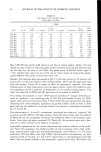
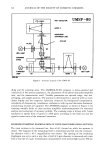
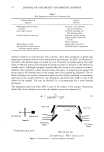
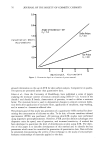
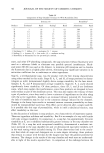
74 JOURNAL OF THE SOCIETY OF COSMETIC CHEMISTS Table I Why Dimethicones Are Used in Personal Care Chemical/Physical Property Product Benefits Physiological and chemical inertness Low surface tension Unique molecular structure High refractive index Incompatibility with aqueous and some organic systems Non-toxic, non-irritating, and non-sensitizing Excellent spreading and film-forming agents Lubricate without oiliness Impart smooth velvety feel to skin Water repellency Imparts gloss and sheen Detackification of ingredients present as well as its concentration. Gas, solution, mull, film, sandwich, or pellet-type sampling techniques work well for transmission spectroscopy. In ATR, the IR source is directed to the beveled edge of a prism by a set of mirrors or transfer optics. The light beam is reflected many times through the prism and then is directed to the detector by transfer optics. Although complete internal reflection occurs at the prism-air interface, radiation does penetrate a short distance above the prism. A sample placed against the prism surface will absorb some of the energy from this penetrating radiation. The re- flected radiation can yield an absorption spectrum that closely resembles a transmission spectrum of the sample. However, the absorption spectrum from ATR is only of the surface of the sample. The text by Harrick (3) is recommended for a more detailed discussion. The absorption spectrum from ATR is only of the surface of the sample. Penetration depth (dr) of the radiation wave into the sample is given by Equation [ 1]' •k 1 dp = 2,rr(Sin20 _ n2 )• [1] 21 IR Source • Sample Detector Mirrors Mirrors Emerging Beam Incident Beam Tr' ansmi ss i on Mu 1 t 1 e Inter,nal Reflecton Figure 1. Transmission vs. internal reflection techniques.
Purchased for the exclusive use of nofirst nolast (unknown)
From: SCC Media Library & Resource Center (library.scconline.org)