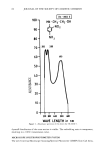
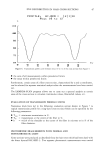
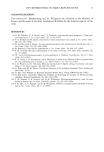
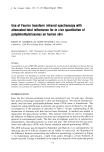
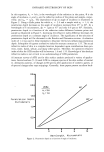
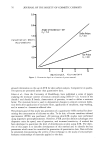
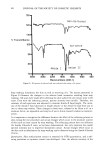
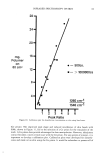
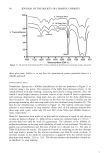
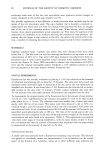
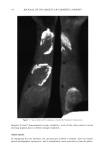
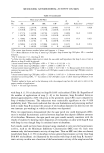
INFRARED SPECTROSCOPY OF SKIN 83 28-- mg. Polymer on 80 cm2 24= 20- 16= 12= 1 1 ß- 500cs. ß -- • 1000000cs 1260 cm-1 ß 1540 cm-1 ! ! ! ! I I 2 3 4 5 6 Peak Ratio Figure 10. Calibration plot for dimethicone concentration on skin using band areas. (Ge prism). The improved peak shape and reduced interference of skin bands with SiMe, shown in Figure 11, led to the selection of a Ge prism for the remainder of the work. AGe prism does provide advantages for data manipulation. However, skin/prism contact becomes a more critical issue with the Ge prism. For any system of interest, it is important to develop a calibration plot. Calibration plots were developed for dimethi- cones and mink oil on skin using the Ge prism. It would be redundant to present all of

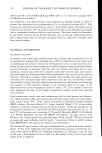
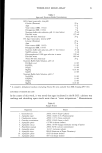
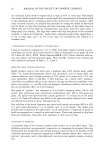
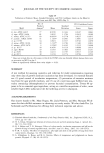
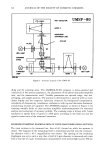
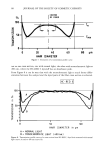
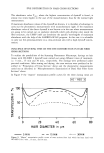
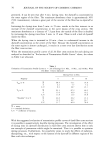
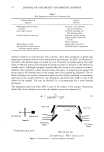
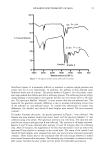
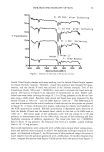
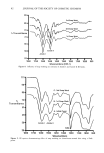
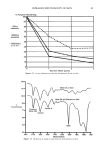
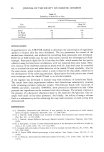
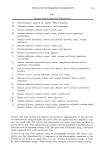
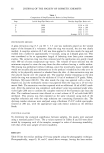
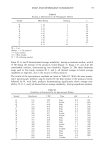
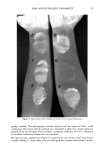
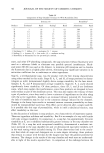
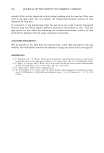
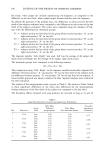
84 JOURNAL OF THE SOCIETY OF COSMETIC CHEMISTS 140 - c. 3rd Soap Wash , 88 % Transmittanc 66 44 ! 1850 1750 1650 1550 1450 1350 1250 1150 1050 950 Wavenumbers (CM-1) Figure l 1. IR spectra demonstrating effect of soap washing on dimethicone-treated skin using a Ge prism. these plots here. Suffice it to say that the quantitation system presented above is a reliable approach. SUBSTANTIVITY DATA Dimethicones. Spectra for a 30000cs dimethicone on skin are presented in Figure 11 as collected using a Ge prism. The intensity of the SiMe band decreases relative to the Amide II band with soap washing, indicating that silicone is being removed. Also, the Amide I band height intensity decreases relative to the Amide II band in agreement with previous observations. Soap wash data was collected for the three dimethicone fluid viscosities. The quantity of silicone on the skin was measured initially and the percentage remaining after each soap wash cycle was calculated using Equation [2]. The data for the dimethicones is presented in Figure 12. The highest molecular weight polymer is most resistant to soap removal. About 38% of this polymer remains after three soap wash cycles, while only 9% and 18% of the 500cs and 30000cs fluids re- main, respectively. Mink Oil. Spectra for both mink oil on skin and for a mixture of mink oil and silicone on skin are shown in Figure 13. Mink oil has a distinctive carbonyl band at 1745 cm- • and this band was used for mink oil quantitation. The influence of the 30000cs di- methicone polymer on the soap wash durability of mink oil was evaluated. The delivery system was cyclomethicone and the ratio of mink oil to silicone was 1/1. The data in Table II illustrate the results. The quantity of mink oil remaining on the skin through each soap wash is greater for the silicone-containing case than for mink oil alone. A two-fold increase in the mink oil concentration is apparent with the silicone mixture after three soap washes, 23% vs. 12%. The silicone enhances the durability of mink oil, an emollient, to soap washing.
Purchased for the exclusive use of nofirst nolast (unknown)
From: SCC Media Library & Resource Center (library.scconline.org)