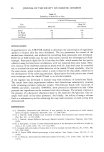
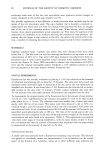
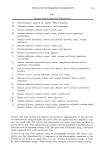
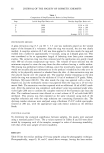
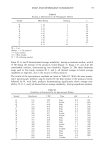
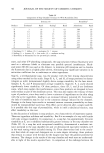
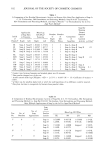
THREE-DAY MOLD ASSAY 55 monomeric form has an inhibitory effect on mold spore germination or growth. Tween 80 has a very low CMC, and it is supposed that the SLS and LDA are sequestered in its micelies, leaving very little monomeric surfactant to inhibit the mold spores. Overall, these experiments established Tween 80 as an essential agar ingredient entirely apart from its role as a preservative neutralizer. In agars with 2% Tween 80, the presence of 0.8% methyl paraben or 0.2% benzoic acid in the shampoo had no noticeable effect on recovery of several Aspergillus strains, but the benzoic acid, more so than the paraben, partially inhibited C. resinae in MYA agar. This strain was completely inhibited by the combination of 0.2% benzoic acid and 0.2% EDTA in MYA agar (no recoveries on Day 5) but not in HC agar. Aspergillus sp. 6177B was partially inhibited by the same preservative combination in MYA but, again, there was no sign of inhibition in HC agar. This inhibition may be attributed to the effect of MYA agar's acid pH which enhances the activity of benzoic acid. Peanut Oil Emulsion. The emulsion was assayed for recovery of Aspergillus sp. 6929 and F. accuminatum without preservative and with 0.8% methyl paraben using MYA and HC agars with and without 2% Tween 80. There was no evidence of inhibition of either strain by the methyl paraben carried over in agar with or without Tween 80. In all cases the recoveries, even of the fastidious F. accuminatum, were comparable to those of the control (no product added). Methyl paraben carryover seems not to be a problem, nor does Tween 80 affect mold recovery. The fact that the omission of Tween 80 has no effect on recovery from the peanut oil emulsion is consistent with the explanation of its role in the shampoo base the peanut oil emulsifiers, like Tween 80 itself, have very low CMCs and would therefore produce very low levels of monomeric surfactant in the agar. VALIDATION IN PRODUCTS The results of statistical analysis of the data (10) are given in Table IV as the mean by mold strain, standard deviation, and 95% confidence limits on the ratio H3/MS, the ratio of the counts on HC agar after three days incubation to the counts on MYA agar after five days. In three cases the mean is significantly greater than unity. In the case of P. notaZure, the difference appears to be of practical as well as statistical significance. In the six paraben-preserved emulsions in which it was tested, H3/M5 ranged from 1.42 to 2.65 in a seventh product, a shampoo with benzoic acid, six colonies were recovered in HC, none in MYA. Evidently it is better able to withstand the stress of cosmetic ingredients or antimicrobials in HC than MYA. Thus, in this isolated case (if P. no- tatum is the product contaminant), one may expect a higher reject rate with the three- day test than with the five-day standard mold assay. For only one organism, C. resinae, the mean count ratio is significantly less than unity. In this case one can expect to recover in the three-day test more than 80% of the counts obtained in the five-day test. It is particularly significant that the mean count ratios for the ubiquitous Aspergillus species are close to unity because this genus accounts for the majority of our mold contamination problems. The adoption of the new method will not lead to an unreal- istic increase or decrease in the frequency of product rejections.

56 JOURNAL OF THE SOCIETY OF COSMETIC CHEMISTS Table IV Validation in Products: Mean, Standard Deviation, and 95% Confidence Limits on the Mean for the Count ratio (HC Day 3/MYA Day 5) No. of 95% Confidence Limits Products Standard Mold Assayed + Mean Deviation Lower Upper G. fici, ATCC 34015 77 0.9729 0. 1463 0.9397 1.0061 A. niger, ATCC 16404 81 1.0012 1.1704 0.9635 1.0389 C. resinae, ATCC 11273 60 0.8955* 0.2778 0.8237 0.9673 F. accumin., ATCC 32949 31 1. 1155' 0.2901 1.0091 1.2219 A. sp, 6177B 34 1.0921 0.3317 0.9763 1.2079 A. oryzae, ATCC 10196 30 1.2147' 0. 1783 1.1481 1.2813 P. noraturn, ATCC 9478 6 1.9700' 0.4162 1. 5332 2.4068 A. sp, 10337 18 0.9650 0. 1336 0.8986 1.0314 A. niger, BL-89 19 1.0353 0. 1863 0.9455 1.1251 A. sp, 6929 18 1.0211 0. 1797 0.9317 1. 1105 A. sp, 6871 49 1.0214 0. 1774 0.9704 1.0724 + Does not include data on a few assays in which the H3/M5 ratio no recoveries on MYA on day 5. * Mean is significantly different from unity (alpha = 0.05). was formally infinite because there were SUMMARY A test method for assaying cosmetics and toiletries for mold contamination requiring only three days of growth medium incubation has been developed. Its essential features are: (1) good control of incubation temperature, (2) prevention of excessive moisture loss from the agar growth medium, and (3) use of a nutritious agar buffered near neu- trality containing chloramphenicol to prevent bacterial contamination. Tween 80 ap- pears to be an essential agar ingredient, acting as a miceliar sequestrant of other, more soluble (high CMC) surfactants like the lathering actives in shampoos. ACKNOWLEDGEMENTS Our sincere thanks to Ms. Mary Hogan, Ms. Judy Peterson, and Mrs. Maryann Wich- mann for their skillful assistance in obtaining our study results. We also thank Drs. Liz Scibienski and Pat Bowman for offering their technical expertise and advice. REFERENCES (1) Elizabeth Moore-Landecker, Fundamentals of the Fungi (Prentice-Hall, Inc., Englewood Cliffs, N.J., 1972), pp 147-183. (2) H. A. Edson, Temperature relations of certain potato-rot and wilt producing fungi,J. Agricult. Res., 18, 511-524 (1920). (3) Q. S. Sekhon and T. N. Shivapuri, Effects of culture media, incubation temperature and pH on the growth of fungi of stored vegetable seeds, Acta Biol. Acad. Sci. Hung., 23(4), 363-368 (1972). (4) P. M. T. Curran, The effect of temperature, pH, light and dark on the growth of fungi from Irish coastal waters, Mycologia, 72, 350-358 (1980). (5) A. Alberghina, A. Benni, and M. G. Fantino, Effects of temperature and polyphenols on fusaria growth, Phytopath. Z., 96, 40-49 (1979).
Purchased for the exclusive use of nofirst nolast (unknown)
From: SCC Media Library & Resource Center (library.scconline.org)