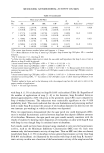
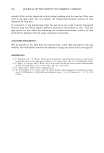
THREE-DAY MOLD ASSAY 57 (6) The United States Pharmacopeia, Twentieth Revision (1980). United States Pharmacopeia Convention, Inc., p 873. (7) Official Methods of Analysis of the Association of Offictal Analytical Chemists, 13th ed. (1980), Section 46.011, p 825. (8) FDA Bacteriological Analytical Methods, 5th ed. (1978), Microbiological Methods for Cosmetics, Chapter 23, p 6. (9) Microbiological Test Methods Compendium, Chemical Specialties Manufacturers Association (1983), Sec- tion F. (10) Consultations with Dr. John Thornton, Statistician--Mr. Sinai School of Medicine. (11) Personal communication with Mr. J. A. Komor, Manager of Avon's Applied Research Department.

j. Soco Cosmet. Chem., 37, 59-71 (March/April 1986) Determination of the dye distribution in human hair cross sections using a scanning photometer microscope G. BLANKENBURG and H. PHILIPPEN, German Wool Research Institute, D-51 O0 Aachen, P. BAURSCHMIDT, Carl Zeiss, D-7082 Oberkochen, and V. BOLLERT, Hans Schwarzkbpf GMBH, D-2000 Hamburg, West Germany. Received February 21, 1985. Presented at the Annual Meeting of the Society of Cosmetic Chew•ists, New York, December 6-7, 1984. Synopsis A photometer microscope with a computer-controlled fast scanning table is described. With a special software program cross sections of dyed human hair can be analyzed automatically with respect to dye distribution from the outside to the inside of the hair shaft. Very important for such a measurement is the production of microtome cross sections of defined thickness in a reproducible manner. With some direct dyestuffs the influence of dyeing time on the dye-distribution profile across the hair section is demonstrated. The advantage of carrying out these measurements at a specific wavelength at which the dyestuff has its maximum absorption is shown. INTRODUCTION The quantitative determination of hair color has been the subject of research for many years. The color has been measured with colorimeters on tresses and the results com- pared with visual assessment (1,4). Color formulae have been discussed and tolerance values have been set up. Absorption and reflectance spectrophotometry (1-3) have also been used to measure color at different wave lengths of the spectrum. These developments have led to the situation that color measurement instruments now belong to the normal equipment of laboratories and the measurement itself can be considered as a routine test. Although th• quantitative analysis of optical characteristics of hair tresses has a very practical application, it is not suitable for studying the dyeing process itself. It does not give any information about the variation in dyestuff uptake between hair fibers nor the location or distribution of the dyestuff within the cross section. Both parameters, how- ever, are very important for determining the nature of the dyeing process as they may relate to the kinetics of dyeing, levelling, and the fastness properties of the dyed fiber. For the optimization of the dyeing process it is therefore important to have an instru- mental tool available with which the dyestuff distribution in hair fiber cross sections can be determined. 59
Purchased for the exclusive use of nofirst nolast (unknown)
From: SCC Media Library & Resource Center (library.scconline.org)