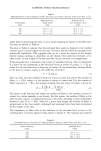
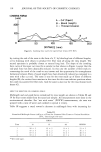
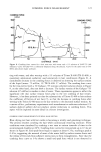
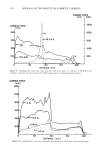
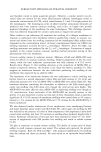
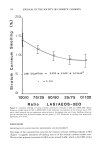
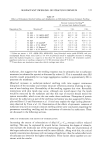
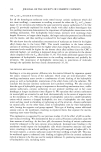
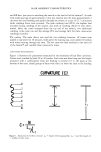
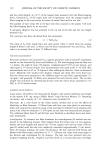
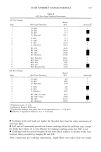
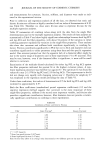
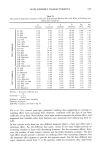
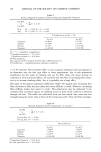
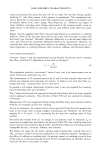
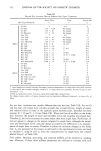
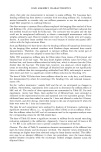
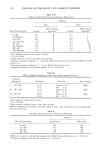
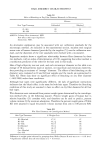
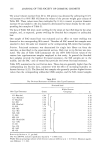
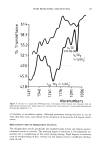
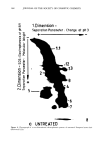
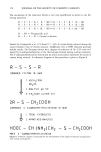
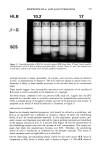
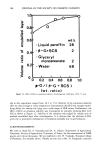
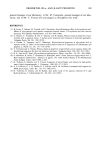
122 JOURNAL OF THE SOCIETY OF COSMETIC CHEMISTS COMBING FORCE (mN)- 3000 COMBING FORCE (mN) •-65%R H H , -II I I / I00 ,,'\--•- I 0 50 I00 150 200 DISTANCE (mm) - 2500 - 2000 - 1500 - I000 - 500 Figure 9. Combing force curves for a hair tress wet with water and a 1% solution of TR-X-400 (left ordinate). Curve for the same tress at 65% RH is also given for comparison (right ordinate). COMBING FORCE (mN) 12( ks 0.12 ks .:' Ill /0.18 ks ._./'--'-':/•':.-'%, ...'"' II/. ............. ""-A 3 k ' '-' "-' "' ...... •'/' I I I I ......... I I 0 50 I00 150 200 DISTANCE (ram) Figure 10. Combing force curves for a hair tress during drying at 60øC after various drying times.

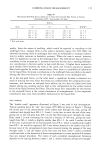
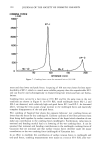
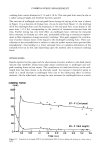
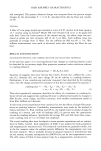
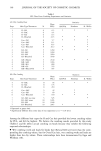
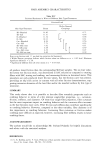
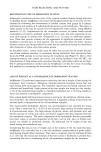
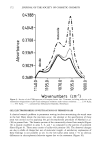
COMBING FORCE MEASUREMENT 123 combing force curves obtained at 0.12 and 0.18 ks. This end-peak force must be due to a rather unusual tangle and therefore has been ignored. The variation of midlength and end-peak forces during the drying of the tress is shown in Figure 11 as a function of drying time. As can be seen from Figure 11, the levelling off of the midlength force and the maximum in the end-peak force occur almost at the same time (--0.4 ks), corresponding to the removal of extraneous moisture from the tress. Further drying has very little effect on midlength force, whereas the end-peak force continues to decrease at a slow rate, presumably reflecting a continuous improve- ment in fiber alignment during successive combings. This again suggests the contribu- tion of surface tension forces of the liquid to the midlength combing force. Their con- tribution to the end-peak force is indirect in that the surface tension forces prevent fiber entanglement, thus leading to a lower end-peak force or complete elimination of the end-peak force (as in this case) depending upon the method used to measure combing forces. CONCLUSIONS Results reported in this paper and the observations of earlier workers in this field clearly indicate that interfiber interactions make major contributions to midlength and end- peak combing forces in hair tresses. The contribution of comb-hair friction to the mid- length force has been shown to be relatively small. An increase in humidity seems to result in a small decrease in midlength force due to the lubricating effect of surface moisture. On the other hand, wetting the tress increases the midlength force as a result COMBING FORCE (raN) 160 - 120 8( 4O 0 •-o-• x I I I 0.8 1.2 1.6 EP-2 (End-peek) o ML-2 {Mid length} I x---x I I I XX4'x--I 2.0 2.4 2.8 3.2 :3.6 TIME (ks) Figure 11. Variation of end-peak (EP-2) and midlength (ML-2) forces during the drying of a hair tress at 60øC.
Purchased for the exclusive use of nofirst nolast (unknown)
From: SCC Media Library & Resource Center (library.scconline.org)