124 JOURNAL OF THE SOCIETY OF COSMETIC CHEMISTS of swelling of the fibers, which makes the compression of fiber bundles between the teeth of the comb more difficult, and also increases the force required to overcome the surface tension forces of the liquid film which hold the fibers together. Wetting the hair assembly results in alignment of the fibers by the surface tension forces of the liquid film after elimination of entanglements. This leads to a drastic reduction in end-peak force to which entanglements make a major contribution. The reduction in wet combing forces with surfactant solutions suggests that the surface tension forces of the liquid make a definite contribution to the midlength force. These effects are further confirmed by the observed decrease in midlength force and increase in end-peak force as a result of removing capillary moisture from a wet tress combed during the process of drying. ACKNOWLEDGMENTS These studies comprised one aspect of work on the Textile Research Institute project "Studies of the Modification of Human Hair Properties by Surface Treatments," sup- ported by a group of Corporate TRI Participants. The authors would like to thank Ms. Margaret Ann Rogers and Ms. Hannelore Mark for their careful experimental work. REFERENCES (1) W. Newman, G. L. Cohen, and C. Hayes, A quantitative characterization of combing force, J. Soc. Cosmet. Chem., 24, 773-782 (1973). (2) W. C. Waggoner and G. V. Scott, Instrumental method for the determination of hair raspiness, J. Soc. Cosmet. Chem., 17, 171-179 (1966). (3) W. S. Tolgyesi, E. Cottington, and A. Fookson, Mechanics of hair combing, presented at the Sympo- siam on Mechanics ofFibroas Stractares, Fiber Society, Inc., Atlanta, Ga., May 14, 1975. (4) M. L. Garcia and J. Diaz, Combability measurements on human hair, J, Soc, Cosmet. Chem,, 27, 379 (1976). (5) A. C. Lunn and R. E. Evans, The electrostatic properties of human hair, J. Soc. Cosmet. Chem., 28, 549 (1977). (6) J. A. Epps and L. J. Wolfram, Combing differences between caucasian and black hair, J. Soc. Cosmet, Chem., 34, 213 (1983). (7) G. F. Scott and C. R. Robbins, The effects of surfactant solutions on hair fiber friction,J. Soc. Cosmet. Chem,, 31, 179 (1980).

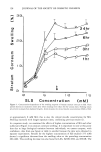
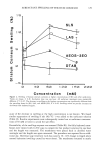
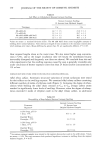
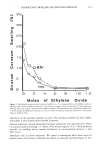
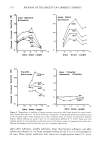
j. Soc. Cosmet. Chem., 37, 125-139 (May/June 1986) Surfactant structure effects on swelling of isolated human stratum corneum L. D. RHEIN, C. R. ROBBINS, K. FERNEE, and R. CANTORE, Colgate-Pahnolive Research and Development Center, 909 River Road, Piscataway, NJ 08854. Received November 8, 1985. Presented at the Society of Cosmetic Chemists' Annual Meeting, New York, December 5-6, 1985. Synopsis Many surfactants in solution induce swelling of isolated human stratum corneum beyond that of water (1-3). The highest levels of swelling observed were for anionic surfactants, and very little swelling occurs with cationics and nonionics (3). Stratum corneum swelling is frequently accompanied by curling of the membrane edges (4). We have now extended these studies to examine effects of other surfactants on swelling of stratum corneum. Swelling caused by surfactants increased with time, was concentration-dependent, was saturable with in- creasing concentration, and was reversible. Apparent saturation for sodium lauryl sulfate (SLS) occurs near the critical micelie concentration. The extent of swelling was reduced with increased ethoxylation of alkyl (C12-C14) sulfate. When Mg 2+ or triethanolamine were the counter ions rather than Na +, swelling by lauryl sulfate was reduced. For homologous series of various anionic surfactants (alkyl benzene sulfonates, alpha olefin sulfonates, alkyl sulfates, and paraffin sulfonates), maximal swelling occurred at either C 12 or C14 carbon atoms. For cationic surfactants, membrane shrinkage rather than swelling occurred at the longer incubation times. Surfactant interactions to reduce swelling were found, e.g. addition of alkyl ethoxy sulfates or amphoterics to SLS produced less swelling than the SLS alone. The results suggest mechanisms of action and a basis for in vivo irritancy of surfactants. INTRODUCTION It has been demonstrated (.1-3) that surfactants in solution induce swelling of isolated stratum corneum. For some surfactants swelling is accompanied by curling of the edges (4). Putterman et al. (3) examined the effects of a variety of surfactants on swelling of guinea pig stratum corneum. They reported that the highest levels of swelling were induced by the artionic surfactants, sodium laurate and sodium lauryl sulfate (SLS), while very little swelling was induced by cationic and nonionic surfactants. They con- cluded that swelling of stratum corneum results from a reversible conforrnational change due to cooperative binding of the detergent. It has also been suggested by Putterman et al. (3) that the micellization state of the surfactant solution may con- tribute to these swelling effects the concentration of free monomer varies depending on the critical micelle concentration. Some of us (2) previously studied the swelling response of human stratum corneum in more detail and found that in water and SLS solution the stratum corneum swells in 125
Purchased for the exclusive use of nofirst nolast (unknown)
From: SCC Media Library & Resource Center (library.scconline.org)