j. Soc. Cosmet. Chem., 37, 141-158 (May/June 1986) Prediction of hair assembly characteristics from single-fiber properties. Part II. The relationship of fiber curvature, friction, stiffness, and diameter to combing behavior C. R. ROBBINS and C. REICH, Colgate-Palmolive Research Center, Piscataway, NJ 08854. Received January 27, 1986. Presented in part at the SCC Annual Scientific Seminar, Anaheim, California, May 1984, and the 3rd International Hair Science Symposium, Syburg, West Germany, November 1984. Synopsis Results of studies are described relating force and work of quantitative combing to the single fiber proper- ties of curvature, friction, stiffness, and diameter. Tresses of straight, wavy, and kinky hair were treated with shampoo (sodium lauryl sulfate), creme rinse (stearalkonium chloride), a pomade (mineral oil/petro- latum mixture), or a hair bleach, and combed quantitatively. Fibers were then taken from the tresses, and curvature, friction, stiffness, and diameter measured. The data consisting of 27 sets of combing observa- tions, with each observation consisting of 5 to 10 replicas (tresses), were then evaluated via multiple regression analysis to relate the comparative effects of the single fiber properties to combing behavior. The results of this study indicate that curvature has the most important impact on combing and that the curvature effect increases as the hair becomes more curly. Fiber friction and stiffness also contribute signifi- cantly to combing behavior, while fiber diameter is of less importance. Increasing fiber curvature or fiber friction makes combing more difficult as expected however, increasing fiber stiffness results in lower combing forces. For pomade-type treatments, cohesive forces also serve to lower combing loads, probably by inhibiting formation of entanglements beneath the comb as it traverses through the hair in a manner analogous to fiber stiffness. INTRODUCTION A few years ago Scott and Robbins published a paper hypothesizing how changes in the behavior of hair assemblies (tresses or heads of hair) depend on changes in single-fiber properties (1). We described a matrix of relationships predicting how changes in combing ease, body, flyaway, manageability, and style retention of hair assemblies relate to changes in fiber friction, stiffness, curvature, diameter, weight, and static charge. The objective of this current paper is to describe the results of experiments done to test the hypothetical relationship between combing behavior and the relevant single-fiber properties: friction, curvature, stiffness, and diameter. 141

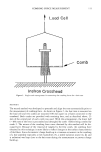
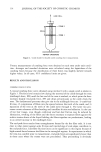
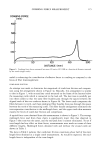
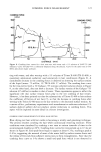
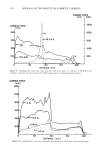
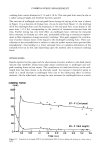
142 JOURNAL OF THE SOCIETY OF COSMETIC CHEMISTS EXPERIMENTAL HAIR Ten-inch European dark brown hair (Cau), 10-inch Oriental hair (O), and two different lots of 10-inch kinky hair (steam set Caucasian hair, KI & KII) were used in this study (2). Hair purchased from black subjects was also used. Tress preparatio,, Three-gram tresses of European and Oriental hair were prepared by weighing 3 grams of hair and carefully binding the root end with an 8.9 X 0.16-cm rubber band. Bundles of kinky hair (30 to 40 grams as received) (2) were bound with a rubber band behind the binding string, which was subsequently cut and removed. Swatches or bundles of hair were separated up to the rubber band and quickly pulled from the large bundle. Three and one-half to 4-gram tresses were made by binding the root ends carefully with a rubber band. Sodium lauryl sulfate (SLS) treatment. All tresses were washed with 10 percent sodium lauryl sulfate solution, rinsed with tap water, and combed out (root to tip) by starting near the tress bottom and working upward while holding it under the tap with water flowing through the hair. This is especially important to insure a relatively uniform starting state for the kinky hair. Generally up to ! gram of kinky hair was combed or pulled out of the tress during this preparation step, bringing the tresses to 3.0 -+ 0.5 grams. The tresses were then hung up to dry overnight or longer at 60 _+ 5% RH. Stearalkonium chloride (SAC) treatment. After SLS washing and drying, tresses were placed under the tap, wet out, and combed while under the tap until no snagging was encountered. A hard rubber comb with tooth spacings of approximately 2 mm was used. Each tress was carefully dipped into SAC solution [one percent SAC in eth- anol:water (30:70)] for one minute, removed, combed for 5 to 10 strokes, placed under the tap, combed five strokes, and quickly removed from the tap. For wet combing, the tress was immediately clamped to the Instron © and combed. For dry combing, the tresses were hung up to dry overnight at 60 -+ 5% RH, combed 10 to 25 strokes, placed on the Instron ©, and combed as indicated below. Bleaching treatment. After SLS washing and drying, tresses were wet with tap water and bleached with a mixture of 3.5% hydrogen peroxide, 2.5 % ammonium persulfate, and 5% potassium persulfate adjusted to pH 10 with ammonium hydroxide. The treatment was repeated 3 times at 10 minute intervals with fresh bleach solution (6 grams per tress). After the third bleaching, the hair was rinsed with tap water, washed again with 10% SLS, rinsed, combed for approximately 20 strokes (under the tap), and hung up to dry. Pomade or oil treatment. After SLS washing and drying, one-half gram of a mixture of 85% petrolatum and 15% light mineral oil herein called "oil" was added to each dry tress and spread throughout the hair by combing for approximately 25 strokes. The tress was hung until quantitative combing measurements were taken. QUANTITATIVE COMBING OF HAIR Dry combing. An attachment similar to the one described by Garcia and Diaz (3) was constructed to measure combability of human hair. Dry combing curves were recorded with swatches hand-combed 10 strokes for Cau and O hair, and 20 to 25 strokes for KI
Purchased for the exclusive use of nofirst nolast (unknown)
From: SCC Media Library & Resource Center (library.scconline.org)