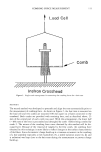
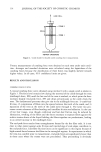
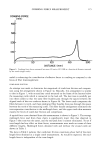
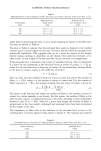
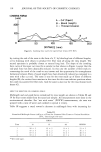
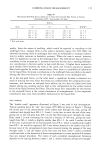
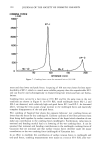
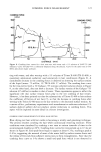
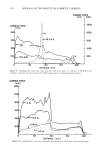
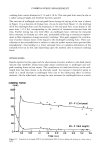
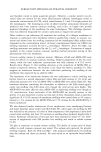
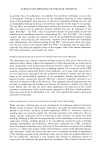
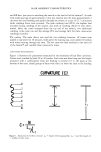
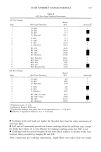
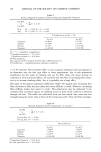
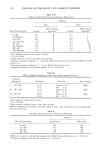
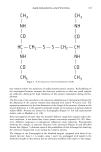
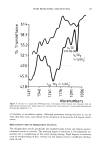
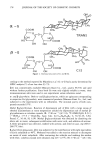
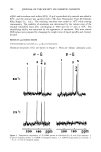
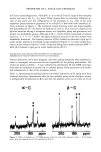
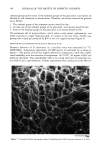
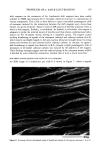
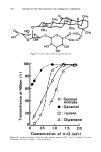
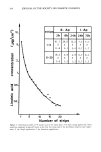
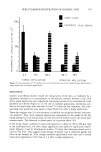
HAIR ASSEMBLY CHARACTERISTICS 143 and KII hair, just prior to attac•ing the swatch to the load cell of the Instron ©. A comb with tooth spacings of approximately 2 mm was inserted into the tress approximately 2 cm from the tress binding and pulled through the swatch at a rate of 12.7 cm/minute while combing forces were recorded. The peak combing load (PCL), the highest load recorded during combing of the swatch, and work of combing (ACL) (3) were deter- mined. After the comb emerged from the tip end of the swatch, two additional combing cycles were run and the average PCL and average ACL for three consecutive combings recorded. Wet combing. The same device was used for wet combing however, all tresses were soaked in tap water for 10 minutes, held under the running tap, and combed 20 strokes with water running through the tress. The wet tress was than attached to the load cell of the Instron © and combed three consecutive times. CURVATURE MEASUREMENT Figure 1 illustrates the parameters measured for the estimation of hair fiber curvature. Tresses were combed by hand 20 to 30 strokes. Each tress was then hung and the length measured with a cathetometer from the binding to several (15 to 20) spots at the bottom of the tress. Small groups of hairs were then cut from the tress at the binding CURVATURE (C) o I I T N C= LC/L l Figure 1. Estimation of the fiber curvature. L c = number of wave crests. = length of free-hanging fiber. L T = taut fiber length. N

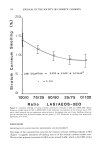
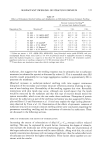
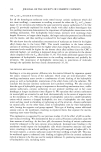
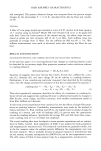
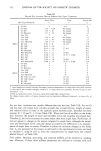
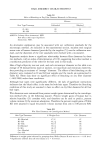
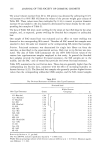
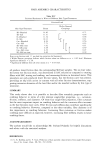
144 JOURNAL OF THE SOCIETY OF COSMETIC CHEMISTS and the curled length, L o of 15 of the longest hairs measured with the fibers hanging freely. Generally L c of the single hairs was in agreement with the average length of fibers hanging in the tress except for some oil-treated hair and for wet hair. The number of wave crests (N) in the hair were then counted to the nearest « N with the fiber hanging freely by its root end. A one-gram alligator clip was attached to the tip end of the hair and the taut length measured (LT). The curvature was then calculated from this expression: C = N/(Lc/L T) (1) The value of L c from single hairs was used except when it varied from the average length of fibers in the tress, in which case the latter measurement was used for L o Each value is an average from at least 15 different hairs. FRICTION MEASUREMENT Frictional resistance was measured by a capstan procedure with an Instron © attachment similar to that described by Scott and Robbins (4). The load hanging from the fiber was 1.1 grams, the angle of wrap 210 degrees, crosshead speed 0.051 cm per minute, and chart speed 2.54 cm per minute. Dry measurements were made at 60 --- 5% RH. Wet measurements were at 65 to 70 degrees F after soaking the hairs for 1 hour in deionized water. Mandrels were washed with absolute ethanol and dried after every third run. Friction values were measured at two different spots on each fiber, approximately 2.5 cm apart, and generally 10 fibers were measured for each friction value. The no-rinse sample was evaluated by determining friction with the entire setup immersed in 1% SAC in 30:70 ethanol:water. DIAMETER MEASUREMENTS Li,ear de,sity. Dry fibers were measured for length to the nearest millimeter and weight to the nearest 0.01 mg using a Roller Smith 3-mg Precision Balance (5). Assuming circularity, and a density of 1.32, diameters were calculated (6). Microscopy. As a cross check on the linear density method and to test the effects of bleaching on fiber diameter, 10 fibers from each hair type were glued to microscope slides and measured for diameter using a filar micrometer calibrated with stainless steel suture wire of known diameter (7). Five spots on each hair were measured and averaged. The calibrated fibers from O and KI hair were bleached as described above and diam- eters remeasured. Centrifugation. To estimate wet fiber diameters the centrifugation (8) method was em- ployed in the following manner. Hair samples from the tresses were cut into approxi- mately one-inch lengths and placed into 70-mm capped vials and tap water (100 de- grees F) added until the hair was completely immersed (approximately 13 ml water). After 10 minutes soaking, the water was decanted, the hair removed with forceps and blotted with filter paper, and placed in 11 X 100-ram test tubes with tissue paper in the bottom and centrifuged for 20 minutes. The hair was then removed into pre- weighed weighing bottles, weighed, and then dried in a vacuum desiccator overnight
Purchased for the exclusive use of nofirst nolast (unknown)
From: SCC Media Library & Resource Center (library.scconline.org)