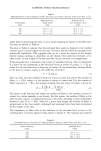
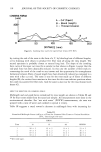
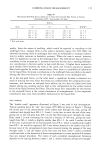
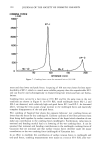
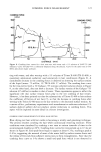
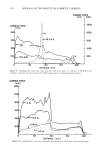
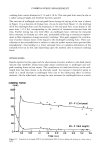
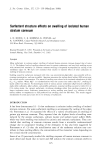
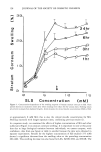
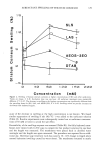
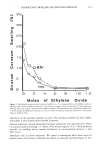
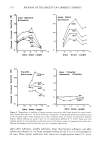
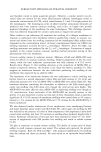
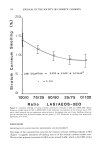
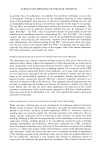
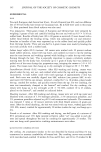
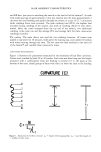
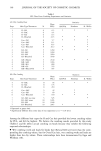
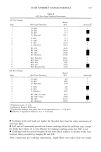
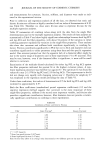
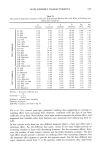
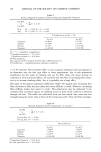
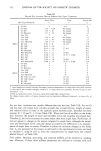
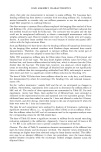
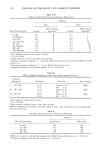
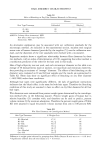
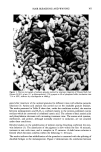
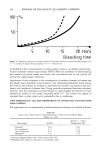
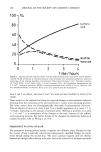
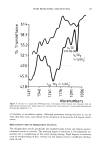
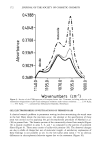
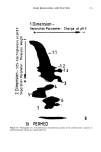
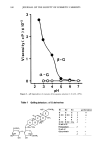
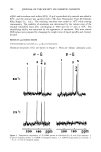
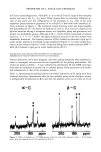
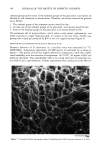
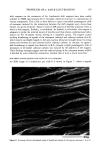
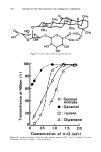
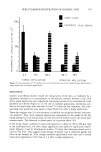
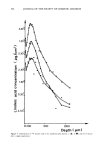
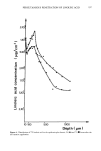
HAIR BLEACHING AND WAVING 161 • .• • •? • •. •- /' • • :: -' ..•" -'" " .- "'2 • • Figure 1. Electon micrograph of melanin granules isolated by enzymatic digestion of Chinese black hair (Giesen (3)) (0.3 g hair, O. 1 g dithioerythritol, 2.58 g papain in 40 ml phosphate buffer incubation time 72 h at 50øC isolation by centrifugation at 4000 g). gated after treatment of the isolated granules for different times with alkaline peroxide solutions (3). Amino acid analysis was carried out on the insoluble granule residues. The results presented in Table II show that, under the conditions studied, the reaction between melanoprotein and H202 is confined mainly to the protein-combined cystine residues which are converted to combined cysteic acid. The content of basic amino acids and phenylalanine decreases with increasing treatment time. The amino acids tyrosine, methionine, and proline, although normally sensitive to oxidation, are not attacked under these conditions. Detailed studies on the solubilization of melanin during bleaching confirmed the step- wise behavior (3). The dissolution of the pigment is slow within the first 10 minutes, increases in rate with time, and is complete in 25 minutes. A dark brown solution is formed which becomes colorless within the following 5-10 hours. The results indicate that solubilization of the granules is connected with the splitting of disulfide bridges in the melanoprotein. Figure 2 demonstrates the correlation between

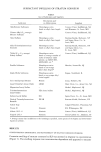
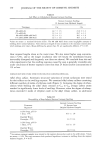
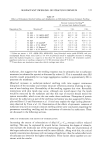
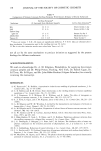
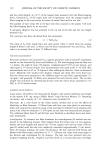
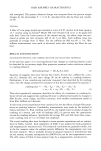
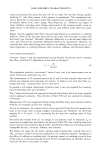
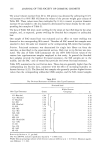
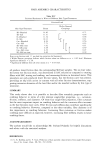
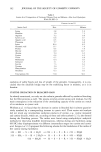
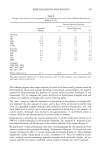
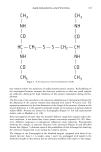
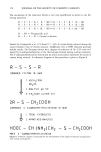
162 JOURNAL OF THE SOCIETY OF COSMETIC CHEMISTS Table I Amino Acid Composition of Untreated Chinese Hair and Melanin, After Acid Hydrolysis With 6N-HC1 (3) Content in mol % Amino Acid Hair Melanin Lysine 2.8 5.9 Histidine 1.0 7.5 Arginine 7.2 9.9 Cysteic acid 0.6 0.7 Aspartic acid 6.5 6.6 Threonine 7.7 6.0 Serine 10.4 8.2 Glutamic acid 13.7 7.6 Proline 9.5 7.9 Glycine 6.9 10.7 Alanine 5.4 6.2 Cystine 6.6 4.5 Valine 6.7 6.6 Methionine 0.4 0.3 Isoleucine 3.1 3.5 Leucine 7.3 6.3 Tyrosine 2.0 3.7 Phenylalanine 2.0 2.1 Ornithine 0.3 0.3 Total protein (%) 73.8 30.1 oxidation of sulfur bonds and loss of weight of the granules. Consequently, it is con- cluded that the disulfide bridge may be the stabilizing factor in melanin, as it is in keratins. CYSTINE OXIDATION IN BLEACHED HAiR As already mentioned, not only are the melanin granules affected by oxidative bleaching but the fiber proteins as well. The process involves several amino acid residues, but the main consequence is the reduction of the crosslinking capacity of the cystine as a result of its oxidation to cysteic acid. Wolfram et al. (1) found that the decrease in cystine in bleached hair is almost quantita- tively matched by a corresponding increase in cysteic acid. Their amino acid analysis did not reveal any intermediate oxidation products of cystine, e.g. cystine monoxide and cystine dioxide, which are, according to these and other authors (1,11), also formed during the bleaching process. The oxides were found using nonhydrolytic analytical methods for thiol plus disulfide determinations, whereas during acid hydrolysis using 6N HC1 they disproportionate via different intermediate stages into cystine and cysteic acid. Savige et al. (12) proposed the following scheme for the breakdown of the oxides of free cystine during hydrolysis: 3R - SO - S - R + H20 --- 2R - S - S - R + 2 R - SO2H 3 R - SO• - S - R + 2 H•O--- R - S - S - R + 4R - SO•H 5 R - SO•H --- R - S - S - R + 3R - SO3H + H20
Purchased for the exclusive use of nofirst nolast (unknown)
From: SCC Media Library & Resource Center (library.scconline.org)