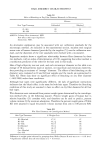
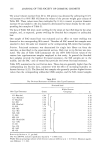
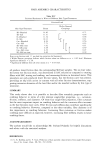
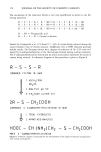
j. Soc. Cosmet. Chem., 37, 159-175 (May/June 1986) Bleaching and permanent waving aspects of hair research HELMUT ZAHN, SABINE HILTERHAUS, and ANNELIE STRO•MANN, Deutsches Wollforschungsinstitut, Veltmanplatz 8, D-5100 Aachen, West Germany. Received July 2, 1985. Presented at the 4th International Hair Science Symposium, Hohensyburg, West Germany, November 7-9, 1984. Synopsis Recent results from various hair research projects at the German Wool Research Institute are reviewed, describing the influence of bleaching and permanent waving on the morphological components and the protein structure of human hair. Modern analytical techniques such as two-dimensional gel electrophoresis and Fourier transform infrared spectroscopy as well as standard techniques of protein chemistry have been used. A new enzymatic method for the isolation of intact melanin granules is presented and the behavior of these isolated pigments during bleaching is described. Investigations on intermediate oxidation products of cystine are reported. An alternative method for the determination of the degree of reduction and reoxida- tion obtained after permanent waving treatment based on S-carboxymethylation and subsequent amino acid analysis is described. Hair material solubilized during permanent waving has been isolated and its chemical nature determined. The composition of these substances indicates that the cell membrane complex is one source of this soluble fraction. INTRODUCTION Numerous scientific publications on the reactions taking place in hair during perming or bleaching already exist. The scientist nevertheless has to ask whether new results from fundamental research in wool and human hair science could provide a deeper understanding of these well-established cosmetic processes. In recent years chemical analytical methods for wool and hair have been extended by the introduction of two-dimensional gel electrophoresis and Fourier transform infrared spectroscopy, as well as by new techniques being developed for the isolation of morpho- logical components. The application of these new techniques and of standard techniques of protein chemistry to problems in cosmetic chemistry is an aim of the work performed at the German Wool Research Institute (DWI) and is described below. BLEACHING OF HAIR The aim of bleaching human hair is a partial or complete oxidative degradation of the natural color pigment, and thus an optimum process should be aimed at reacting with the hair melanin. In practice, however, the hair protein is also attacked by the treatment reagents, and since the melanin granules are mainly within the cortex of the fibers, suitable treatment times result in oxidative modification of the cuticle proteins 159

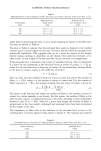
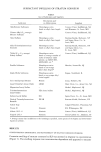
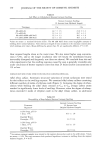
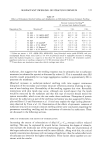
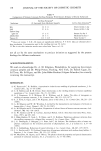
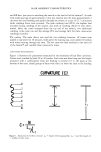
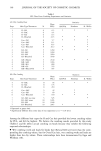
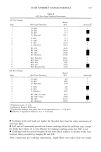
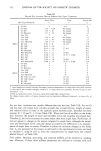
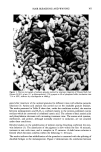
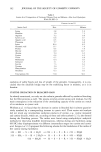
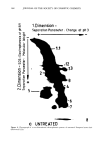
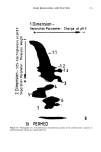
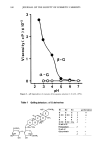
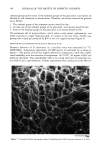
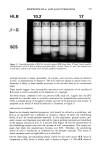
160 JOURNAL OF THE SOCIETY OF COSMETIC CHEMISTS and the cortex proteins as well. This is often referred to as bleaching or oxidative damage. The bleaching reagents most often utilized are aqueous solutions of hydrogen peroxide adjusted to pH values between 9 and 11. Although this treatment has been carried out in practice for several decades, there are relatively few older publications concerned with chemical or mechanical data on bleached human hair. There are, however, numerous articles on the subject of bleaching of wool, but this process is carried out at elevated temperatures in neutral or slightly alkaline media. Consequently it is not possible to transfer these findings to the substrate human hair. One of the first comprehensive reviews on the mechanism and kinetics of bleaching of hair was given by Wolfram et al. (1), including different aspects of irreversible changes in melanin and hair due to the treatment. Reaction of the bleaching reagent with the keratin protein as an unwanted simultaneous side reaction was also described earlier by Zahn (2). Newer results in this field from the German Wool Research Institute include a mild procedure for isolating melanin, bleaching experiments on isolated melanin with special attention to the dissolution of the melanoproteins, further evidence for intermediate oxidation products of cystine in bleached hair, and analysis of keratin proteins of bleached hair by two-dimensional gel electrophoresis. ISOLATION OF MELANIN AND ITS PROTEIN COMPONENT Giesen (3) has worked out conditions for an enzymatic digestion of human hair which allows the isolation of intact melanin granules (Figure 1). Using papain as the enzyme of choice, the investigator found a melanin content of 3.4%-3.5% on the weight of hair in different black human hair fibers, originating from India, China, and Europe. The protein content of the enzymatically isolated pigments ranged from 23-33%. This is considerably higher than the amount of 9.4% reported by Hall et al. (4). This dis- crepancy is conceivably due to the fact that the latter authors used a more destructive isolation method. Comparison of the amino acid composition of the protein found in the melanin granule (denoted as melanoprotein) with that of the total hair fibers, as given in Table I, shows obvious differences (3). Whereas the content of the basic amino acids lysine, arginine, histidine, as well as of glycine and tyrosine, is elevated in the proteins of the granules, the concentration of glutamic acid, serine, threonine, cystine, and proline is lower compared to the fiber keratins. BEHAVIOR OF MELANIN DURING THE BLEACHING PROCESS There have been numerous investigations on the modification of the fiber proteins during alkaline peroxide bleaching (2,5- 10) but few reports about the influence of this process on the melanin. One important study was by Wolfram et al. (1), who found that the bleaching reaction occurs in two steps: The initial solubilization of the granules is followed by the decolorization of the dark brown solubilized pigment. In our institute, changes in composition of the melanoprotein component were investi-
Purchased for the exclusive use of nofirst nolast (unknown)
From: SCC Media Library & Resource Center (library.scconline.org)