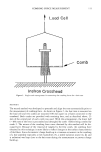
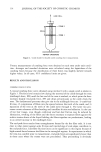
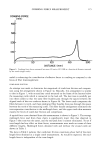
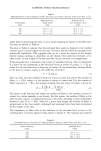
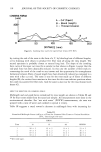
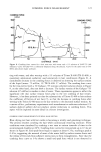
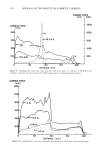
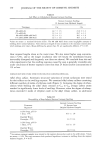
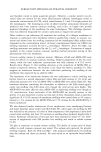
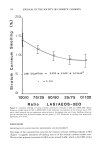
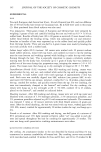
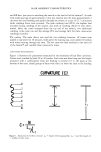
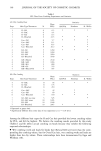
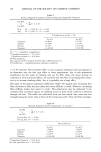
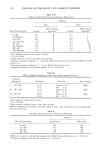
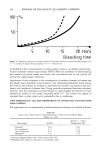
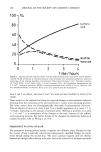
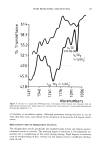
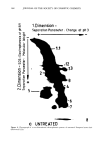
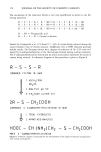
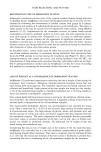
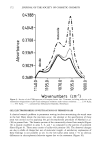
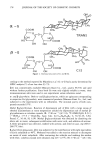
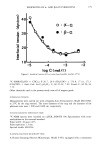
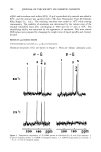
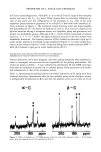
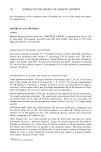
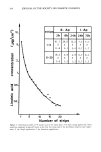
116 JOURNAL OF THE SOCIETY OF COSMETIC CHEMISTS (a) Load Cell Combs robs •'•1"[ "• I nstron Frame Instron Crosshead Figure 4. Schematic sketch of apparatus for measuring combing force (prealigning arrangement). END-PEAK FORCES As mentioned earlier, the end-peak force is assumed to arise mainly as a result of tangles formed by the fiber tips as the comb approaches the last few millimeters of the tress. If this assumption is correct, tress length should not have any effect on the end-peak force. In an effort to check this hypothesis, end-peak forces were measured at three different tress lengths by changing the position of comb insertion along the length of the tress, COMBING FORCE (iN) 120 - 80- 40 0 5o i00 150 DISTANCE (ram) Figure 5. Combing fbrce for an untreated, prealigned hair tress (20 cm) at 65% RH as a function of distance traversed by the combs.

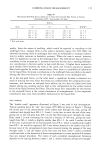
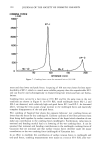
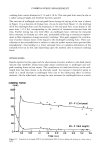
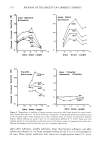
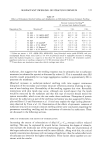
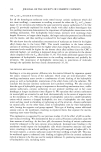
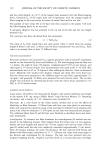
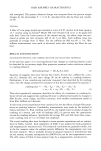
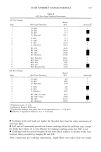
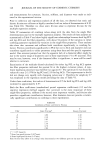
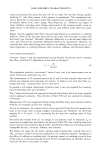
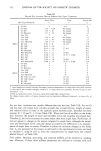
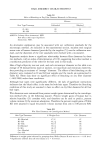
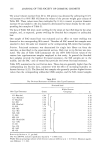
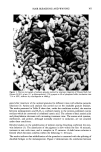
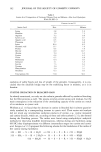
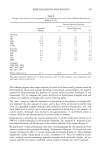
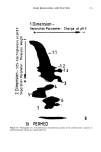
COMBING FORCE MEASUREMENT 1 17 Table I Midlength Forces in the Combing of a Hair Tress with and without Auxiliary Comb (65% RH, 2 IøC) Midlength Force, Midlength Force Tress Length Single Comb with Auxiliary Comb (mm) (mN) (raN) 100 38.2 -+ 2.9 20.6 -+ 3.9 150 33.3 -+ 2.0 20.6 -+ 2.0 200 36.3 -+ 4.9 18.6 _+ 2.0 rather than by shortening the tress, so as to avoid changing the nature of the fiber ends. The data are shown in Table II. The data in Table II indicate that the end-peak force seems to depend on the combed distance up to a certain length (in this case 150 mm), beyond which the increase is not statistically significant. This suggests that up to a point the nature of the tangles formed during combing is dependent on the distance the comb has traversed, or in other words, on the length of the free end that can get involved in entanglements. If the end-peak force is assumed to be a result of interfiber friction, then its magnitude F is given by the summation of the frictional forces at points of contact, fi = Ri where fi is the frictional force at the point of contact, R i the normal force between fibers at the point of contact, and Ix is the coefficient of friction: F = • niR i po. (1) Since in a hair tress the number of points of contact is some function of the number of fibers, n = f(N), where n is the number of points of contact and N is the number of fibers, and since n = •nl, the average end-peak force per point of contact is given by • __ • niR i • _ • niR i Ix (2) n fiN) The nature of the function that relates the number of fibers to the number of points of contact for a dense assembly is not known. For this reason, the number of fibers in the tress has been used as a normalizing factor in this work, assuming a linear relationship between n and N (n = kN). Since for a given tress length the number of fibers is proportional to the tress weight, midlength and end-peak forces have been normalized by the weight of the tress. The importance of fiber ends to the existence of the end-peak force is seen in the combing force curves for tapered tresses shown in Figure 6. The tapering was achieved Table II End-Peak Forces as a Function of Combing Distance Along the Same Tress (65% RH, 2 IøC) Combed Distance End-Peak Force (mm) (mN) 100 194 --- 15.7 150 273 + 36.0 200 286 + 36.0
Purchased for the exclusive use of nofirst nolast (unknown)
From: SCC Media Library & Resource Center (library.scconline.org)