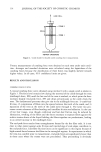
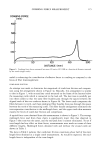
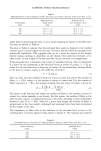
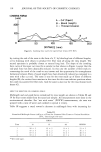
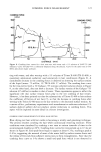
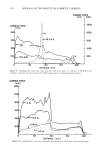
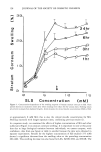
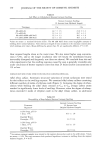
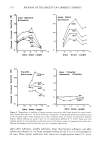
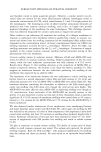
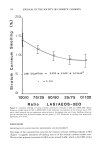
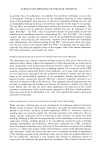
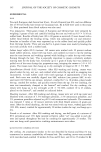
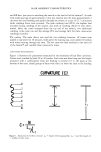
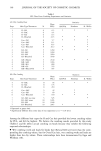
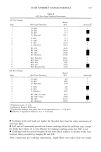
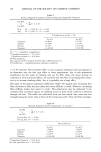
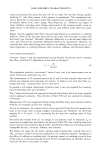
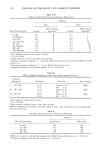
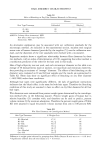
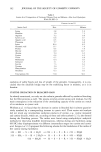
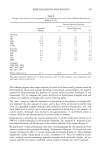
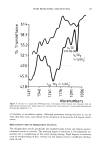
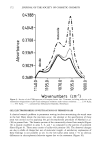
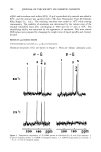
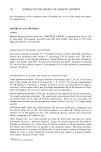
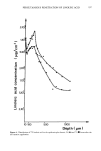
118 JOURNAL OF THE SOCIETY OF COSMETIC CHEMISTS COMBING FORCE (raN) I C- Thinned {she(•rs) 0 50 I00 150 200 DISTANCE (turn) Figure 6. Combing force curves for tapered hair tresses (65% RH). by cutting the end of the tress in the form of a V, by blending hair of different lengths, or by thinning with shears to produce free fiber ends all along the tress length. The second specimen is probably closest to natural long hair. The shape of the combing force curve of the taper cut tress (A) is similar to that shown in Figure 3 except that the end-peak force has been drastically reduced. In this case the number of fiber ends en- countering the teeth of the comb at any instant and the opportunity for entanglement formation between fibers of equal length have been drastically reduced as compared to a tress with a flat cut end. The same is true for the tress made up of fibers of different lengths (B) the various force maxima in the curve for this tress indicate positions where the comb encounters free fiber ends. And the same is also true for the tress thinned with shears (C). EFFECT OF MOISTURE ON COMBING FORCE Midlength and end-peak forces normalized by tress weight are shown in Tables III and IV for four tresses made from the same hair sample. All measurements were done in the environmental chamber. For "wet with water" (XVXVXV) measurements, the tress was sprayed with a mist of water and combed to spread it evenly. Table III suggests a trend toward a decrease in midlength force with increasing hu- Table III Normalized Midlength Forces (mN/g wt of Tress) for Untreated Hair Tresses at Various Humidities (28øC, Tress Length 140 mm) RH(%) Tress 30 65 90 WWW* 1 18 _+ 2 12 _+ 2 11 _+ 1 23 -+ 5 2 15 -+ 3 13 + 2 17 _ 1 36 + 7 3 19 -+ 2 12 _+ 2 14 + 3 48 _+ 6 4 19 + 2 18 + 4 13 -+ 4 36 -+ 4 Wet with water.

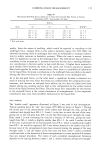
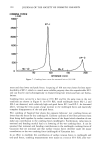
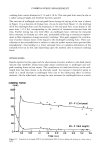
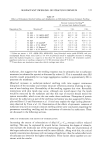
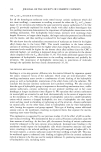
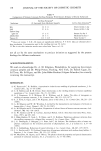
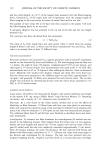
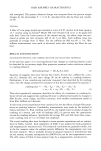
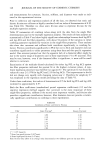
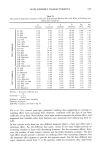
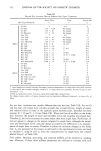
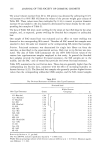
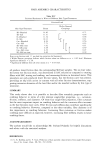
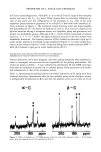
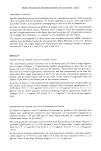
COMBING FORCE MEASUREMENT 119 Table IV Normalized End-Peak Forces (mN/g wt of Tress) for Untreated Hair Tresses at Various Humidities (28øC, Tress Length 140 mm) RH(%) Tress 30 65 90 WWW* 1 192 ñ 21 175 ñ 22 130 q- 16 51 ñ 4 2 307 ñ 44 238 ñ 23 221 ñ 23 56 ñ 7 3 241 ñ 15 227 ñ 33 232 ñ 36 46 ñ 3 4 305 ñ 18 262 ñ 22 293 ñ 49 39 ñ 3 * Wet with water. midity. Since the extent of swelling, which would be expected to contribute to the midlength force, changes little in this relative humidity region (30-90% RH), the observed decreasing trend in midlength force may be attributable to increased lubrica- tion by surface moisture as humidity increases. When the tress is wetted, however, there is a significant increase in the midlength force. The three factors that are likely to contribute to this increase are 1) increase in hair-hair friction due to swelling (deforma- rive contribution to friction) and/or in hair-comb friction, 2) higher forces required to pack swollen fibers between the teeth of the comb, and 3) forces required to separate fibers held together by surface tension forces. Since there is a possibility of lubrication by the liquid film, frictional contributions to the midlength force are likely to be small, leaving the other two factors to be the major contributors to the midlength force. As to the end-peak forces, on the other hand, a significant decrease is observed as a result of wetting the tress. Since the tresses are combed before the combing force mea- surement, this decrease in end-peak force reflects, the fact that the fibers have been aligned during pre-combing and are held in that configuration by the surface tension forces of the liquid between the fibers. Thus the major force responsible for the decrease in the end-peak forces is the virtual elimination of entanglements. A less important contribution may come from interfiber lubrication by the liquid film. WET COMBING The "double comb" apparatus illustrated in Figure 2 was used in this investigation. Typical combing forces for "dry" hair tresses (30% RH) are shown in Figure 7. During the initial part of the measurement, both combs slide through the tress, giving the combined mid-length force ML-1,2. Comb 1 is the first to reach the end of the tress, giving rise to the end-peak force EP-1 as the free fiber ends move through the comb. Only comb 2 is now traversing the tress for a distance of 100 mm, giving the mid- length force ML-2, which is slightly smaller than ML-1,2. As comb 2 reaches the end of the tress, it generates the second end-peak force EP-2, which is significantly smaller than EP-1. As would be expected, EP-2 was always observed to be smaller than EP-1 because most of the entanglements have been removed during the passage of the tress through comb 1, and the release of the free tress end from comb 1 under controlled conditions leads to the formation of fewer entanglements in a more reproducible manner than any manual procedure. The extent of such controlled entanglement formation depends on the spacing between combs 1 and 2, shorter distances giving less entangle-
Purchased for the exclusive use of nofirst nolast (unknown)
From: SCC Media Library & Resource Center (library.scconline.org)