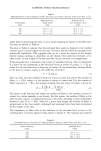
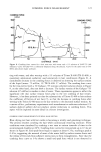
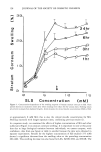
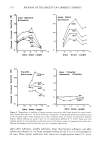
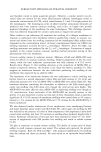
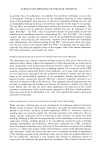
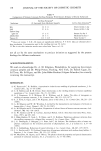
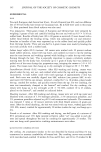
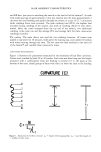
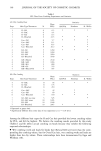
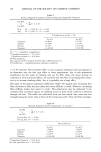
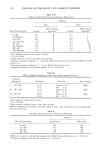
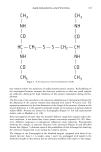
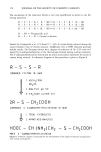
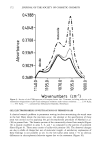
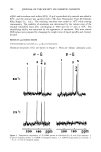
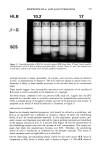
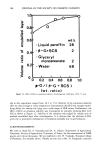
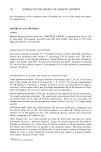
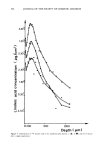
182 JOURNAL OF THE SOCIETY OF COSMETIC CHEMISTS of I3-G and/or sodium cetyl sulfate (SCS), 30 g of a prescribed oily material was added at 80øC, and the mixture was agitated with a TK Auto Homomixer Type M (Tokushu Kika Kogyo Co., Ltd.). The resulting emulsion was cooled to 30øC while stirring continuously. The stabili.ty of emulsions was determined by the volume ratio of the residual emulsified layer after centrifuging at 3000 rpm for 15 min at 30øC. The emulsifying ability was examined by the appearance of emulsions. Oils with various HLB values were prepared by changing the weight ratio of liquid paraffin and 2-hexyl- decanol. RESULTS and DISCUSSION PHYSICOCHEMICAL NATURES of or- and [3-GLYCYRRHIZINS Chemical structures of Gs are shown in Figure 1. They are tribasic carboxylic acids. 80 øC 2 1 3 1 45 2 5 25øC ß • I I I I,, 200 180 ppm 200 *SO ppm Figure 5. Temperature dependence of t3C-NMR spectra of individual Gs (10 wt% D20 solution). 1: C=O of triterpene moiety. 2: COOH of triterpene moiety. 3,4: COOH of glucuronic acid moiety. 5: - • = C - C = O of triterpene moiety.

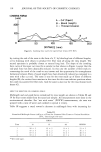
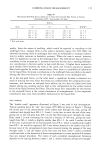
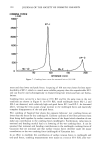
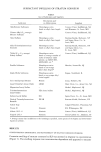
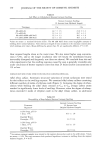
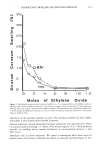
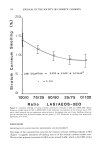
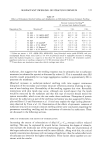
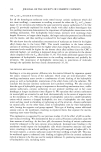
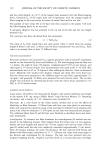
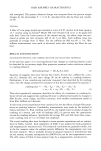
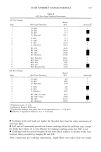
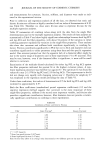
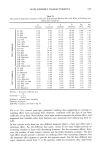
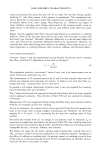
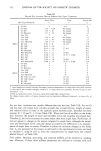
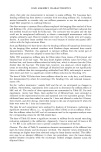
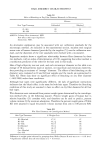
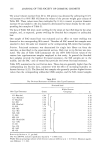
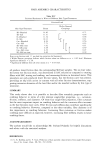
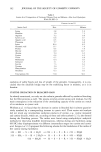
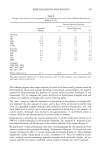
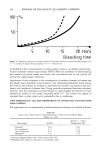
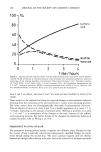
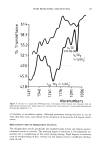
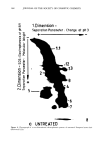
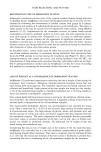
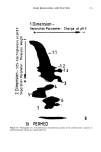
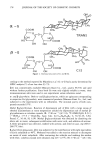
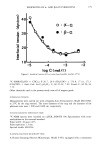
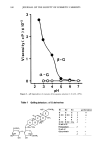
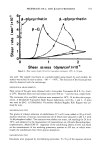
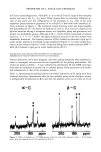
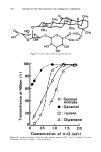
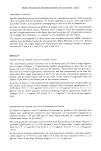
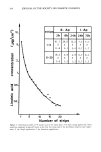
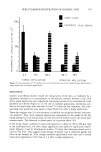
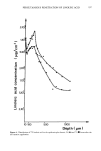
PROPERTIES OF or- AND IB-GLYCYRRHIZINS 183 ot-G has a transconfiguration, while IB-G is cis in which D and E rings of the triterpene moiety are bent at the C•7-C•8 bond. These isomers have no structural difference ex- cept at this point and the configuration of the hydrogen at C•8. One of the most important physicochemical properties of or- and IB-G is that both have interfacial ac- tivity as shown in Figure 2. The interfacial tension between water and liquid paraffin was diminished by 25-30 dyn/cm by addition of each G. This activity is based on the peculiar structure having a triterpene moiety as a lipophilic group and glucuronic acid moiety as a hydrophilic group. Although C.M.C. values of both compounds are almost equal (ca. 2-3 x 10 -4 mol/1), the physicochemical natures of the two isomers were remarkably dissimilar. The aqueous solution of IB-G formed an extremely rigid gel in acidic media, whereas ot-G showed no sign of gelation (Figure 3). It is also notable that, even in dilute solution below 0.1 wt%, in spite of being such a small molecule (MW = 840), I•-G formed a rigid gel in acidic media below pH 4.5. SOLUBILIZING AND GELLING MECHANISMS OF GLYCYRRHIZINS PROPERTIES OF VARIOUS DERIVATIVES OF GLYCYRRHIZINS Various derivatives of Gs were prepared, and their gelling properties were examined in order to investigate the structural factors responsible for the gelling mechanisms. The results are shown in Table 1. It was confirmed by preliminary IR and NMR investiga- tions that salt formation occurred first at carboxyl groups of the glucuronic acid moiety and subsequently at that of the triterpene moiety. Table 1, representing the gelling behavior of several derivatives of Gs along with their chemical structures, demonstrates that the free carboxyl group of the triterpene moiety is indispensable for gelation by IB-G and that the gelation never occurs when all of the I 35 4 5 I I I • I I 200 180 ppm 200 180 ppm Figure 6. Effect of Eu(fod) 3 on •3C-NMR spectra of Gs (10 wt% D20 solution), Eu/G = 0.05 (molar ratio). c•-G was measured at 25.0øC and •-G at 80.0øC.
Purchased for the exclusive use of nofirst nolast (unknown)
From: SCC Media Library & Resource Center (library.scconline.org)