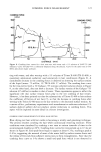
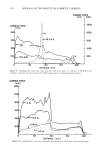
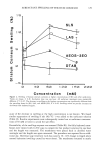
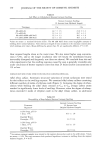
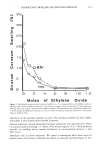
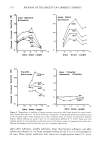
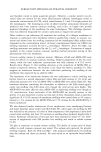
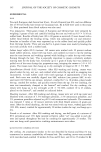
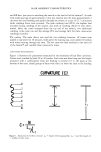
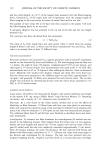
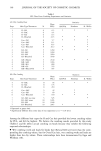
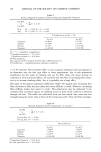
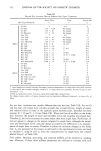
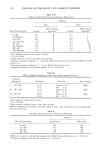
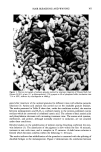
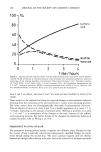
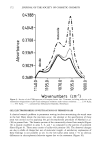
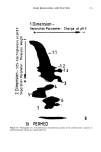
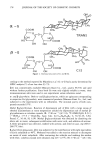
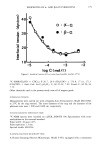
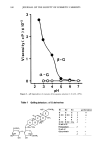
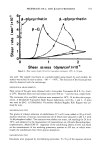
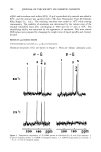
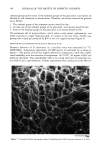
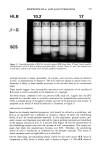
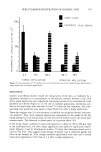
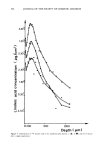
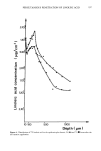
184 JOURNAL OF THE SOCIETY OF COSMETIC CHEMISTS carboxyl groups and/or some of the hydroxyl groups of the glucuronic acid moiety are blocked by salt formation or esterification. Therefore, the factors essential for gelation are as follows: 1. The carboxyl group of the triterpene moiety should be free. 2. At least one of the carboxyl groups of the glucuronic acid moiety should be free. 3. Some of the hydroxy groups of the glucuronic acid moiety should be free. The potassium salt of tx-glycyrrhetin, which takes a more planar conformation, was ready to produce a coagel (soap-type gel), in contrast to the case of Gs, thereby sug- gesting that a rigid gel produced by I3-G is not of a coagel structure (Figure 4). BEHAVIOR OF GLYCYRRHIZIN MOLECULES IN MICELLAR STATE Dynamic behavior of G molecules in a miceliar state was examined by •3C- NMR(CMR). Temperature dependence of CMR spectra of individual Gs is shown in Figure 5. The spectra of tx-G was slightly affected by temperature, while that of I3-G varied markedly with the elevation of temperature. At 25.0øC, all signals of I3-G can hardly be discerned. This undoubtedly reflects the strong restriction of molecular mo- tion of I3-G due to gel formation. Further experiments were conducted on the effect of Figure 7. Scanning electron micrograph image of lyophilized gel of I3-G aqueous solution (!.0 wt%).

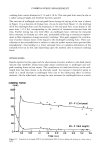
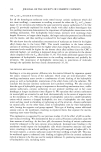
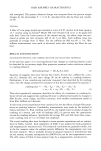
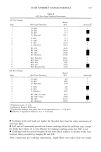
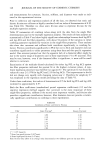
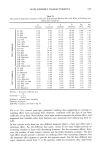
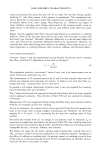
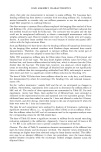
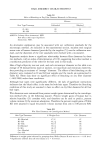
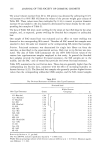
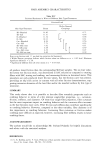
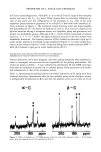
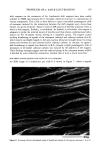
PROPERTIES OF tx- AND [3-GLYCYRRHIZINS 185 shift reagents on the resonances of Gs. Lanthanide shift reagents have been widely utilized in NMR spectroscopy (8) to elucidate chemical structure or conformation of various compounds. This is due to their ability to cause a noticeable paramagnetic shift of resonance induced by the interaction between the shift reagents and a Lewis base moiety of a given molecule. Figure 6 shows CMR spectra of miceIlar solutions of Gs in which a shift reagent, Eu(fod) 3, is solubilized. As Eu(fod) 3 is oil-soluble, this reagent is adequate to probe the internal nature of micelles and thus obtain conformational infor- mation on the triterpene moiety serving as a lipophilic group. The reagent caused striking broadening of signals of the triterpene carbonyl and carboxyl carbons of or-G, which may be ascribable largely to the spin-nucleus relaxation brought about by strong interaction between Eu and carboxyl and/or carbonyl carbons. In contrast, no appreci- able broadening of signals was observed in [3-G, though a slight paramagnetic shift of resonances of triterpene carboxyl carbons was induced by the addition of the reagent. These findings strongly suggest that the carboxyl group of the triterpene moiety of is blocked by some molecular interaction, whereas that of ot-G is much more free. SEM OBSERVATIONS/AQUEOUS SOLUTIONS OF GLYCYRRHIZINS An SEM image of a lyophilized gel of [3-G is shown in Figure 7, where a regular /. : . f- Figure 8. Scanning electron micrograph image of lyophilized sample of o•-O aqueous solution (l. 0 wt%).
Purchased for the exclusive use of nofirst nolast (unknown)
From: SCC Media Library & Resource Center (library.scconline.org)