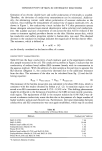
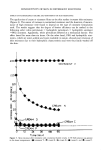
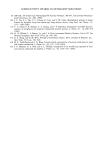
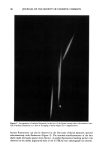
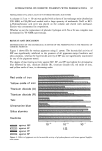
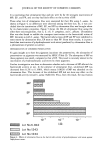
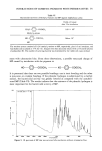
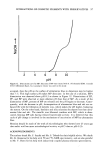
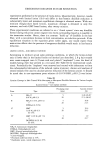
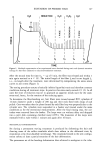
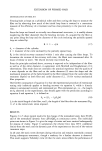
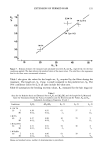
INTERACTIONS OF COSMETIC PIGMENTS WITH PRESERVATIVES 89 MP EP PP BP I •/ /•////////////////////•////.• :::::::::::::::::::::::::::::::::::::::::::::::::::::::::::::::::::::::::::::::::: ::::::::::::::::::::::::::::::::::::::::::::::::::::::::::::::::::::::::::::::::::::::::::: I I i i i i I 10 -• 10 -3 10 -• against EC. I.D. against PA. against CA. Figure 5. Effects of ultramarine blue on the bactericidal activity of p-hydroxybenzoic acid esters against three microorganisms. of p-hydroxybenzoic acid esters by ultramarine blue could hardly be explained by simple adsorption of preservative on the pigment. DECOMPOSITION OF P-HYDROXYBENZOIC ACID ESTERS BY COSMETIC PIGMENTS At 120øC for 1 hr, some of the pigments caused slight decomposition of MP and EP (Table IV). The degradation product was mainly p-hydroxybenzoic acid. However, in Table II Determination of Preservative Adsorption Quantity of adsorbed MP EP Red oxide of iron X X Yellow oxide of iron X C) Titanium dioxide (A) X A Titanium dioxide (R) X X Talc X X Ultramarine blue X C) Kaolinite x x Silica alumina X C) x: less than 5%. A: from 5% to 10%. C): more than 10%.

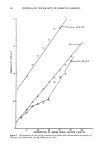
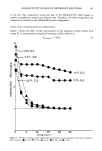
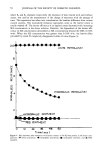
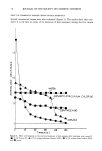
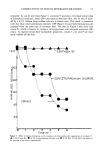
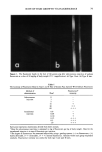
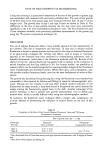
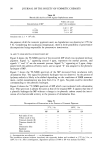
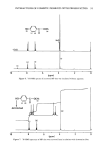
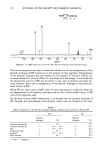
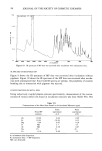
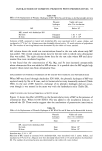
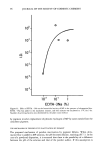
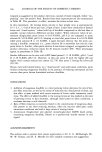
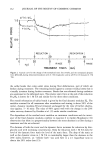
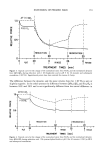
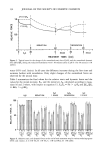
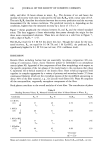
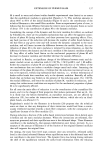
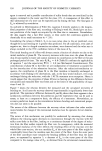
90 JOURNAL OF THE SOCIETY OF COSMETIC CHEMISTS Table III Bactericidal Activity of MP Against Staphylococcus aureus Concentration of MP Viable cell count after 5-hr incubation -- •.49 x 108 0.19% 9.8 x 10² 0.20% 7.4 x 10² Inoculum size: 2.1 x 10 8 cells. the presence of all the cosmetic pigments used, no degradation was observed at 37øC for 5 hr. Considering the incubation temperature, there is little possibility of preservative decomposition being responsible for preservative inactivation. •H AND •3C-NMR SPECTRA OF RECOVERED MP Figure 6 shows the •H-NMR spectra of the recovered MP which was incubated without pigment. Signal "a," appearing around 4 ppm, represents the methyl protons, and signals "c" and "d" are the aromatic protons. Signal "b," appearing at 9 ppm, disap- peared with the addition of heavy water, and so signal "b" was assigned to the phenolic hydrogen of MP. Figure 7 shows the •H-NMR spectrum of the MP recovered from incubation with ultramarine blue. The signal for phenolic hydrogen was not observed. As the proton of hydroxy radicals is likely to be shifted depending on the conditions of NMR measure- ment, careful reexamination was done from 0 to 15 ppm. No peak could be identified corresponding to the phenolic hydrogen. Figure 8 shows the •3C-NMR spectrum of MP which was incubated with ultramarine blue. This spectrum is almost the same as that of the original MP. It appears that loss of a phenolic hydrogen by MP without a change in its phenolic carbon caused the inacti- vation of its bactericidal activity in the presence of ultramarine blue. Table IV Decomposition of Preservatives in the Presence of Cosmetic Pigments 37øC, 5 hr 120øC, 1 hr MP EP MP EP Red oxide of iron -- -- -- Yellow oxide of iron -- -- -- Titanium dioxide (R) -- -- + Titanium dioxide (A) -- -- -- Talc -- -- + Ultramarine blue -- -- + + Kaolinite -- -- -- Silica alumina -- -- + +' decomposition was observed. -: no decomposition. The incubation mixture (without inoculum) was vigorously shaken and incubated at 37øC for 5 hr, or ß 120øC for 1 hr. After centrifugation, degradation products of MP or EP were analyzed by HPLC.
Purchased for the exclusive use of nofirst nolast (unknown)
From: SCC Media Library & Resource Center (library.scconline.org)