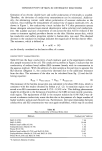
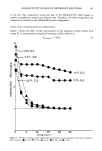
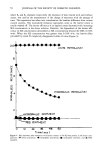
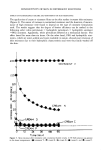
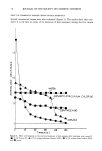
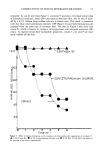
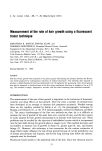
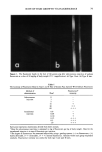
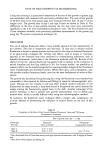
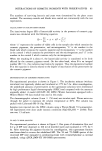
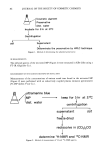
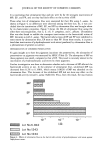
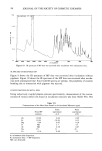
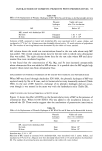
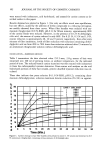
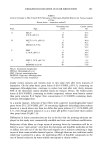
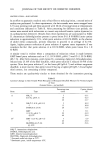
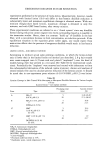
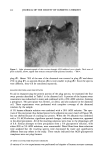
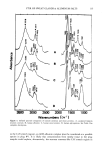
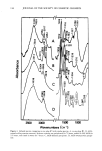
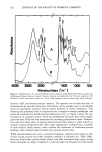
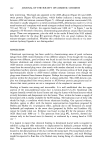
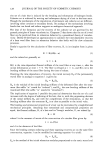
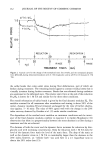
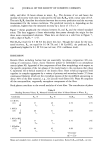
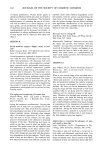
112 JOURNAL OF THE SOCIETY OF COSMETIC CHEMISTS Figure I. Light photomicrograph of thin section through ACH-inhibited sweat glands. Dark areas of poral occlusion, arrows, appear near stratum corneum/viable epidermal interface. -- 100 X. plug # 1. About 70% of the area of the diamonds was covered in plug #2 and about 25% in plug # 1, so spectral dilution effects were smaller in plug #2. Since the spectra were different, they will be considered separately. RELATED PROTEINS AND PRECIPITATES To aid in characterizing the protein portion of the plug spectra, we examined the four sweat proteins described in Table I in the diamond cell. A portion of the human sweat concentrate was redissolved in water and combined with a 20% ACH solution, forming a precipitate. This precipitate was filtered, air dried, and also analyzed in the diamond cell. These experiments were performed with complete coverage of the diamond windows by the sample. A 5% human albumin solution was combined with a 20% ACH solution. The spec- trum of the precipitate thus formed proved to be albumin (an exact match of Figure 3B, but not shown) because of a salting out process. When the 5% albumin was combined with a 5% ACH solution, significant spectral changes, indicating interaction, appeared in the dried precipitate. All of the resulting solutions were close to the physiologic pH of 6.0. Similar attempts to form precipitates from a 5% glycoprotein solution, with either 20% or 5% ACH solutions, were unsuccessful. Dried films from these solutions were analyzed but the resulting spectra were dominated by water and significantly different from any others in the study. These results indicated that ACH-glycoprotein complexes were not plug formers. IN VITRO ACH-TREATED STRATUM CORNEUM A variety of in vitro experiments was performed on biopsies of human stratum corneum

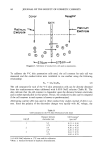
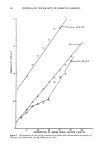
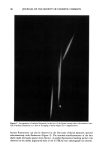
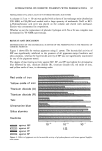
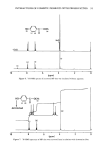
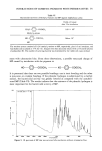
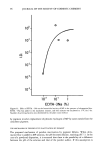
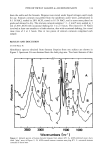
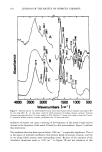
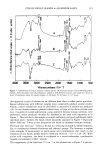
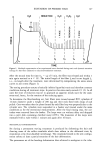
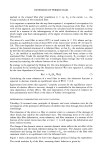
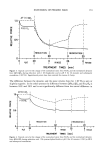
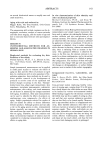
FTIR OF SWEAT GLANDS & ALUMINUM SALTS 113 from the axilla and the forearm. Biopsies were stored under liquid nitrogen until ready for use. Stratum corneum was peeled from the epidermis under water, prehydrated in 0.1 N NaCI, soaked in 20% ACH, rinsed in 0.1 N NaC1, and in most cases placed on grids and allowed to dry. The stratum corneum samples (-- 1-2 mm 2) were soaked in 1 mL of 20% ACH with occasional shaking for 1 to 2.5 hours. The rinses (0.1 N NaC1) involved at least one transfer to a fresh solution, also with occasional shaking, for a total rinse time of 2 or 3 hours. One or two pieces of stratum corneum comprised each sample. RESULTS AND DISCUSSION IN VIVO PLUG # 1 Absorbance spectra obtained from forearm biopsies from one subject are shown in Figure 2. Spectrum 2A was obtained from the dark plug area. Two basic features of this A I i I I /, 35OO 3000 1500 1000 Wavenumbers {cu '1 } Figure 2. Infrared spectra of human forearm biopsies from subject #1: A, ACH-inhibited sweat ducts (dark "plug" areas in Figure 1). B, ACH-treated stratum comeurn near plug #1. C, untreated stratum corneum in ductal area.
Purchased for the exclusive use of nofirst nolast (unknown)
From: SCC Media Library & Resource Center (library.scconline.org)