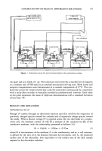
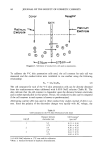
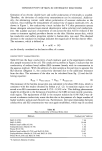
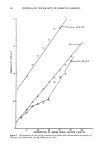
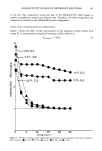
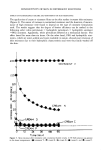
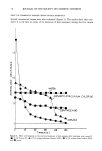
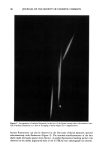
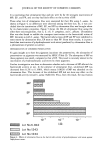
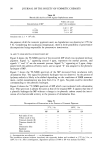
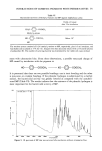
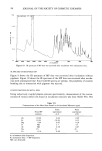
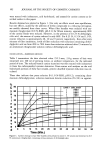
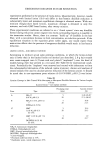
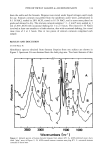
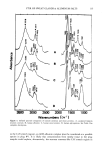
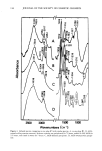
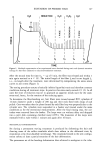
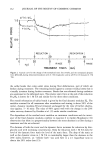
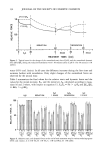
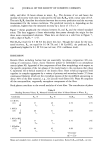
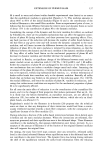
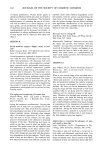
132 JOURNAL OF THE SOCIETY OF COSMETIC CHEMISTS w w REOXIDATION J REDUCTION 0 2o 2o 0 I TREATMENT 0 20 0 25 0 H20 RINSE I TIMES [mini RINSE Figure 2. Typical curve for the change of the normalized static force F(t)/F 0 and the normalized dynamic force AF(t)/AF 0 during reduction/reoxidation with 0.3 M thioglycolic acid at pH 9 for 20 minutes (0.3 M TA). the sulfur bonds that come under stress during fiber deformation, part of which are broken during treatment. The remaining bonds support a constant residual stress that is virtually invariant during further treatment. Bonds that are reformed during oxidation are unstrained in the deformed state. The relative static force at the end of the reduction F(t2)/F 0 is lowest for 1 M TA and similar for the three other conditions. The overall reformation of sulfur bonds is given by the final dynamic modulus Ergo . The modulus attained for all treatments after reoxidation and rinsing is about 90% of the initial, dynamic modulus Eg and remained unchanged for the time of further observa- tion (approx. 5-10 rain). The value of 90% agrees well with the change in the 20% index recovery observed by Gershon et al. (2) under similar conditions. The dependence of the residual static modulus on treatment conditions and the invari- ance of the final dynamic modulus combine in equation 6 to explain Munakata's (14) observation that there is a proportionality between the stress decrease in a fiber during a treatment and the set achieved. The decrease of both the static and the dynamic forces increases for reduction by thio- glycolic acid with increasing concentration. Only for reduction with 1 M TA does the level of the dynamic force reach the level of the static force. The drop of the static as well as the dynamic stress in 1 M TA is considerably larger than the decrease in the 20% index however, an "infinite bath" was used here vs a 2:1 liquor/hair ratio to obtain the 20% index data (15).

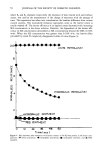
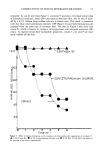
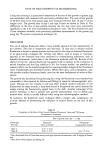
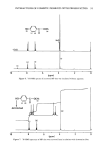
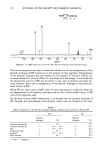
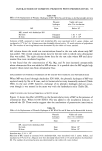
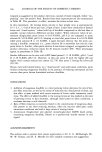
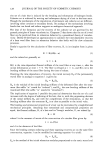
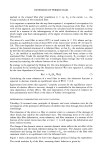
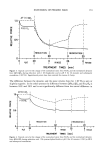
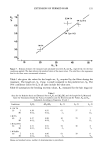
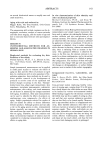
EXTENSION OF PERMED HAIR 133 1.0- 0.5 AF(t)/&F o F(t)/F o I i\• ! I I o 20 o I I RINSE TREATMENT TIMES I I I REOXlDATION I 0 2o 25 0 I I RINSE [rnin] Figure 3. Typical curve for the change of the normalized static force F(t)/F o and the normalized dynamic force AF(t)/AFo during reduction with 1 M thioglycolic acid at pH 9 for 20 minutes and subsequent reoxidation (1 M TA). Experimental points have been omitted for reasons of clarity. The difference between the dynamic and the static relative force for 1 M TA is zero or slightly negative. In the other systems the difference between AF(t2)/AF o and F(t2)/F o is between 10% and 20% and is not significantly different from the initial difference in hi 1.0- 0,5- AF(t)I AF o F(t)IF o [ REDUCTION I I REOXIDATION [ 0 • 0 20 0 , , , I ' I , I , I , I , I ' I I ' I , I , I 0 20 0 25 0 I H20 I I RINSE I I RINSE TREATMENT TlklES [mini Figure 4. Typical curve for the change of the normalized static force F(t)/F o and the normalized dynamic force AF(t)/AFo during reduction with ! M cysteine-hydrochloride at pH 8 for 40 minutes (1 M Cys-HCI) and subsequent reoxidation.
Purchased for the exclusive use of nofirst nolast (unknown)
From: SCC Media Library & Resource Center (library.scconline.org)