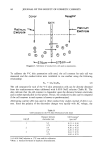
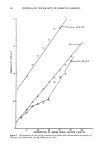
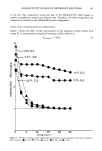
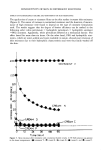
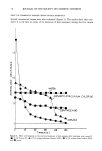
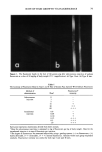
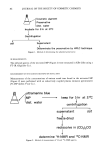
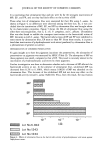
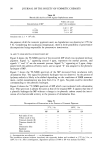
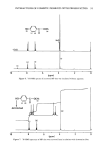
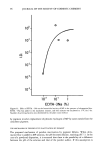
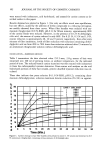
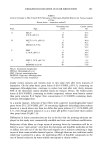
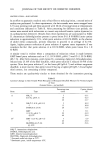
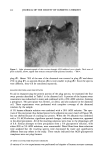
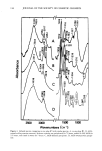
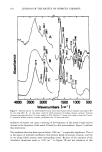
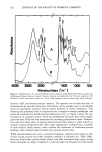
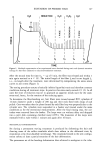
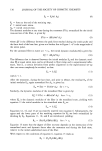
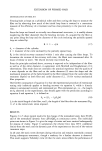
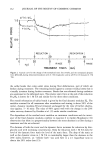
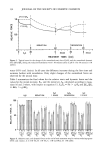
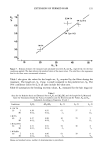
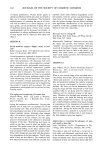
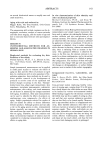
70 JOURNAL OF THE SOCIETY OF COSMETIC CHEMISTS where R t and Rc represent respectively the resistance of skin treated with and without cream, was used as the measurement of the change of resistance with the passage of time. This expression has taken into consideration the baseline difference from various control systems. The normalized resistance approaches unity as the barrier cream is totally washed off. The barrier efficiency of an applied cream decreased with increasing SLS concentration in the donor solution. However, the dependence of the barrier effi- ciency on SLS concentration diminished at SLS concentrations beyond the CMC (0.30% w/w). When the SLS concentration was greater than 0.30% w/w, the barrier effect provided by cream D completely disappeared within 36 min (Figure 3). WHFFE PETROLATUI',4 HYDROFH ILIC PETROLATUM 2 HIyDROPH i LIC OINTMENT 12 24 Ti me ( rain ) Figure 4. Skin resistance after treatment with barrier creams. 0.5% SLS was present in the donor com- partment. (•) white petrolatum, (0) hydrophilic petrolatum, (.) hydrophilic ointment, and (I,) PEG ointment.

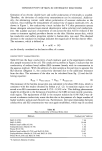
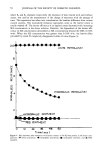
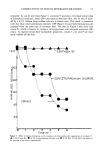
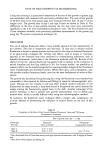
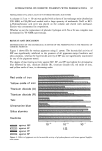
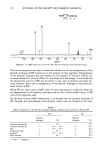
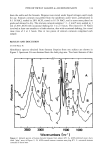
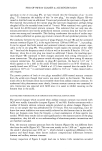
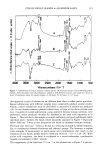
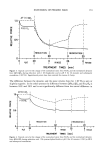
CONDUCTIVITY OF SKIN IN DETERGENT SOLUTIONS 71 EFFECT OF PHARMACOPEIA CREAMS AND OINTMENTS ON SKIN RESISTANCE The application of cream or ointment films on the skin surface increases skin resistance (Figure 4). The extent of increase in normalized resistance and the duration of mainte- nance of high resistance were found to depend on the type of ointment formulation used. The results suggest that the degree of barrier efficiency can be ranked in the following order: white petrolatum hydrophilic petrolatum hydrophilic ointment •PEG ointment. Apparently, white petrolatum behaved as a mechanical barrier. The effect lasted for more than six hours. On the other hand, PEG and hydrophilic oint- ments, which are water-soluble and water-washable in nature, showed poor retention of skin resistance due to their hydrophilic characteristics and were thus easily washed off the skin. 200• 100• I 01NTM E NT V CREAM c 0 12 24 36 48 60 Time(mir,) Figure 5. Skin resistance after treatment with commercial barrier creams. 0.5% SLS solution was present in the donor compartment. (0) ointment V, (•) cream N, (I,) cream D, (I)cream C, and (I) cream P.
Purchased for the exclusive use of nofirst nolast (unknown)
From: SCC Media Library & Resource Center (library.scconline.org)