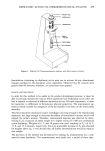
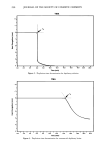
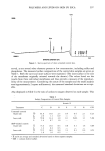
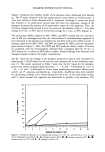
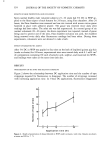
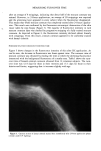
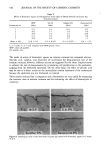
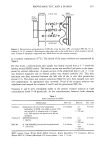
296 JOURNAL OF THE SOCIETY OF COSMETIC CHEMISTS EXPERIMENTAL MATERIALS AND SAMPLE PREPARATION The membranes were derived from neonatal rats obtained from Marland Farms using a procedure described previously (4). In brief, the excised skin samples were immersed in 60øC water for 30 seconds, and the stratum corneum membranes were carefully peeled away from the rest of the tissue. They were then air dried after careful flattening onto sheets of Teflon film. Throughout the procedure, care was taken to identify the outer surface and inner surface of the membranes. The two cationic cellulosic conditioning polymers used in this study, viz., UCARE Polymer JR 400 (CTFA designation Polyquaternium-10) and QUATRISOFT TM LM-200 Polymer (CTFA designation Polyquaternium-24), are products of Union Car- bide Corporation. The chitosan sample was of medium molecular weight, with a 1% aqueous solution viscosity of 2500 cps. Membranes were exposed to solutions of the polymers (0.1 weight % in distilled water) for 30 minutes with intermittent agitation, followed by three 30-second rinses in distilled water. The conditioned and rinsed mem- branes were air dried, as indicated above, on sheets of Teflon film. In cases where the membranes were pre-exposed to sodium dodecyl sulfate (SDS) solutions (1 weight % in distilled water), 30-minute exposures were used, again followed by three 30-second rinses. The emollients examined were castor oil, mineral oil (Arcoprime 350), oleic acid, gly- cerid acid (Agent G II, Westvaco), and lanolin. SDS treatment of membrane samples used in the emollient study was as noted above. Emollient treatments were performed at a level of 2.5 microliters/square centimeter applied to the outer skin surface, with the oils gently rubbed in for two minutes. The membranes were held in this condition for 30 minutes and then subjected to an SDS wash, rinse, and air drying, again under the conditions described above. ESCA ANALYSIS The membranes were analyzed as received using a Surface Science Laboratories Inc. SSX-100 ESCA spectrometer. The samples were mounted on a computer-controlled, rotating stage, using double-sided adhesive tape, such that no tape was present in the analysis area. The instrument is regularly calibrated to give the Au4f7/2 photoelectron peak at 83.93 eV and the Cu2p3/2 peak at 932.47 eV. An analysis area of approxi- mately 2 square millimeters was used throughout. All analyses were performed using an electron flood gun to provide charge compensation, and measured binding energies were charge-corrected to the principal C ls photoelectron line at 284.6 eV. Quantita- tion and peak fitting of high-resolution spectra were performed using software supplied by the manufacturer. RESULTS AND DISCUSSION CONTROL MEMBRANES AND THE EFFECT OF SDS WASHING Figure 1 is a representative survey spectrum of a sample of untreated control skin. Photoelectron peaks corresponding to carbon, oxygen, and nitrogen are readily ob-

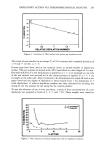
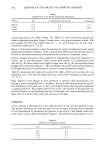
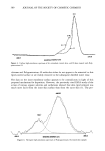
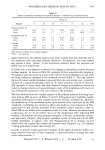
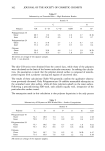
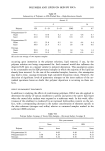
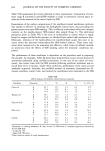
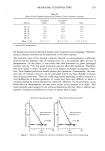
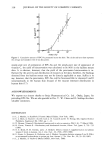
POLYMERS AND LIPIDS ON SKIN BY ESCA 297 Cls 2OOO 01 s I BINDING ENERGY (eV) Figure 1. Survey spectrum of clean unwashed control skin. O.O served, as are several other elements present at low concentration, including sulfur and phosphorus. The measured surface compositions of the control skin samples are given in Table 1. Both the outer and inner surfaces were examined. (The inner surface is the side of the membrane originally oriented towards the dermis.) The values listed are the results from three individual membranes and thus provide a measure of the reproduci- bility of the measurement. Considering the nature of the samples and the small analysis area (approximately 2 square millimeters), the measured standard deviations are accept- able. Als0 displayed in Table I is the ratio of carbon-to-oxygen observed on each sample. This Table I Surface Composition of Control Skin Samples Atomic % Treatment C O N S P Si C/O Untreated controls Outer side Inner side SDSb-washed controls Outer side Inner side 81.0 13.0 2.3 0.4 0.4 2.1 6.23 2.9 1.1 0.9 -- 79.8 13.4 3.0 0.1 N.D. 1.1 5.96 1.4 0.7 1.0 -- -- -- X 73.4 15.0 8.3 0.8 0.1 1.4 4.89 S 1.2 0.4 0.3 -- -- -- -- X 72.5 16.0 9.0 1.3 0.3 0.4 4.53 S 1.6 1.0 0.2 -- -- -- and S are average and standard deviations based on three separate samples. SDS = sodium dodecyl sulfate.
Purchased for the exclusive use of nofirst nolast (unknown)
From: SCC Media Library & Resource Center (library.scconline.org)