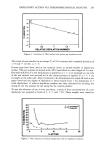
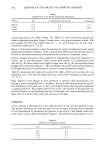
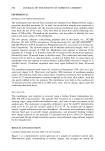
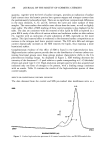
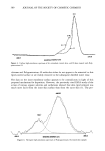
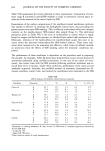
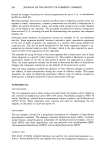
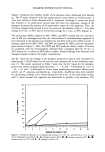
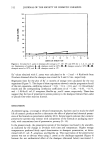
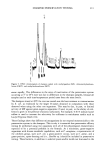
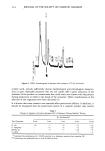
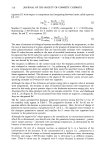
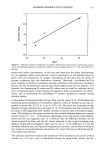
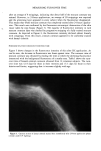
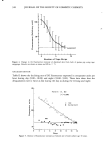
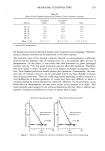
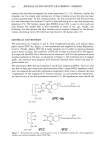
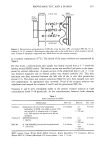
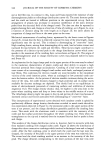
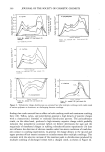
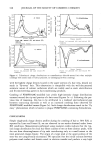
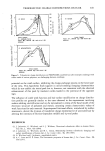
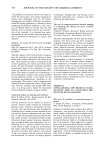
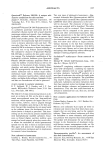
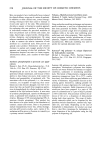
300 JOURNAL OF THE SOCIETY OF COSMETIC CHEMISTS 299.8 C-C c.o } 279.8 BINDING ENERGY {eV) Figure 3. Carbon high-resolution spectrum of A) unwashed control skin, and B) skin treated with Poly- quaternium-24. chitosan and Polyquaternium-10 molecules either do not appear to be attracted to this lipid-covered surface or are readily removed in the subsequent distilled water rinse. The data on the inner membrane surface appears to be contradictory in light of this proposed mechanism for deposition. However, the previously cited ESCA study of the action of various organic solvents and surfactants showed that skin lipid removal was much more facile from the inner skin surface than from the outer skin (3). The pro- AMIDE NR4+ // • III III % ß i II •.o BINDING ENERGY (eV) 3•.0 •/•ure 4. Nitrogen hi•h-reso]ution spectrum oF Polyqu•ternium-10-tre•ted skin s•mple.

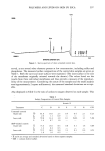
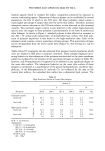
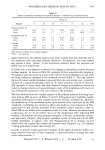
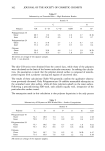
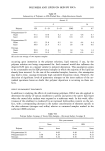
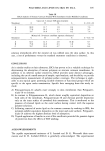
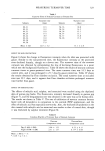
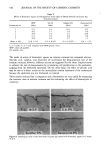
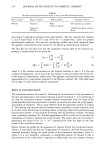
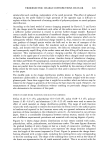
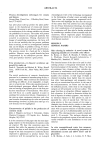
POLYMERS AND LIPIDS ON SKIN BY ESCA 301 Table III Surface Composition of Polymer-Treated Skin Samples--Substantivity on Unwashed Skin Atomic % Polymer C O N P S Si C/O Polyquaternium- 10 Outer 84.2 11.2 2.7 N.D. N.D. 1.3 7.52 Inner 81.7 14.3 2.7 1.3 N.D. N.D. 5.71 Polyquaternium-24 Outer 75.9 19.6 1.3 N.D. N.D. 3.1 3.87 Inner 80.6 16.9 1.4 0.6 N.D. 0.2 4.77 Chitosan Outer 79.9 13.4 3.9 N.D. 0.1 2.7 5.96 Inner 79.4 16.3 2.8 1.2 0.2 0.1 4.87 All entries are average of two separate samples. N.D. = not detected. longed exposure to the polymer solution may result in some lipid loss from this side of the membrane with concurrent polymer deposition. Alternatively, this inner surface may present a more "porous" or less keratinized substrate which the polymers can diffuse into with relative ease. A further clue to this behavior is offered by the changes in phosphorus content detected on these samples. As shown in Table Ill, treatment of these unwashed skin samples in the polymer solutions results in a shift in the relative levels of phosphorus on the inner and outer surfaces as compared to the untreated controls (Table I). This may indicate the loss of a water-soluble phosphate compound from the outer surface and, conversely, exposure of a nonsoluble phosphate lipid on the inner surface by removal of other sol- uble materials. It seems likely that these observed changes in phosphorus content are linked to changes which occur upon prolonged contact of the membranes with water, in turn altering the receptivity of the inner surface to the polymers. The data obtained from skin samples exposed to the polymer solutions following treat- ment with an SDS are given in Tables V and VI. Polyquaternium-24 exhibits roughly equivalent performance on these samples versus the previous unwashed set. However, the modification of the membrane surface upon removal of the lipid layer by the SDS completely overwhelms any orientation effects and results in clear deposition of Poly- quaternium-10 and chitosan regardless of the membrane surface examined. (Any re- sidual SDS on the surface of the membrane could, of course, influence the adsorption of a polycation, but we do not believe this to be the predominant effect following SDS washing.) All measures of surface polymer adsorption, C/O ratio, alcohol/ether content, and quaternary nitrogen, yield roughly equivalent results on both sides of the SDS- washed membranes. It appears, then, that Polyquaternium-10 or chitosan can best adsorb when the original lipid mantle has somehow been disrupted, e.g., by exposure to harsh surfactants or other skin irritants (6). In order to provide a semi-quantitative measure of the degree of polymer surface cov- erage achieved with each of these treatments, a fractional surface coverage was com- puted using equation 1: Measured C/O = X (Polymer C/O) + (1 - X)(Skin C/O) (1)
Purchased for the exclusive use of nofirst nolast (unknown)
From: SCC Media Library & Resource Center (library.scconline.org)