j. Soc. Cosmet. Chem., 40, 127-133 (May/June 1989) A new substrate to measure sunscreen protection factors throughout the ultraviolet spectrum B. L. DIFFEY and J. ROBSON, Regional Medical Physics Department, Dryburn Hospital, Durham DH1 5TW, U.K. Synopsis A new method is described to assess sunscreen protection factors throughout the ultraviolet spectrum using Transpore TM tape, a readily available, inexpensive substrate. Spectroradiometric measurement of the trans- mission of ultraviolet radiation through the substrate with and without the sunscreen applied allows rapid determination of not only SPFs but also of the photoprotection afforded against long-wavelength ultraviolet radiation (UVA). A wide range of sunscreen products has been assayed using the substrate, and close agreement with published in vivo sun protection factors (SPF), including reference formulations defined by the FDA and DIN, has been obtained. INTRODUCTION The photoprotection afforded by topical sunscreens against solar ultraviolet radiation (UVR) exposure is determined ideally by phototesting human volunteers. In vivo photo- testing is a time-consuming process, particularly when information concerning the pro- tection against long wavelength UVR (UVA) is required. As a consequence, much effort has been devoted to the development of in vitro techniques for assessing the pho- toprotection of sunscreening compounds. Early in vitro studies relied on either spectrophotometric assay of dilute solutions of sunscreening agents (1-3) or the determination of the transmission spectrum of thin films of products (4-6). Both these techniques produce estimates of protection factors which correlate poorly with the results obtained in in vivo phototesting of human sub- jects. Indeed, it wasn't until Sayre eta/. (1), and later Cole and VanFossen (7), used separated hairless mouse epidermis as the matrix on which sunscreens were applied that close agreement between in vitro and in vivo protection factors was achieved. The use of excised epidermis from human cadaver skin as the substrate produces equally good agreement (8). Because of the difficulties associated with obtaining and preparing either mouse or human epidermis, Stockdale (9) described the production of ultraviolet transparent plastic casts obtained from silicone rubber impressions of the surface of human skin. Although the results of protection factors obtained by using these plastic casts as the sunscreen substrate were promising, the fabrication of the casts is time-consuming and demands care. 127

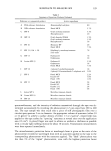
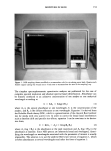
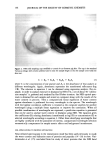
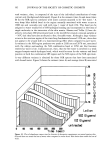
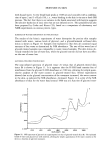
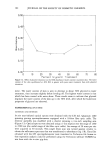
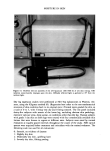
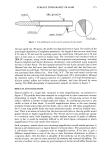
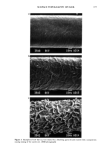
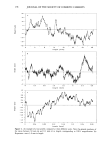
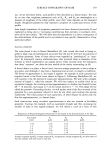
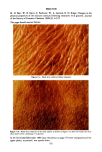
128 JOURNAL OF THE SOCIETY OF COSMETIC CHEMISTS The two requirements for a carrier matrix for the in vitro assessment of sunscreen photo- protection are that it should transmit ultraviolet radiation down to at least 290 nm, and that it should have an irregular surface that distributes the topically applied sunscreen in much the same way as human skin. This latter requirement is based on the work of O'Neill (10) who, in a theoretical analysis, suggested that the surface irregularities of human skin could play a major role in influencing the photoprotection afforded by topical sunscreens. This paper describes the performance of a material that is readily available, requires no preparation, is inexpensive, and satisfies these two requirements. MATERIALS AND METHODS CARRIER MATRIX The substrate that is used for supporting the sunscreen agents is Transpore TM tape (3M Company, St. Paul, MN). This tape has a "knobbled" surface, that has been found to distribute the sunscreen compounds in a way similar to the uneven topography of human stratum corneum. PRODUCTION AND MEASUREMENT OF ULTRAVIOLET RADIATION The principle of the present method is to measure the spectral transmission of ultravi- olet radiation through a sample of Transpore tape with and without the sunscreen applied. Any radiation source may be used, providing there is a continuous spectral power distribution between 290 and 400 nm. In the present case an unfiltered 75W xenon arc lamp was used, and radiation was conducted from the lamp housing to the input optics of a scanning spectroradiometer (Optronic model 742, Optronic Labs. Inc., Orlando, FL) by means of a liquid light guide. The bandwidth of the monochro- mator was fixed at 1.5 nm, and wavelength calibration was achieved using a low-pres- sure mercury discharge lamp (253.7 nm and 435.8 nm). The input optics consisted of a double ground quartz diffuser (10 mm diameter). The operation of the spectroradiom- eter was controlled using a Hewlett Packard HP85 desk-top computer. SUNSCREEN PRODUCTS EVALUATED Fourteen different sunscreen products were tested including the standard reference for- mulations published by the Food and Drug Administration (FDA) in the United States (11) and the German standards organization Deutsches Institut fiir Normung (DIN) (12). These products are listed in Table I. The DIN reference formulation (product B) was applied at a surface density of 1.5 •l/cm 2, since the published sun protection factor (SPF) relates to this value (12). Similarly, the published SPFs of products J to N were determined in vivo by the manufacturer at 1.5 •l/cm 2 using a filtered xenon arc lamp (Dr. J. Ferguson, personal communication), and so the same surface density was used here. All other products were applied to the substrate at 2 }xl/cm 2, as their published SPFs were determined using the FDA methodology. EXPERIMENTAL TECHNIQUE A piece of Transpore tape (4 X 4 cm 2) was placed over the quartz input optics of the
Purchased for the exclusive use of nofirst nolast (unknown)
From: SCC Media Library & Resource Center (library.scconline.org)