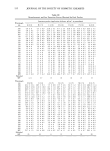
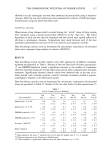
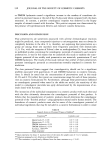
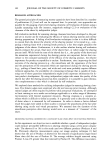
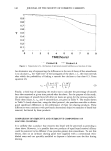
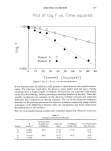
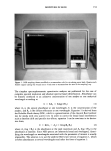
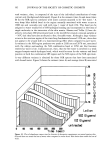
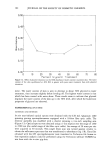
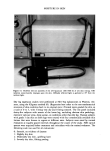
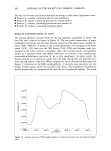
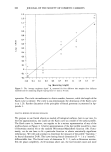
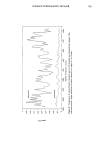
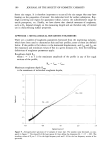
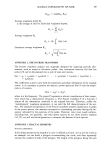
164 JOURNAL OF THE SOCIETY OF COSMETIC CHEMISTS 0.40 0.30 0.20 0.10 , m- O 0,00 ' ' ' ' ' ' ' 0 10 EO 30 40 50 60 70 80 Percent G Iwcerol Treo•men• Figure 12. Effect of glycerol treatment on the NIR absorbance (water content) in porcine skin. The water content of the skin equilibrated at 40% RH is greater with pure water treatment than with glycerol treatment. ment. The water content of skin is seen to decrease to about 50% glycerol in water treatment, then increases slightly before leveling off. The highest water content is that which has been treated with water alone. These results seem to indicate that glycerol displaces the water content of the skin up to the 50% level, after which the humectant properties of glycerol are observed. EXPERIMENTAL (IN VIVO) MATERIALS AND METHODS In vivo near-infrared optical spectra were obtained with the LTI Ind. Quantum 1200 spinning grating spectrophotometer equipped with a 10-foot fiber optic cable. The detector assembly was modified with a shutter exposing a two-inch sampling area (Figure 13). Optical spectra were obtained using a 1-nm stepsize over the range of 1200 to 2200 nm (the useful range of the fiber optic cable). An average of 20 scans per site were acquired in 30 seconds. This single beam scan was ratioed against ceramic to obtain the reflectance spectrum that was transformed to absorbance (log l/R). Data files obtained with the LTI spectrophotometer were translated to Technicon file format so that regression analysis could be performed using the Technicon software COMBO as was done with the in vitro pig skin.

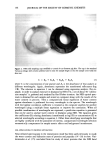
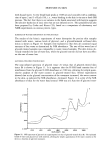
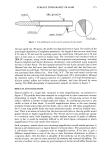
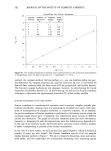
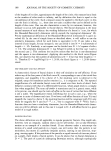
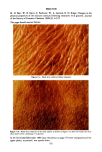
MOISTURE IN SKIN . . .. . Figure 13. Modified detector assembly of the LTI Quantum 1200 NIR for in vivo skin testing. NIR radiation nonocclusively impinges upon the skin. Diffusely reflected light is gathered at 45 ø from the incident light. Dry leg regression studies were performed at Hill Top Laboratories in Phoenix, Ari- zona, using the Kligman method (8). (Regression here refers to the non-mathematical reversion of skin condition back to its original state.) Trained raters graded the skin on a scale of 0 to 3, with 3 being very dry and 0 being smooth. The test panel included thirty-five subjects with xerosis of the lower leg, excluding obvious skin pathology, extensive varicose veins, deep suntan, or conditions other than dry leg. Human subjects with grade 3 dry skin on both legs were treated with four commercially available skin lotions that were known to regress at different rates. Subjects were rated by trained evaluators at equally spaced intervals throughout the course of the study. NIR optical spectra were acquired before treatment and coincident with the trained evaluator. The following scale was used for all evaluations: 0: Smooth, no evidence of dryness 1: Slightly dry skin 2: Moderately dry skin, uplifting layer 3: Severely dry skin, flaking peeling
Purchased for the exclusive use of nofirst nolast (unknown)
From: SCC Media Library & Resource Center (library.scconline.org)