SURFACE TOPOGRAPHY OF HAIR 185

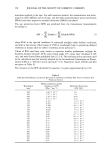
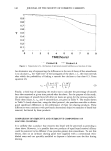
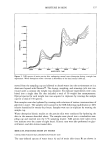
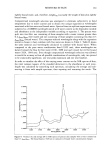
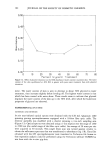
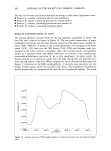
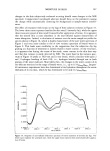
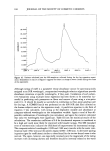
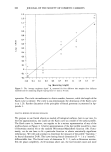
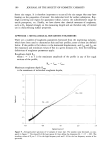
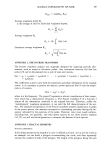
186 JOURNAL OF THE SOCIETY OF COSMETIC CHEMISTS ferent size ranges. It is therefore important to access all the size ranges that may have bearing on the properties of interest: the molecular level for surface adsorption, Ray- leigh scattering size region for appearance (shine, luster), the submillimeter range for tactile perception, etc. Finally, we have shown that classical measures of roughness, such as Rz, depend strongly on the measuring length and are therefore only of limited use in characterizing surface properties. APPENDIX 1: METALLURGICAL ROUGHNESS PARAMETERS There are a number of roughness parameters borrowed from the machining industry, which have been used to characterize skin and hair profiles some of them are defined below. If the profile is f(x) where x is the horizontal displacement, and fm= and fmin are the maximum and minimum values of f(x) in a given domain of x, then the following definitions of roughness parameters apply: Roughness depth Rzi, where i = 1 to 5 is the maximum amplitude of the profile in any of five equal sections of the profile, Rzi = fmax -- fmin, Maximum roughness depth Rma x is the maximum of individual roughness depths, 2 1.63 -2 -3 -0.5 0.5 1.5 2.5 3.5 log(spacing [•m]) Figure 9. Averaged power spectrum of 52 samples of intact hair. The random noise decreased, as com- pared to Figure 7. The slopes B of the least square fit lines define the dimension D, = 2.5 - B/2. The resulting values of D s are 1.31 for the high frequency end and 1.63 for the low frequency section of the spectrum.
Purchased for the exclusive use of nofirst nolast (unknown)
From: SCC Media Library & Resource Center (library.scconline.org)