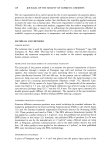
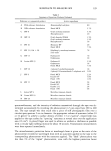
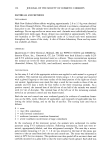
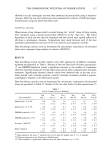
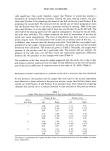
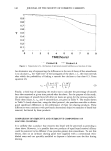
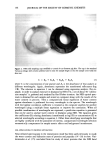
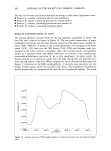
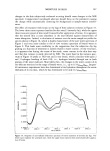
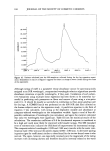
SUBSTRATE TO MEASURE SPF 129 Table I Summary of Sunscreen Products Evaluated Reference or commercial product Active ingredients A FDA reference formulation Homomenthyl salicylate 8% B DIN reference formulation Parsol MCX 2.7% C SPF 8 Octyl methoxycinnamate 5.5% Benzophenone-4 2% D SPF 19 Octyl dimethyl PABA 3.5% Octyl methoxycinnamate 3.5 % Benzophenone-3 3% E SPF 10 Mexenone BP 4% Parsol MCX 7.5 % F SPF 15 (15A + B) Ethylhexyl p-methoxycinnamate 7% Zinc oxide G SPF 15 H Lotion SPF 23 I SPF 10 J SPF 6 K SPF 15 L Lotion SPF 4 M Cream SPF 10 N SPF 20 Padimate-O 7% Oxybenzone 3% Padimate-O 2.5 % Oxybenzone 3 % Parsol MCX 7.5 % 2-phenyl- 5 -methyl be nzoxazole 1% 2-phenyl-14-benzimidazole-5-sulphonic acid 2.8% Parsol MCX 2.2 % Escalol 507 3.8% Parsol 1789 1.0% Parsol MCX 5% Escalo! 507 5% Eusolex 232 2% Parsol 1789 4% Microfine titanium dioxide Microfine titanium dioxide Microfine titanium dioxide spectroradiometer, and the intensity of radiation transmitted through the tape was de- termined automatically by recording the photocurrent in 5-mn steps from 290 to 400 nm. The tape sample was then stuck onto a piece of stiff photographic film over a circular open aperture 2 cm in diameter. An appropriate volume of sunscreen (either 24 or 32 •l/cm 2 to achieve a surface density of either 1.5 or 2 •l/cm 2, respectively) was applied to the tape surface by "spotting" sunscreen at several sites over the application area (16 cm2). A gloved finger was used to achieve as uniform a thickness as possible with a circular light rubbing motion for about 10 seconds. Transmission measurements were then repeated immediately. The monochromatic protection factor at wavelength ?tnm is given as the ratio of the photocurrent recorded at wavelength Knm with no sunscreen applied to the tape to the corresponding photocurrent with the sunscreen applied. The "dark" photocurrent was less than 1% of the "signal" photocurrent, even with the highest protection factor

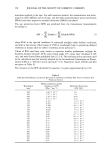
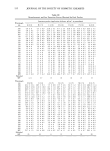
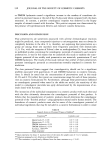
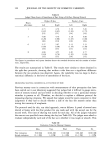
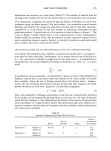
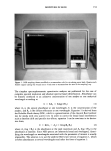
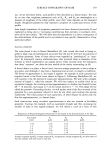
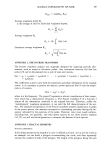
130 JOURNAL OF THE SOCIETY OF COSMETIC CHEMISTS sunscreens applied to the tape. For each sunscreen product the transmittance was deter- mined on three different pieces of tape, and the mean monochromatic protection factors [PF(k)] and their respective standard deviations [AP(k)] calculated. The sun protection factor (SPF) was predicted from the transmission measurements according to: 400 400 SPF = •', E(k)½(k) / •", E(k)½(k)/PF(k) 290 290 (1) where E(k) is the spectral irradiance of terrestrial sunlight under defined conditions and ½(k) is the relative effectiveness of UVR at wavelength knm in producing delayed erythema in human skin (so-called "erythema action spectrum"). Values of E(k) used here were chosen to represent midday midsummer sunlight for Southern Europe (latitude 40øN solar zenith angle 20ø ozone layer thickness 0.305 cm), and were derived from published data (13,14). The erythema action spectrum used in the calculation was that recently adopted by the International Commission on Illumi- nation (CIE) as a "reference action spectrum" (15). Numerical values of E(k) and ½(k) are given in Table II. The variance on the SPF calculated by equation 1 is given approximately by (16): Table II Solar Spectral Irradiance and Action Spectrum for Erythema in Human Skin Used to Calculate Sun Protection Factors Midday midsummer global Wavelength irradiance at 40øN Erythemal effectiveness (nm) (Wm -2 nm-•) (CIE 1987) 290 3.68 x 10 -6 1.0 295 7.97 x 10 -4 1.0 300 1.28 x 10 -2 0.65 305 6.51 x 10 -2 0.22 310 0.171 7.4 x 10 -2 315 0.295 2.5 x 10 -2 320 0.398 8.6 x 10 -3 325 0.536 2.9 x 10 -3 330 0.630 1.4 x 10 -3 335 0.65 1.2 x 10 -3 340 0.68 9.7 x 10 -4 345 0.69 8.1 x 10 --4 350 0.70 6.8 X 10 --4 355 0.71 5.7 • 10 -4 360 0.73 4.8 X 10 -4 365 0.75 4.0 x 10 -4 370 0.78 3.4 x 10 -4 375 0.80 2.9 x 10 -4 380 0.83 2.4 x 10 -4 385 0.86 2.0 x 10 -4 390 0.90 1.7 x 10 -4 395 0.93 1.4 X 10 -4 400 0.97 1.2 x 10 -4
Purchased for the exclusive use of nofirst nolast (unknown)
From: SCC Media Library & Resource Center (library.scconline.org)