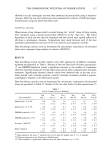
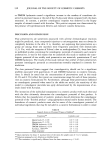
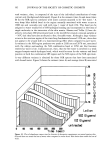
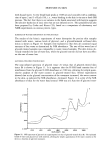
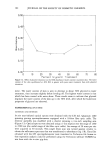
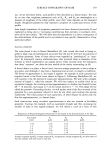
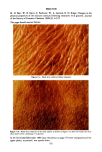
138 JOURNAL OF THE SOCIETY OF COSMETIC CHEMISTS or DMDM hydantoin caused a significant increase in the number of comedones ob- served in processed tissues at the end of the 29-day study when compared with the sham treatment. In contrast, a positive comedogenic response was observed in the biopsy samples of animals treated with Acetulan. This positive response was characterized by the presence of hyperkeratinized follicles and extensive comedo formations. DISCUSSION AND CONCLUSION That preservatives are sometimes associated with adverse dermatological reactions might be predicted, since compounds injurious to microorganisms may not always be completely harmless to the skin. It is, therefore, not surprising that preservatives as a group are among those raw materials most frequently associated with dermatitides (1,3). Yet, with the exception of Fulton's data on methylparaben (5), there have been no published studies concerning the comedogenic potential of commonly used cosmetic preservatives. It was for this reason that we undertook this study to examine the come- dogenic potential of two widely used preservative raw materials, quanternium-15 and DMDM hydantoin. The results of this study indicate that neither of these preservatives possesses comedogenic potential at concentrations normally employed in cosmetic for- mulations. The data presented herein suggest that comedogenicity should not be a significant problem associated with quaternium-15 and DMDM hydantoin in cosmetic formula- tions. It should be noted that the concentrations of preservatives used in this study (0.2% and 0.5%) reflect the typical use concentration range for each of these preserva- tives in cosmetic formulations (9). Furthermore, although these preservatives exhibited no comedogenic potential when tested in the rabbit ear model, the sensitivity of this model to comedogenic materials was aptly demonstrated by the responsiveness of an- imals dosed with Acetulan. The interaction of the individual components in a cosmetic product with each other and with the skin ultimately determines the comedogenic potential of that product. It follows that the manufacturer of cosmetic products should determine the comedogenic potential of the "finished product" using appropriate animal and/or human models. The formulator of cosmetic products must also be aware of the comedogenic potential of individual ingredients that may be included in a cosmetic formulation in order to create TaMe II Comedo Scores in Processed Tissues of Rabbits* Treatment** Comedo score Quaternium- 15, 0.2% 0.0 _+ 0.0 Quaternium- 15, 0.5 % 0.0 ___ 0.0 DMDM hydantoin, 0.2% 0.0 -+ 0.0 DMDM hydantoin, 0.5 % 0.0 _+ 0.0 Acetulan, 100%*** 3.5 -+ 0.2 Sham treatment 0.1 + 0.1 * Values represent the mean ___ standard error of the mean for sample sizes of 3 to 12 animals. ** Solutions prepared as w/v dilutions in distilled water. *** This treatment is significantly different from the sham treatment at p 0.01.

THE COMEDOGENIC POTENTIAL OF PRESERVATIVES 139 products with minimal comedogenic potential. In this regard the data presented herein suggest that neither quaternium-15 nor DMDM hydantoin (at typical use levels) should contribute to the comedogenic potential of cosmetic products. REFERENCES (1) R. M. Adams and H. I. Maibach, A five year study of cosmetic reactions, J. Am. Acad. Dermatol., 13, 1062-1069 (1985). (2) R. L. Decker, Jr. and J. A. Wenniger, Frequency of preservative use in cosmetic formulas as dis- closed to FDA--1987, Cosmet. Toil., 102, 21-24 (1987). (3) A. C. DeGroot, Contact allergy to cosmetics: Causative ingredients, Contact Dermatitis, 17, 26-34 (1987). (4) J. E. Fulton, Comedogenicity of current therapeutic products, cosmetics and ingredients in the rabbit ear, J. Am. Acad. Dermatol., 10, 96-105 (1984). (5) J. E. Fulton, S. Bradley, A. Aqundez, and T. Black, Non-comedogenic cosmetics. Cutis, 17, 344-351 (1976). (6) A.M. Kligman and T. Kwong, An improved rabbit ear model for assessing comedogenic substances, Br. J. Dermatol., 100, 699-702 (1979). (7) A.M. Kligman and O. H. Mills, Acne cosmetica, Arch. Dermatol., 106, 843-850 (1972). (8) M. Lanzet, Comedogenic effects of cosmetic raw materials, Cosmet. Toil., 101, 63-72 (1986). (9) K. H. Wallhauser, "Antimicrobial Preservatives Used by the Cosmetic Industry," in Cosmetic and Drug Preservation--Principles and Practice, 1st ed., J. J. Kabara, Ed. (Marcel Dekker, New York, 1984), pp. 605-745.
Purchased for the exclusive use of nofirst nolast (unknown)
From: SCC Media Library & Resource Center (library.scconline.org)