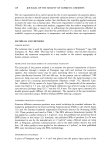
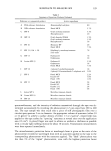
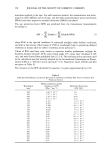
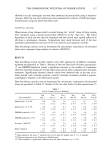
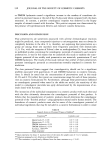
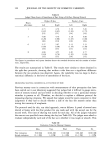
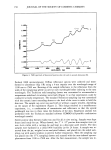
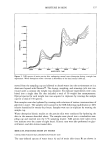
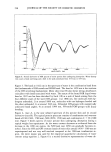
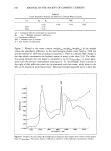
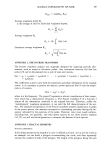
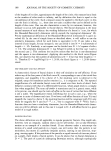
130 JOURNAL OF THE SOCIETY OF COSMETIC CHEMISTS sunscreens applied to the tape. For each sunscreen product the transmittance was deter- mined on three different pieces of tape, and the mean monochromatic protection factors [PF(k)] and their respective standard deviations [AP(k)] calculated. The sun protection factor (SPF) was predicted from the transmission measurements according to: 400 400 SPF = •', E(k)½(k) / •", E(k)½(k)/PF(k) 290 290 (1) where E(k) is the spectral irradiance of terrestrial sunlight under defined conditions and ½(k) is the relative effectiveness of UVR at wavelength knm in producing delayed erythema in human skin (so-called "erythema action spectrum"). Values of E(k) used here were chosen to represent midday midsummer sunlight for Southern Europe (latitude 40øN solar zenith angle 20ø ozone layer thickness 0.305 cm), and were derived from published data (13,14). The erythema action spectrum used in the calculation was that recently adopted by the International Commission on Illumi- nation (CIE) as a "reference action spectrum" (15). Numerical values of E(k) and ½(k) are given in Table II. The variance on the SPF calculated by equation 1 is given approximately by (16): Table II Solar Spectral Irradiance and Action Spectrum for Erythema in Human Skin Used to Calculate Sun Protection Factors Midday midsummer global Wavelength irradiance at 40øN Erythemal effectiveness (nm) (Wm -2 nm-•) (CIE 1987) 290 3.68 x 10 -6 1.0 295 7.97 x 10 -4 1.0 300 1.28 x 10 -2 0.65 305 6.51 x 10 -2 0.22 310 0.171 7.4 x 10 -2 315 0.295 2.5 x 10 -2 320 0.398 8.6 x 10 -3 325 0.536 2.9 x 10 -3 330 0.630 1.4 x 10 -3 335 0.65 1.2 x 10 -3 340 0.68 9.7 x 10 -4 345 0.69 8.1 x 10 --4 350 0.70 6.8 X 10 --4 355 0.71 5.7 • 10 -4 360 0.73 4.8 X 10 -4 365 0.75 4.0 x 10 -4 370 0.78 3.4 x 10 -4 375 0.80 2.9 x 10 -4 380 0.83 2.4 x 10 -4 385 0.86 2.0 x 10 -4 390 0.90 1.7 x 10 -4 395 0.93 1.4 X 10 -4 400 0.97 1.2 x 10 -4

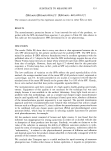
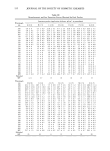
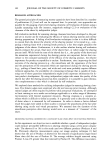
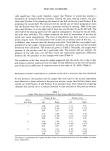
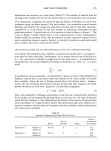
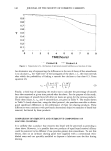
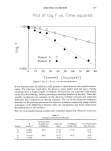
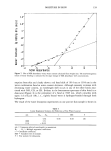
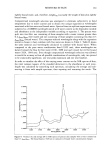
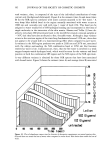
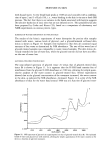
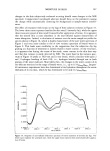
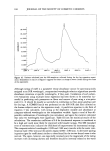
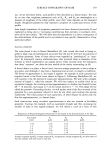
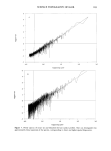
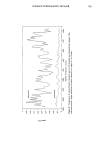
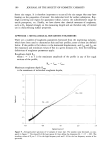
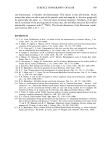
SUBSTRATE TO MEASURE SPF 131 {EE(k)e(k)/[•E(k)e(k)/PF(k)]2} 2. {E[E(X)E(X). AP(k)/PF(k)2] 2} The variance calculated by this expression assumes no error in either E(k) or E(k). RESULTS The monochromatic protection factors at 5-nm intervals for each of the products, to- gether with the SPF calculated from equation 2, are given in Table III. Also shown in this table are the manufacturers' SPFs determined by in vivo phototesting. DISCUSSION The results (Table III) show that in every case there is close agreement between the in vitro SPF determined by the present method and the published SPF. The SPF deter- mined for product B (DIN reference formulation) was in excellent agreement with the published value of 3.7 despite the fact that the DIN methodology requires the use of an Osram Vitalux lamp (mercury arc lamp) whose ultraviolet spectrum differs significantly from that of sunlight. However, Sayre and Agin (17) showed that for this particular sunscreen, a Vitalux lamp does, in fact, yield an SPF very similar to that obtained with a filtered xenon arc lamp. The low coefficient of variation on the SPFs reflects the good reproducibility of the method the average standard error of the mean SPF of all products tested, expressed as a percentage, was 3%. In well-controlled in vivo studies it is expected (10, 18) that the standard error of the mean SPF should not be greater than 5 to 10% of the SPF. Clearly, the in vitro method described here yields comparable reproducibility. The instrumentation used here consisted of a high quality double-grating spectroradi- ometer. Equipment of this quality is not necessary for the technique but was used simply because it was available in the authors' laboratory. Stray light levels are not a problem with this methodology, and so a simpler and cheaper single monochromator may be used equally well. Since the technique is based upon ratios, absolute calibration of the monochromator spectral responsivity is not required. The spectral transmission approach used here is fundamentally more versatile than techniques that utilize a single detector such as a Berger meter (7), since it allows the monochromatic protection factors to be combined with any chosen source spectrum [E(?O] and photobiological action spectrum [•(2•)], which may be relevant in selecting suitable sunscreens for patients with photodermatoses, for example. All the products tested consisted of lotions and light creams. It was found that the substrate was inappropriate for testing sunscreens in either oil or alcohol vehicles due to absorption of these products into the tape. Similarly, we make no claims as to the value of the substrate in assessing the ability of different sunscreen products to with- stand the stress of sweating and water immersion. This property, sometimes called the "substantivity," is related to the physicochemical processes of diffusion and adhesion and depends upon how the products remain absorbed or chemically conjugated with the proteins of the stratum corneum. We conclude that Transpore tape is a useful medium for rapid screening of sunscreen photoprotection. Unlike either mouse or human epidermis, it requires no preparation,
Purchased for the exclusive use of nofirst nolast (unknown)
From: SCC Media Library & Resource Center (library.scconline.org)