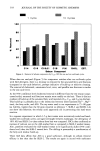
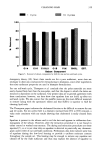
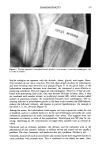
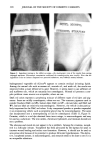
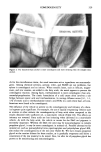
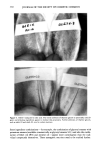
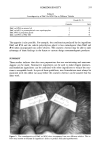
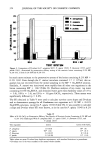
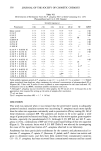
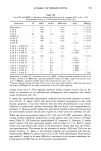
322 JOURNAL OF THE SOCIETY OF COSMETIC CHEMISTS tions and their ingredients would not have been possible without the use of this animal model. We have now extended the model to include an index of surface skin irritancy as well as of follicular hyperkeratosis. METHODS Ingredients are mixed in propylene glycol at a 9 to 1 dilution for testing unless other- wise indicated (10% concentration). A colony of New Zealand albino rabbits that has genetically good ears and is free from mites is used. Three rabbits, weighing two to three kilograms, are used for each assay. Animals are housed singly in suspended cages and fed Purina Rabbit Chow and water ad libitum. Animals are maintained on a 12-hour light and 12-hour dark cycle. A dose of 1 ml of the test material is applied and spread once daily to the entire inner surface of one ear five days per week for two weeks. The opposite untreated ear of each animal serves as an untreated control. Follicular keratosis is judged both macroscopically (visually) and microscopically with a micrometer to measure the width of the follicular keratosis. The macroscopic response is determined by averaging the measurements of the width of six follicles using a Mitutoyo Dial Micrometer (#536-724). A similar microscopic micrometer measurement is obtained by averaging the width of six follicles under a magnification of 430 x after a 6-ram biopsy specimen is fixed in formalin, sectioned at six microns, and stained with hema- toxylin-eosin. The results are then combined on a scale of one to five: Micrometer reading Grade 0.009 in or less 0 No significant increase in follicular keratosis 0.010 in-.014 in 1 0.015 in-.019 in 2 A moderate increase in follicular keratosis 0.020 in-.025 in 3 0.025 in-.029 in 4 An extensive increase in follicular keratosis 0.030 in or more 5 Grade 5 is the presence of large comedones throughout the ear, similar to those induced by the application of our standard "positive" testing agent, isopropyl myristate. As reported in our previous studies, a minimal grade of 0 to 1 is not considered significant. Grade 2 to 3 is borderline. However, a grade of 4 to 5 is uniformally reproduceable and considered positive. The irritancy produced by the repeated application of a chemical or skin care product on the surface epidermis in the rabbit ear is also evaluated on a similar scale of 0 to 5. The grades are summarized as follows: 0 No irritation 1 Few scales, no erythema 2 Diffuse scaling, no erythema 3 Generalized scaling with erythema 4 Scaling, erythema, and edema 5 Epidermal necrosis and slough To study the effects of different vehicles on comedogenicity and irritancy, several fatty acids and the D&C red pigment #36 are reexamined in different solvents. The fatty

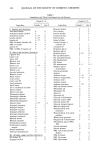
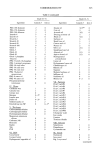
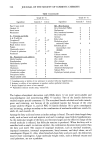
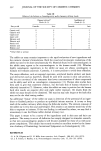
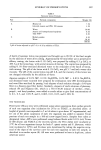
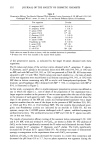
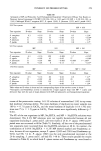
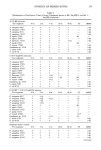
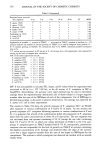
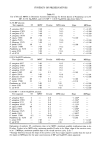
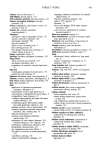
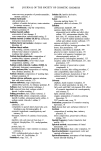
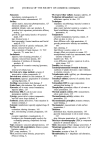
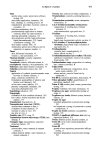
COMEDOGENICITY 323 acids are dissolved in either a volatile solvent or sunflower oil. The D&C red #36 pigment is tested in mineral oil, propylene glycol, polyethylene glycol 400, and pen- taerythrital tetra capra/caprylate. RESULTS AND DISCUSSION Cosmetic acne was first reported by French dermatologists in the mid-forties. They reported on brilliantines and hair pomades causing flareups on the temple and forehead facial regions. They attributed the problems to impurities in the brilliantines (6). In 1970, Kligman requested that Gerd Piewig and I examine over 700 men to find some with normal facial skin. Much to our chagrin, the majority had cosmetic acne (7). About 70% showed some evidence of follicular keratoses on the forehead and temples. Occasionally the eruptions were noted on the cheeks down to the jawline area. The lesions were usually noninflammatory, closed comedones. A few lesions developed into small inflammatory papules. However, there were no cases of severe, cystic inflamma- tory acne. Histologically, the comedones from pomade acne cases were identical to biopsies taken from comedones of classic acne vulgaris patients. In surveying the hair care preparations, we felt that the actual ingredients and not trace contaminants were offenders. Interestingly, very few of the subjects attributed their follicular eruptions to their daily use of a hair pomade. This study stimulated us to examine other skin care products and ingredients. In 1972 Kligman and Mills reported on acne cosmetica in their survey at the Acne Clinic at the University of Pennsylvania (1). Approximately one third of the adult women had a low-grade, persistent acne in the cheek area, consisting of closed comedones quite similar to those found in pomade acne. This appeared more frequently in women after age twenty and may explain one of the reasons for epidemic adult acne in women in the 1970s and 1980s. In 1976 and 1984, Fulton published results on actual cosmetic lines and on ingredients, and proposed the development of noncomedogenic cosmetics using ingredients that were nonoffenders in the rabbit ear assay (2,3). Several major cosmetic manufacturers have now produced these types of products. However, our screening indicates that work is still needed on many skin care formulations. It became apparent during our research into potential noncomedogenic ingredients that several hypotheses could be developed: (1) In order for an ingredient to be comedogenic, it must penetrate into the follicle, and (2) once in the follicle, the chemical must produce the follicular reaction of "retention hyperkeratosis" (8). In addition, the overall penetratibility of the molecule may be related to (1) the water/oil partition coefficient of the compound (HLB balance) and (2) the relative molecular weight of the ingredient. The ingredient appears to have the most potential if it is fairly soluble in both water and oil (HLB around 10 to 12) and has a range of molecular weight between 200 and 300. The comedogenicity of an ingredient may be reduced by adding a large constituent (i.e., polymers of PEGs), by adding a charged molecule (i.e., sugars), or by adding a heavy metal (i.e., zinc or lithium). This often relates to raising the HLB balance to above 12. Examples of this concept of water/lipid solubility and molecular weights are apparent in each class of chemicals examined (Table I). Among the lanolins, the classic anhydrous lanolins are not as comedogenic as the moderately ethoxylated derivatives (laneth 10).
Purchased for the exclusive use of nofirst nolast (unknown)
From: SCC Media Library & Resource Center (library.scconline.org)