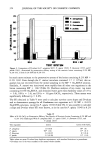
j. Soc. Cosmet. Chem., 40, 347-365 (November/December 1989) Synergism of preservative system components: Use of the survival curve slope method to demonstrate anti-Pseudomonas synergy of methyl paraben and acrylic acid homopolymer/copolymers in vitro D. S. ORTH,* C. M. LUTES ANDERSON, D. K. SMITH, and S. R. MILSTEIN, The Andrew Jergens Company, 2535 Spring Grove Avenue, Cincinnati, OH 45214. Received July 2, 1989. Synopsis The survival curve slope method allows determination of synergy in multicomponent systems when the slope (i.e., rate of death of the population of test organisms) is a larger negative number than the sum of the slopes of each of the components. This method was used to demonstrate anti-Pseudomonas synergy of methyl paraben (MP) and acrylic acid homopolymer/copolymers in vitro. Preservative efficacy testing of nonionic lotions containing 0.2% MP and 0.2% acrylic acid homopolymer/ copolymers revealed anti-Pseudomonas synergy against P. aeruginosa, P. putida, P. fluorescens, and P. stutzeri. Addition of 0.1% CaC12 to the lotion caused significant increases in D-values and eliminated the anti-Pseu- domonas synergy. Similar patterns of synergy were observed in lotions containing 0.2% MP q- 0.2% carbomer 934, 941 or acrylates/C10-30 alkyl acrylate cross polymer (1342) and in tap water containing 0.2% MP q- 0.01% Na2EDTA. The anti-Pseudomonas synergy observed with MP and neutralized acrylic acid homopolymer/co- polymers is probably related to chelation of divalent metal ions and similar to permeabilization synergy reported for preservative action by EDTA. INTRODUCTION Preservative efficacy testing is performed to determine the type and minimum effective concentrations of preservatives required for products to meet acceptance criteria (1). Testing is needed for each product because the physicochemical composition of a for- mula may enhance or reduce the antimicrobial effectiveness of preservatives. When designing the preservative system of a product (2,3), it is desirable to select compounds that enhance the antibacterial action of the preservative system. Synergism is observed when the effect produced by the combination of components is greater than the sum of the effects of each component taken separately. Synergy of antimicrobial preservatives has been reported by several workers (4-7). *Current Address.' Neutrogena Corporation, 5755 West 96th Street, Los Angeles, CA 90045. 347

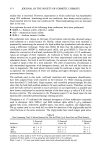
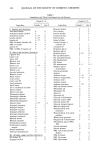
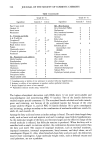
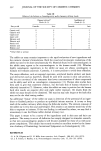
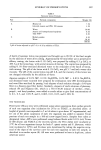
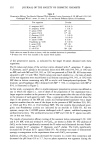
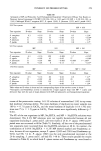
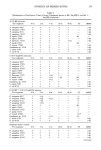
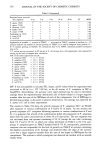
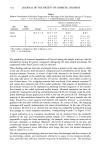
348 JOURNAL OF THE SOCIETY OF COSMETIC CHEMISTS During testing with the linear regression method (8), we noticed that Pseudomonas aeru- ginosa was inactivated more rapidly in nonionic emulsion systems containing carbomer 941 than in products that did not contain this material. By thoroughly studying this system, we developed a method of demonstrating synergy of preservative system com- ponents that uses the rates of inactivation of test organisms determined by the linear regression method. The most desirable outcome of testing antimicrobial preservatives for synergy is finding the combination that will allow the use of fewer and/or reduced concentrations of pre- servatives in consumer products. The use of a preservative system that has synergistic action is of practical significance because it may help reduce the cost of the product and the irritation or sensitization potential of the formula. EXPERIMENTAL TEST ORGANISMS The strains of Pseudomonas used in this study were received directly from the American Type Culture Collection (ATCC) and consisted of P. aeruginosa ATCC strains 9027, 9721, 10145, and 27853 P. cepacia ATCC strains 13945 and 25416 P. fluorescens ATCC 13525 P. putida (Biotype A) ATCC 12633 P. stutzeri ATCC 17588 and Pseu- domonas sp. 9230. P. aeruginosa 9027 routinely is used in antimicrobial preservative testing (1), and P. aeruginosa 27853 is a standardized strain for antibiotic susceptibility testing. Multiple strains of species of P. aeruginosa and P. cepacia were available, and consequently, P. aeruginosa 9027 and P. cepacia 13945 were used unless other strains are indicated. Bacillus cereus ATCC 11778 was obtained directly from the ATCC. E. coli ATCC 8739 was obtained from Hill Top Biolabs, Inc. Staphylococcus aureus ATCC 6538 (FDA 209 strain) and Bacillus sp. were taken from the Jergens culture collection. The cultures were maintained by weekly transfer on Tryptic Soy Agar (TSA). All test organisms were grown on TSA with 0.07% lecithin and 0.5% Tween 80 (TSALT) in 150-mm Petri dishes for 24 hr prior to use in preservative efficacy testing. S. aureus, E. coli, Bacillus sp., and B. cereus were incubated at 37øC. All Pseudomonas test organisms were incubated at 30øC for 24 hr in preparation for preservative efficacy testing. All Petri dishes prepared from samples for determination of aerobic plate counts (APCs) were incubated for 48 hr at 37øC (except for those prepared from samples challenged with both P. cepacia strains and P. fluorescens, which were incubated for 48 hr at 30øC). TEST SAMPLES The test samples used in this study included a nonionic o/w lotion (Table I). The lotion was prepared as follows: Parts A, B, and C were heated to 70øC. Part A was added to part C with continuous mixing. Part B was added after 5 min, and mixing was con- tinued as the batch was cooled to ambient temperature. This lotion was selected for studying the effects of emulsion pH, [polyacrylic acid resin (934 or 941) or acrylic acid copolymer (1342), B.F. Goodrich] neutralizing agent [TEA 99% or 85% (Dow Chem- ical), TEA 99% (Union Carbide), or NaOH], and CaCI•, on antimicrobial activity. The pH readings were adjusted to the stated value ( _+ 0.1 pH unit).
Purchased for the exclusive use of nofirst nolast (unknown)
From: SCC Media Library & Resource Center (library.scconline.org)