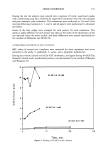
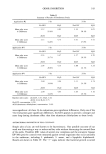
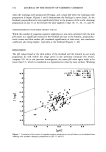
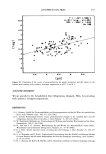
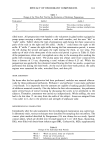
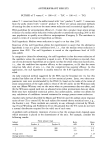
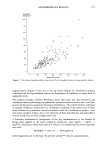
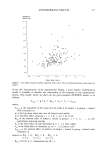
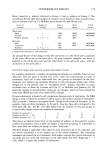
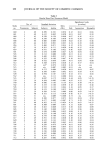
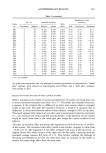
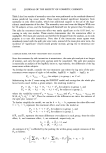
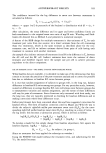
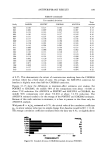
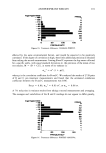
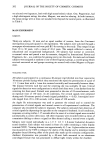
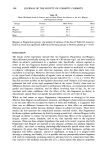
pH EFFECTS ON SKIN 155 n 4.5 4 3.5 2.5 1.5 ! ,5 N Y - 3.161 -.849 X r--.831 (n.s., p.85) 95• • -.228 r .169 N- N N N 4.5 5 5.5 6 6.5 [pHI Figure 8. Correlation of the counts of coagulase-negative staphylococci per square centimeter and pH values on the forearm from washing with synthetic detergent preparations at pH 5.5 and 8.5. the skin of the forehead and the forearm repeatedly with an acidic synthetic detergent preparation influenced both skin surface pH and the bacterial resident flora, as in the previous study (7). This observation supports the hypothesis, which still is the subject of considerable debate, that washing habits not only influence the skin surface pH in the short term but also in the long term, and that there are associated changes with respect to the cutaneous microflora. Moreover, it is of particular interest that the biological effects on both parameters are similar with the repeated application of both an alkaline soap and an alkaline syndet, but remarkably different in the case of an acidic syndet, even if the chemical composition of both syndets is nearly identical, except for pH. Certainly, a trial of the present type does not allow one to attribute the biological effects found solely to the pH value of a skin cleansing preparation. Indirect effects are still possible. In particular, differences in the pH value might affect substantivity of various ingredients and, moreover, direct anti- microbial properties of ingredients such as benzyl alcohol and methylisothiazolinone itself. This, however, should affect both propionibacteria and staphylococci in a similar way and should not selectively affect the former component of the cutaneous resident flora. A direct effect of the skin surface pH by itself is more likely, as there is a major difference in the specific growth rate of propionibacteria but not of staphylococci in the

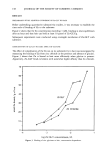
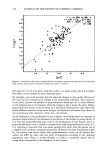
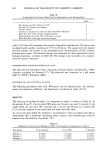
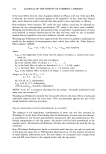
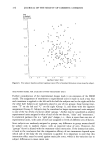
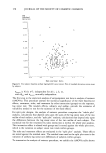
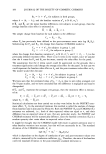
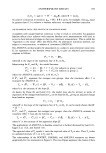
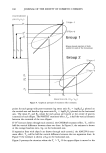
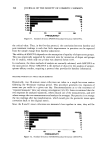
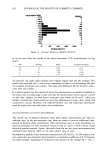
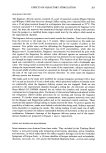
156 JOURNAL OF THE SOCIETY OF COSMETIC CHEMISTS ? 6.5 4.$ 4 # ß . . I . ß I I I ß ß ß ß I ß I i I I .... I 4.5 5 5.5 6 6.5 [pH] Figure 9. Correlation of the counts of propionibacteria per square centimeter and pH values on the forehead from washing with synthetic detergent preparations at pH 5.5 and 8.5. pH range of 5.5 to 6.0 (in vitro). And this, in fact, is a range within which skin surface pH values can be changed by skin cleansing habits. By principle, one could speculate that the observed changes in skin surface pH are not the cause but the consequence of changes in the propionibacterial flora. This, however, is not likely, because the number of propionibacteria found per cm 2 is much different on the forehead and on the forearm, while the change in pH is nearly the same. Higher propionibacterial counts on the forehead are a well known phenomenon that reflects the totally different character of the entire biotope: the forehead and forearm were chosen as test sites because they represent a fatty and a dry biotope. As the forehead is a site predisposed to acne vulgaris, this finding raises the question of potential implications for the treatment or prevention of this disease in young adults. If it is true that propionibacteria play a role in the development of acne lesions, and if in particular adolescent acne is linked to comparatively high propionibacterial counts (21), it is tempting to speculate that acne-prone patients may profit from the regular use of a slightly acidic synthetic detergent preparation. Whatever the basic mechanisms might be, the present trial shows clearly that propionibacterial counts on the human skin surface can differ by more than one order of magnitude according to the cleansing preparation used. Hence, it seems advisable to conduct a controlled clinical trial in young adults susceptible to the formation of acne lesions.
Purchased for the exclusive use of nofirst nolast (unknown)
From: SCC Media Library & Resource Center (library.scconline.org)