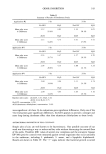
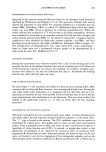
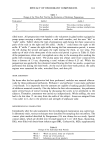
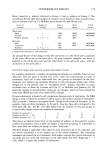
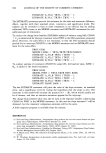
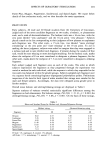
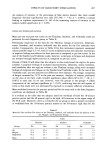
EFFICACY OF DEODORANT COMPONENTS 161 Table I Design of the Three-Part Trial for the Evaluation of Deodorant Preparations Trial period Axilla 1 Axilla 2 X Test product Y Test product Z Test product Test product without perfume Test product without triethylcitrate Placebo tilled water. All preparations were handed to the volunteers in glass bottles equipped as pump sprays carrying a subject number, a trial week number, and the note "left" or "right" axilla. Table I shows the type of preparation used during the three consecutive parts of the trial in the right and left axilla. "Axilla 1" could mean the right or left axilla. If"axilla 1" meant the right axilla during the first examination period, it meant the left during the second and again the right during the third, or vice versa. The make-up of each of the three parts of the entire trial period is given in Table II. Each of the preparations, when used, was applied once a day in the morning after washing the axilla with running tap water. The pump spray was always used twice consecutively from a distance of 15 cm, dispensing a total volume of about 0.25 mi. While the preparation was applied by the volunteer himself during the first two weeks, a supervisor performed this during the third week. At the end of each three-week period, the axilla regions were examined for odor, microbial flora, and skin pH. ODOR ASSESSMENT Six hours after the last application had been performed, malodor was assessed olfactor- ically by three professional perfumers. Perfumer 1 and perfumer 3 were male perfumer 2 was female. It is important that the assessors are capable of ranking graded dilutions of odiferous materials correctly. One day before the first odor assessment, the perfumers spent several hours of initial training by discussing the scores to be attributed to the subjects. Thereafter, assessment was carried out independently. While sniffing, the nose had to be less than 15 cm away from the axilla of the subject. Scores are assigned from 1 (no odor) to 6, due to the presence and strength of unpleasant odor. MICROBIOLOGICAL EXAMINATION Immediately after the odor assessment the microbiological examination was carried out. In laboratory trials, various techniques were described for sampling skin microflora. The contact plate method described by Faergemann (16) was chosen for our study. Special contact plates, which are divided into 16 small squares of 1 cm 2 (A/S Nunc, Kamstrup, DK), were filled with brain-heart infusion agar (BBL, Cockeysville, MD), supplemented Table II Design of the Individual Trial Periods Week 1 Week 2 Week 3 Wash out period, home use of placebo Home use of test products Laboratory use of test products

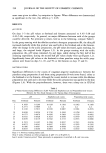
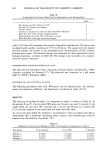
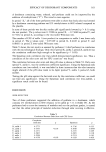
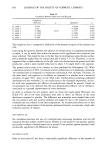
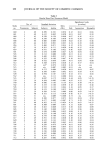
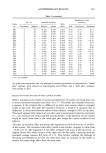
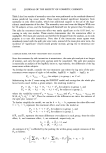
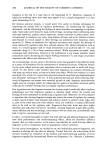
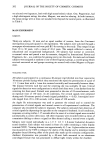
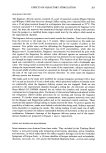
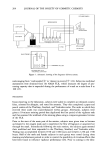
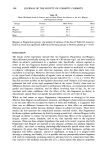
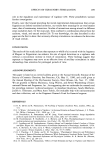
162 JOURNAL OF THE SOCIETY OF COSMETIC CHEMISTS Table III Scoring System for Contact Plates Used for Quantitation of the Bacterial Flora Score No colonies seen after 48 hours at 37øC Less than 30 colonies on 16 squares 30-100 colonies Colonies too numerous to count but more than 80% well-spaced More than 20% of the colonies merging together Heavy growth, more than 60% of the agar is covered More than 98% of the agar covered by colonies with 0.5 % Tween 80 to promote the growth of lipophilic diphtheroids. The plates were incubated under aerobic conditions at 37øC for 48 hours. The square with the highest bacterial density was chosen as the semiquantitative determination of CFU (colony- forming unit) count. The bacterial density was examined by three experienced micro- biological assessors, as shown in Table III. The average score was taken into consider- ation for further evaluation. DETERMINATION OF THE SKIN SURFACE pH VALUE The skin pH was determined with a flat glass electrode (Ingold, Steinbach/Ts., FRG) clinically evaluated by Schirren (17). The electrode was connected to a pH meter (pH521, WTW, Weilheim, FRG). MATHEMATICAL AND STATISTICAL ANALYSIS The following procedures were used: Wilcoxon's test for matched pairs, the determi- nation of correlation coefficient, and Spearman's correlation by ranks (18, 19). RESULTS The reduction of malodor of axilla 1 in comparison to axilla 2 is shown in Table IV. In the periods X and Y, the two-tailed Wilcoxon test for pairs was used. In period Z, the single-tailed test was used. We conclude that it can be used because it is certain that 0.25 ml water applied to the axilla does not lower the body odor. As can be seen from Table IV, perfumer 1 and perfumer 3 (the two males) were able to demonstrate that a deodorant containing water, ethanol, and triethylcitrate could be improved by the addition of perfume ("X"). Table IV Significance of Reduction of Malodor in Axilla 1 (test product) in Comparison to Axilla 2 Trial period X (no perfume) Y (no TEC) Z (placebo) Perfumer 1 0.07829 - 0.10264 0.01929 Perfumer 2 0. 23047 - 0. 53829 0. 02796 Perfumer 3 0.09755 - 0.12515 0.07254
Purchased for the exclusive use of nofirst nolast (unknown)
From: SCC Media Library & Resource Center (library.scconline.org)