j. Soc. Cosmet. Chem., 42, 167-197 (May/June 1991) Analysis of antiperspirant efficacy test results THOMAS D. MURPHY and MARK J. LEVINE, Shulton Research Division, American Cyanamid Company, Clifton, NJ 07015. Received August 1 O, 1990. Synopsis This paper discusses the statistical analysis of antiperspirant efficacy studies conducted by the gravimetric procedure. Earlier writers have disagreed on the proper utilization of baseline (pretreatment) measurements and on the form of the data analysis. We advocate the use of baseline data and show that the analysis of covariance procedure for baseline adjustment yields the most precise results for these studies. We confirm that the logarithmic transformation of sweat measurement data is necessary for valid use of parametric statistical methods. We also suggest guidelines for multitreatment studies and comment on some repeated- measures aspects of these tests. INTRODUCTION Antiperspirants are classified as over-the-counter (OTC) drugs and accordingly are reg- ulated by the Federal Food and Drug Administration (FDA) for efficacy (1,2). The most commonly used efficacy test is the "gravimetric procedure," in which sweat is collected from human subjects under controlled conditions of humidity and elevated temperature. This test was brought to its present state of development by Hill Top Laboratories, and was described by Majors and Wild (4). There seems to be no standard protocol for this test, but one in common use in our laboratories is a five-day procedure. Baseline, or pretreatment, sweat measurements are taken the first day, treatment applications are made on days 2-4, and a post-treatment sweat measurement is taken on day 5. This protocol has the advantage of covering a five-day work week, with subjects spending the same amount of time (about 90 min- utes) in the lab each day. Two or three separate panels of subjects can be accommodated each week, thus making the best use of the test facilities. Thomas D. Murphy's present address is Agricultural Research Division, American Cyanamid Company, P.O. Box 400, Princeton, NJ 08543-0400. Mark J. Levine's present address is The Procter and Gamble Company, Sharon Woods Technical Center, 11520 Reed Hartman Highway, Cincinnati, OH 45241. 167

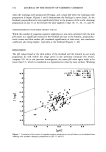
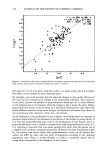
168 JOURNAL OF THE SOCIETY OF COSMETIC CHEMISTS The test designs are fairly standard throughout the industry. When two treatments are tested, each subject is applied with both treatments, one on the left axilla and the other on the right. Treatments are assigned to an equal number of left and right axillae in the panel. The reasoning for this assignment is that, in the general population, the right axillae tend to have slightly higher sweat rates than the left axillae (known as the laterality or "sides" effect). Test designs are also available for three or more treatments in the same panel. In antiperspirant efficacy testing it is common practice to repeatedly use the same cadre of human subjects. Baseline testing can be used as a monitoring tool for clinical test quality assurance. Major deviation of a panelist's baseline result from a historical norm can detect protocol violations (nonabstinence from antiperspirant use) or physical changes that might affect the test outcome. Baseline data have also been utilized in the statistical analysis to adjust the post- treatment data. Although treatments are randomly assigned to subjects, the mean sweat rates of the axillae destined to receive each treatment may be different at baseline. If baselines are run, it is sensible to extract whatever information exists in the baseline data to improve the test precision. A number of statistical methods have been proposed and are in use for analyzing the results of these tests, and this profusion has led to some controversy. The FDA (3) recommended the use of nonparametric tests based on rankings of the sweat rates, either with or without baseline data. Majors and Wild (4) described a simple baseline adjust- ment procedure where the post-treatment sweat rates were divided by the baseline, or pretreatment, sweat rates. Wooding (5) and Wooding and Finklestein (6) demonstrated the need for a logarithmic transformation of the sweat rates prior to normal-theory statistical analysis. They de- scribed the use of this transformation for both uncorrected and baseline-corrected data, but they recommended against the use of simple baseline adjustment. SUMMARY OF RESULTS AND CONCLUSIONS Our investigations of statistical methods have shown that baseline information can best be utilized by analysis of covariance (ANCOVA), a technique that has been used extensively in pharmaceutical clinical trials and was briefly mentioned by Wooding and Finklestein (6). Using data from 70 recent clinical studies, the test precision using the ANCOVA procedure was always better than either using post-treatment data alone (POSTRT) or using the simple change from baseline method (CHGBAS). The basic principle behind baseline correction is that post-treatment sweat rates are correlated with baseline rates. In ANCOVA, a regression line relating post-treatment to baseline data is used for the adjustment. The slope of the regression line thus determines the degree of baseline adjustment required, which may vary from study to study. In the CHGBAS method, the slope is fixed at the value 1.0. Averaged over all tests, the POSTRT and CHGBAS methods were roughly comparable in precision, the CHGBAS method being about 4% lower in test variance. In 60% of the tests, the CHGBAS method gave better precision than the POSTRT method. The ANCOVA method was superior in precision to the other two methods, averaging 14%
Purchased for the exclusive use of nofirst nolast (unknown)
From: SCC Media Library & Resource Center (library.scconline.org)