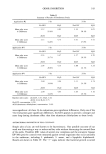
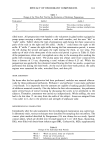
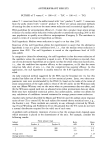
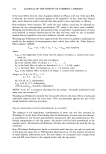
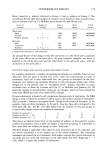
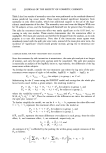
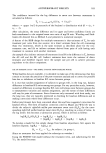
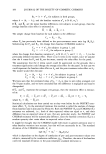
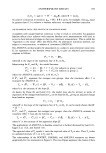
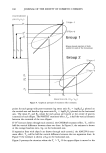
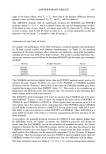
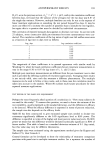
ANTIPERSPIRANT RESULTS 179 below, based on n• subjects allocated to Group 1, and n 2 subjects to Group 2. The calculations for the split plot analysis of variance can be found in most standard texts, such as Cochran and Cox (7), Milliken and Johnson (8), and Winer (14). Source of Degrees of Sum of Mean F Test variation freedom squares squares statistic Whole plots Mean 1 SSM MSM MSM/MSS Groups* 1 SSG MSG MSG/MSS Subjects (groups) n• + n 2 - 2 SSS MSS Split plots Sides 1 SSL MSL MSL/MSE Treatments 1 SST MST MST/MSE Residual n• q- n 2 -- 2 SSE * Aliased with treatment by side interaction. An unusual feature of this design is that the interaction is in the whole plots, and both of the main effects are in the split plots. (In most textbook examples one factor is assigned to the whole plot units and the other factor to the split plot units, with the interaction in the split plots.) STATISTICAL DESIGN AND ANALYSIS OF MULTITREATMENT STUDIES For multiple treatments, a number of experimental designs are available, based on test objectives. The test panel is divided into "cells," each cell corresponding to a pair of treatments. Each cell is then subdivided into two groups as described for the two- treatment case. Subjects are randomly allocated to cells and groups within cells. These designs are in the general class of "incomplete block" designs, described in many textbooks such as those by Cochran and Cox (7) or Milliken and Johnsor, (8). Of particular interest in antiperspirant studies are two designs, which we have termed the round robin (RRB) and each versus control (EVC) designs. If equal information is desired on all comparisons between pairs of treatments, the RRB design is used in which the number of cells is equal to the number of pairs of treatments. This is termed a "balanced incomplete block" design in the statistical literature. If, for example, there are three treatments, A, B, and C, then the three cells correspond to the three pairs AB, AC, and BC. The table below lists the number of cells and groups in a round robin design versus the number of treatments. Number of treatments, t 3 4 5 6 7 Number of cells, t(t - 1)/2 3 6 10 15 21 Number of groups, t(t - 1) 6 12 20 30 42 This places an obvious lower limit on the number of subjects in the panel for a given number of treatments, since at least one subject is required per group. It is desirable to have more than one subject per group to cover "drop-outs." The EVC design is applicable when three or more treatments are to be compared, and one of the treatments is to be singled out as the control treatment. The remaining treatments are termed the test treatments. Each subject receives the control treatment on one axilla and one of the test treatments on the other axilla. The EVC design has t - 1 cells, where t is again the number of treatments.

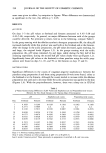
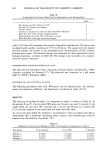
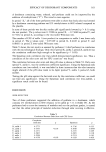
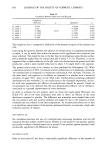
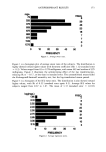
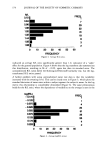
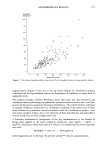
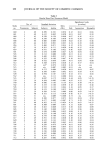
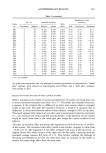
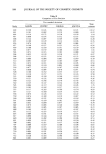
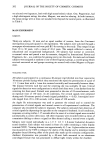
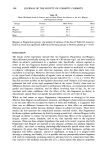
180 JOURNAL OF THE SOCIETY OF COSMETIC CHEMISTS Table I Results From Post-Treatment Model Study no. Significance levels No. of Standard deviation (p-values) Sides Treatments Subjects Subjects Axillae effect Side Interaction Normality 440 441 444 447 448 455 456 457 459 501 503 504 506 509 512 513 515 518 521 528 532 535 539 540 542 545 550 555 557 558 559 560 561 601 602 603 609 611 614 617 620 621 706 707 708 709 710 711 712 2 40 0.389 0.101 0.036 0.12 0.61 0.66 3 40 0.412 0.065 0.058 0.01 0.87 0.39 2 45 0.528 0.124 0.048 0.07 0.16 0.31 3 46 0.358 0.109 0.018 0.44 0.30 0.63 3 40 0.400 0.069 0.038 0.02 0.10 0.46 3 44 0.493 0.091 0.023 0.24 0.19 0.08 2 23 0.406 0.071 0.034 0.12 0.76 0.44 2 16 0.301 0.111 0.028 0.48 0.12 0.28 3 26 0.441 0. 106 0.022 0.46 0.60 0.72 2 40 0.434 0.098 0.027 0.24 0.84 0.46 2 22 0.312 0.080 0.083 0.01 0.41 0.89 2 24 0.460 0.092 0.071 0.01 0.61 0.70 2 32 0.395 0.109 0.047 0.10 0.61 0.57 2 38 0.452 0.059 0.041 0.01 0.84 0.88 3 39 0.368 0.076 0.028 0.12 0.57 0.64 7 44 n/a* O. 079 O. 016 O. 34 rda rda 7 45 rda 0.087 0.002 0.91 rda rda 2 44 0.272 0.084 0.058 0.01 0.64 0.87 2 43 0.385 0.067 0.042 0.01 0.09 0.76 6 44 0.594 O. 107 0.015 0.52 0.91 0.66 6 20 rda 0.111 0. 080 0.04 rda rda 6 37 0.087 0.175 0.030 0.44 0.05 0.15 3 36 0.304 0.085 -0.001 0.95 0.22 0.67 6 40 0.486 0.103 0.134 0.01 0.58 0.15 2 29 0.325 0. 104 0.038 0.18 0.58 0.46 3 32 0.522 0.122 0.044 0.16 0.85 0.37 3 30 0.323 0.100 0.012 0.64 0.33 0.78 3 34 0.384 0.143 0.009 0.80 0.69 0.15 7 40 0.161 0.113 -0.018 0.46 0.37 0.15 7 31 rda 0.089 -0.008 0.73 rda 0.15 3 23 0.306 0.077 0.073 0.01 0.04 0.59 5 43 0.477 0.085 -0.007 0.71 0.29 0.15 5 40 0.303 0.112 -0.024 0.34 0.65 0.15 3 40 0.308 0.084 0.031 0.11 0.08 0.87 2 20 0.403 0.068 0.015 0.49 0.60 0.89 2 24 0.346 0.060 0.027 0.14 0.96 0.06 6 41 0.249 0.086 0.035 0.08 0.11 0.26 6 41 0.293 0.108 0.035 0.16 0.50 0.31 4 42 0.344 0.100 0.012 0.58 0.33 0.25 4 49 0.391 0.102 0.028 0.18 0.40 0.99 4 45 0.422 0. 143 0.032 0.30 0.82 0.04 7 58 0.360 0.095 0.045 0.01 0.86 0.04 3 53 0.299 0.079 0.078 0.01 0.06 0.56 3 31 0.441 0.094 0.054 0.01 0.47 0.02 6 55 0.399 0.080 0.053 0.01 0.49 0.54 3 61 0.356 0.098 0.023 0.19 0.88 0.60 3 51 0.387 0.086 0.054 0.01 0.37 0.51 4 53 0.344 0.071 0.032 0.03 0.25 0.60 4 43 0.297 0.082 0.032 0.09 0.07 0.66
Purchased for the exclusive use of nofirst nolast (unknown)
From: SCC Media Library & Resource Center (library.scconline.org)