200 JOURNAL OF THE SOCIETY OF COSMETIC CHEMISTS headachy at the end of a vigil than at the beginning (6-7). Moreover, measures of subjective workload show that what may appear to be a simple assignment is in fact quite demanding (8-9). For obvious practical reasons, it would prove very useful to develop techniques for improving the overall level of vigilance performance, for moderating the vigilance decrement, and for alleviating the feelings of stress attendant on engaging in vigilance tasks. Such tasks can be found in many work settings, including those confronting radar and sonar operators, quality control inspectors, system monitors in power plants, med- ical personnel in intensive care units, long distance drivers, and so on. Failure to detect and respond to critical signals in these settings can sometimes have disastrous conse- quences (2). Efforts to moderate the vigilance decrement and combat the feelings of stress induced by vigilance tasks have utilized exercise (10), added stimulation such as music in a visual vigilance task or visual stimulation in an auditory task (11-12), and stimulant drugs (13-14) to keep monitors aroused. While somewhat successful, these techniques have limitations. Exercise at the workstation is not always possible, added stimulation can be distracting and impair working memory (15), and drugs can produce unwanted side effects and addiction (16). To our knowledge, no one, prior to the present study, has appealed to the olfactory sense as a source of stimulation for the maintenance of sustained attention. Olfactory stimuli can be quite salient and can play important roles in emotion and in recall and recog- nition (17-18). There is also evidence that some fragrances can enhance alertness and that some can reduce stress, at least on a short-term basis. While this evidence is in part anecdotal (19), much of it comes from empirical research using both psychophysiological and self-report techniques (20-21). If the purported alerting and stress-reducing prop- erties of fragrances can operate over extended periods of time, fragrance administration might serve as a benign vehicle for enhancing the quality of sustained attention and/or reducing the stressful feelings that accompany vigilance performance. Our hypothesis was that fragrances assessed as alerting might beneficially affect vigilance performance and that fragrances assessed as relaxing might reduce the tension and feelings of stress consequent on performing a vigilance task. Moreover, we were prepared to speculate that alerting fragrances might also reduce the stress of vigilance by creating a closer match between task demands and subjects' ability to perform those tasks that is, part of the stress may arise from subjects' need, but inability, to remain sufficiently alert to do well on the vigilance task. Fragrances that help them stay alert might therefore also help them feel better. Similarly, relaxing fragrances might affect perfor- mance efficiency as well as feelings, since subjects who are tense and uncomfortable may find it hard to concentrate on the task. In short, it seemed reasonable to expect that both alerting and relaxing fragrances might have both performance- and mood-enhancing effects, albeit for somewhat different reasons. But our main concern, at the outset, was whether we could find any effects of fragrance at all in comparison with an appropriate control condition. For our initial investigation, we decided to use two hedonically positive fragrances, one assessed as alerting and the other as relaxing. Toward that end, the initial phase of the research involved an evaluation of the hedonic and mood-inducing qualities of seven fragrances supplied by International Flavors and Fragrances, Inc.: Benzoin, Cashmeran,

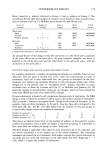
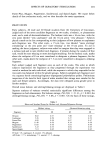
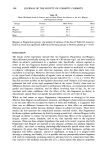
EFFECTS OF OLFACTORY STIMULATION 201 Forest-Plus, Muguet, Peppermint, Sandiewood, and Spiced-Apple. We report below details of that evaluation study, and we then describe the main experiment. PILOT STUDY Forty subjects, 20 male and 20 female students from the University of Cincinnati, judged each of the seven candidate fragrances on two scales, a hedonic, or pleasantness scale, and a scale of alertness/relaxation. The hedonic scale was a 16-cm line, with the zero point labeled "very unpleasant" and the 16-cm point "very pleasant." Subjects placed a mark on the line corresponding to their judgment of how pleasant or unpleasant each fragrance was. The other scale, a 15-cm line, was labeled "more alerting/ stimulating" at the zero point and "more relaxing" at the 15-cm point. To aid in making the latter judgment, subjects were asked to imagine that they were engaged in a tedious task and to note whether each fragrance, if present during the conduct of that task, would be more relaxing or more alerting/stimulating. For the hedonic scale, marks above the midpoint of 8 cm were considered to designate a pleasant fragrance for the other scale, marks above the midpoint of 7.5 cm were considered to designate a relaxing fragrance. Each subject judged each fragrance once on each of the scales. The order in which subjects experienced the fragrances as they progressed through the experiment was varied at random for each individual, while the sequence in which they responded to the two scales was balanced within the gender groups. Subjects sampled each fragrance once via a squeeze bottle containing fragrance-impregnated polyethylene pellets. Preliminary inspection of the data for both types of scales revealed that ratings were similar for the male and female subjects. Accordingly, the data were collapsed across gender prior to further analysis. Overall mean hedonic and alerting/relaxing ratings are displayed in Table I. Separate analyses of variance revealed statistically significant differences among the fragrances on both dimensions. For hedonic ratings, F(6,234) = 21.31, p ( 0.001 for alerting/relaxing ratings, F(6,234) = 5.08, p ( 0.001. On the basis of these ratings, Table I Means and Standard Errors for Hedonic and Alertness/Relaxation Ratings Hedonic rating Alertness/relaxation rating Fragrance M SE M SE Benzoin 8.02 0.57 7.88 0.43 Cashmeran 5.26 0.59 5.27 0.52 Forest-Plus 6.09 0.56 6.07 0.47 Muguet ! !.40 0.59 8.34 0.56 Peppermint ! !. 02 0.56 5.63 0.56 Sandiewood 5.22 0.55 6.04 0.45 Spiced-Apple 7.6 ! 0.65 6.65 0.45 H Scale: (8, unpleasant 8, neutral )8, pleasant. A/R Scale: (7.5, stimulating 7.5, neutral )7.5, relaxing.
Purchased for the exclusive use of nofirst nolast (unknown)
From: SCC Media Library & Resource Center (library.scconline.org)