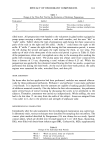
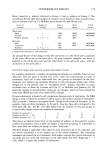
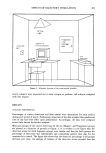
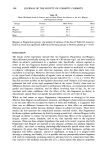
202 JOURNAL OF THE SOCIETY OF COSMETIC CHEMISTS we selected two fragrances, both with high mean hedonic values. One, Peppermint, had a high alertingness rating the other, Muguet, was rated as relaxing. In both instances, the mean ratings were at least one standard error beyond the neutral point, as illustrated in Table I. MAIN EXPERIMENT SUBJECTS Thirty-six subjects, 18 men and an equal number of women, from the Cincinnati metropolitan area participated in the experiment. The subjects were solicited through a newspaper advertisement and were paid $ ! 5 for serving in the study. They ranged in age from 18 to 30 years, with a mean of 26.6 years. The sample reflected a variety of educational and occupational backgrounds. All subjects had normal or corrected- to-normal vision and passed a test for anosmia, designed by International Flavors and Fragrances, Inc., as a condition for gaining entry into the study. Six male and six female subjects were assigned at random to one of three fragrance groups, a control group which received unscented air and groups receiving air scented with either Muguet or Pepper- mint. VIGILANCE TASK All subjects participated in a continuous 40-minute vigil divided into four consecutive 10-minute periods during which they monitored the repetitive presentation of a pair of ! X 13-mm lines with a 1-mm dot centered vertically and horizontally between them. The distance between each line and the centering dot was normally 10 mm. Critical signals for detection were configurations in which both lines were 2 mm farther from the centering dot than usual. Stimuli were presented at the rate of 24 events/minute, with an exposure time of 150 msec. In all conditions, five critical signals were presented during each 10-minute period of watch (signal probability = 0.02). Intersignal inter- vals ranged from 20 to 240 seconds, with a mean of 120 seconds. An Apple IIe microcomputer was used to generate the stimuli and to control the presentation of critical signals and neutral events in all experimental conditions. The computer also recorded the subjects' responses. The subjects indicated their detection of critical signals by depressing the spacebar on the computer's keyboard. In all conditions, responses occurring within 1.25 seconds after the onset of a critical signal were recorded automatically as correct detections. All other responses were recorded either as errors of commission (failing to detect a signal) or false alarms (calling a neutral event a signal). Subjects were tested individually in a 1.9 X 1.8 X 2.0-meter Industrial Acoustics sound chamber. Each subject was seated in front of a table containing a video display terminal (VDT). Viewing distance was approximately 43.5 cm. A glare reduction screen was mounted on the VDT to enhance the clarity of the display and to minimize visible phosphor decay following offset of the pixels that made up the stimulus configuration. Ambient illumination was provided by a 40-watt bulb mounted in an aluminum cone-shaped fixture that was positioned to diffuse light evenly within the chamber.

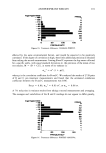
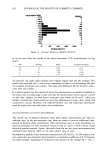
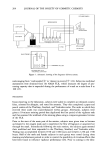
EFFECTS OF OLFACTORY STIMULATION 203 FRAGRANCE DELIVERY The fragrance delivery system consisted of a pair of aquarium pumps (Hagen Optima and Whisper 1000) that forced air through Teflon tubing into a charcoal filter and then into a 35-ml glass reservoir housed in a refrigerator that was maintained at 70 ø F. The reservoir contained 9 x 9-mm polyethylene pellets that incorporated the fragrance to be used. Air from the reservoir was transmitted through additional tubing under pressure from the pumps to a modified home oxygen mask worn by the subject while seated in the experimental chamber. The fragrance delivery equipment was located outside the chamber. Total travel distance from the reservoir to the mask was 2.15 meters. Odor concentration at the mask was controlled by the air flow (0.80 liters/minute) and by the number of pellets in the reservoir. Five pellets were used for delivering the Peppermint fragrance and 10 for Muguet. The concentration of Peppermint was 0.05 parts/million, while that for Muguet was 0.13 parts/million. Fragrance concentration was determined by pilot work that equated the fragrances for salience when delivered against an unscented back- ground. In the control condition, unscented air was delivered to the mask by forcing the air through an empty reservoir in the refrigerator. The duration of air flow through the mask was controlled by a decade interval timer in conjunction with a Gerbrands tape timer. The timing system activated the air pumps for limited intervals at specified times during the experimental session. In the course of the experiment, subjects experienced 30-second whiffs of either scented or unscented air through the mask 4.5 minutes after the start of the vigil and every five minutes thereafter. At other times the fragrance delivery system was dormant. The masks used in the study were modified by cutting triangular openings (with a base of 6 cm and an altitude of 4 cm) in both sides, which permitted subjects to breathe room air comfortably when the fragrance delivery system was not engaged. Fresh air was provided to the experimental chamber through a ceiling fan. An electronic air cleaner (Sears Model 635.830000) cleansed the air within the chamber and insured against contamination by lingering odors. Containers of charcoal and baking soda placed within the refrigerator offered similar protection for air entering and leaving the fragrance reservoir. To further insure against contamination, three separate reservoirs were used for the Muguet and Peppermint pellets and in the unscented control condition. These reservoirs had separate tubing leading to masks reserved for them. To protect against the possibility of infection, masks were bathed in alcohol after being used. Subjects reported little discomfort in wearing the masks. The tubing leading to each mask was of suffi- cient length to permit the subjects considerable freedom of movement as they sat at their workstation. Schematic drawings of the fragrance delivery system and of the experi- mental chamber are presented in Figures 1 and 2, respectively. STRESS AND WORKLOAD MEASUREMENT Stress measures were obtained from three scales. They included (a) the Thackray Mood Scales--a nine-point rating scale measuring attentiveness, sleepiness, strain, boredom, and irritation, in which values below five reflect negative feelings (22) (b) the Yoshitake Symptoms of Fatigue Scale•a 30-item checklist of fatigue indicants such as headache, dizziness, eye strain, etc. (23) and (c) the Stanford Sleepiness Scale•a seven-item rating
Purchased for the exclusive use of nofirst nolast (unknown)
From: SCC Media Library & Resource Center (library.scconline.org)