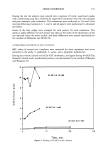
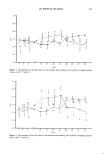
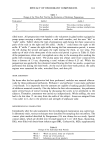
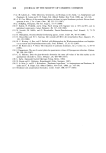
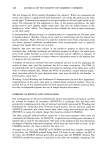
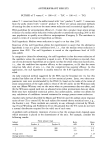
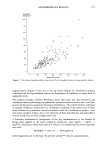
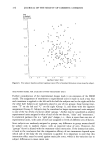
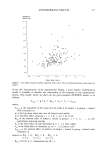
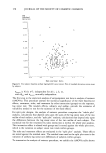
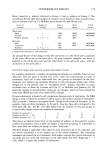
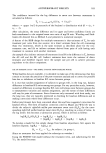
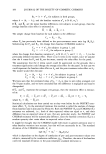
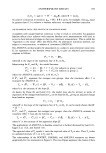
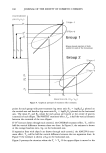
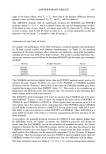
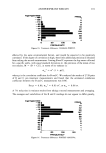
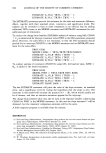
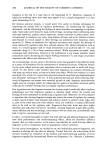
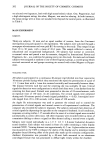
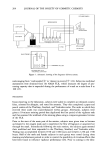
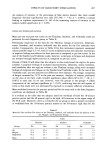
204 JOURNAL OF THE SOCIETY OF COSMETIC CHEMISTS AIR PUMP I AIR PUMP CHARCOAL AIR FILTER VIGILANCE BOOTH REFIRIGERATOEDFI••MODIII -- ' I OXYGEN MASK GLASS TUBING - FRAGRANCE PELLETS ENLARGEMENT OF A FRAGRANCECONTAINER Figure 1. Schematic drawing of the fragrance delivery system. scale ranging from "wide awake { 1}" to "almost in reverie {7}" (24). Subjective workload assessments were obtained from the NASA TLX, which measures the degree of pro- cessing capacity that is expended during the performance of a task on a scale from 0 to 100 (25). PROCEDURE Upon reporting to the laboratory, subjects were asked to complete an informed consent form, screened for allergies, and tested for anosmia. They then completed a paper and pencil version of the Thackray, Stanford, and Yoshitake scales. The order in which they received these scales was counterbalanced within groups. Afterwards, subjects were given a 10-minute training period that duplicated the first period of the vigilance task and then assessed the workload of the training phase using a computer-generated version of the TLX. Prior to the start of the main part of the session, subjects were given time to become acclimated to the oxygen mask and to experience the flow of fragrance or unscented air through the mask. Immediately following the main session, the subjects again assessed their workload and then responded to the Thackray, Stanford, and Yoshitake scales. Testing was accomplished between 0730 and 1100 hours and between 1230 and 1700 hours. Half of the male and female subjects in each group were tested during these morning and afternoon periods in order to control the possibility of circadian effects that have been found to influence vigilance performance (26). Prior to coming to the labo-

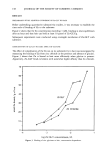
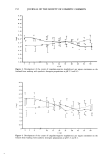
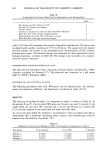
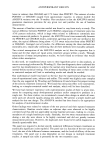
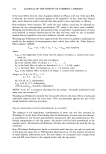
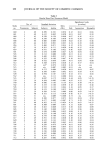
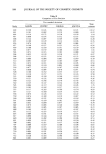
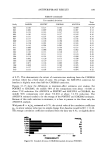
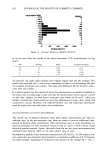
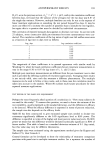
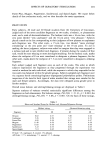
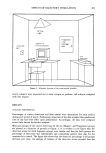
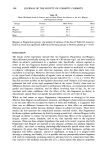
EFFECTS OF OLFACTORY STIMULATION 205 Ceiling Light Fragrance Line Apple lie Storage Intercom M•crocomputer Box Bell Figure 2. Schematic drawing of the experimental chamber. Air Purifier ratory, subjects were requested not to wear cologne or perfume. All subjects complied with this request. RESULTS VIGILANCE PERFORMANCE Percentages of correct detections and false alarms were determined for each subject during each period of watch. Preliminary inspection of the data revealed that gender and time of day had little effect upon performance. Accordingly, the data were collapsed across these factors for further analyses. Mean percentages of the correct detections for the air, Muguet, and Peppermint groups are plotted as a function of periods in Figure 3. It is evident in the figure that the detection scores for both fragrance groups were similar and that for both groups the percentage of detections was substantially and consistently greater than that for the unscented air control. The figure also shows that the detection percentage in all groups declined over time. An analysis of variance of the detection scores revealed that the
Purchased for the exclusive use of nofirst nolast (unknown)
From: SCC Media Library & Resource Center (library.scconline.org)