j. Soc. Cosmet. Chem., 44, 129-138 (May/June 1993) Inhibition of acute ornithine decarboxylase induction can predict tumor prevention by topical photoprotective agents in the skin of hairless mice exposed to ultraviolet radiation GREGG. HILLEBRAND and DONALD L. BISSETT, The Procter & Gamble Company, Miami Valley Laboratories, P.O. Box 398707, Cincinnati, OH 45239-8707. Received March 16, 1992. Synopsis Twenty-five topically applied molecules from three functional classes (anti-oxidants, anti-inflammatory agents, and iron chelators) were evaluated for protection against ultraviolet radiation (UVR) skin damage in hairless mice. Two in vivo assays were used: inhibition of acute UVR induction of epidermal ornithine decarboxylase (ODC) activity and prevention of UVR-induced, skin tumors. Inhibition of acute UVR- induced ODC by the test material showed significant correlation with both prevention of chronic UVR- induced tumor yield (r = 0.91, p 0.001) and delay in onset until 50% tumor incidence (r = 0.86, p 0.001). The results support the use of the acute ODC assay as a short-term marker for predicting the efficacy of molecules in protecting against chronic skin photodamage. INTRODUCTION The development of new agents effective at preventing or reversing the signs of skin aging associated with chronic overexposure of skin to the sun is hampered by the long time required to conduct studies in animal models. For example, we and others have used chronic ultraviolet radiation (UVR) exposure of the hairless mouse as a model to study the effectiveness of topically applied agents against UVR-induced skin wrinkling (1-3). Using this model, experiments lasting over eight months are not uncommon. For the study of agents effective against photocarcinogenesis, the hairless mouse is also widely used, but with much larger group sizes (typically 20 + animals per group). Obviously, the costs of conducting these experiments, in time, money, and animal use, is very high, and alternative methods capable of evaluating the effectiveness of photo- protective agents at lower costs are of value. Biochemical markers are frequently used in the early diagnosis of certain diseases prior to the occurrence of the clinical signs associated with the disease. In the development of drugs effective against the disease, biochemical markers can be an essential tool for rapid drug screening subsequent to confirmatory testing in longer-term animal models or clinical studies. The enzyme ornithine decarboxylase (ODC) (EC 4.1.1.17) catalyzes the 129

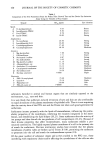
130 JOURNAL OF THE SOCIETY OF COSMETIC CHEMISTS synthesis of putrescine from ornithine (4,5). This biochemical reaction is the initial and rate-limiting step in the biosynthesis of all the polyamines (e.g., spermidine and sper- mine). Polyamines are essential low-molecular-weight compounds containing, e.g., two (putrescine), three (spermidine), or four (spermine) amino groups, and are required for cell proliferation (6-9). Induction of epidermal ODC activity is required for mouse skin tumor promotion by chemicals such as phorbol esters (10, 11). Because there is a good association between ODC induction and chemical tumor promotion, ODC has been used as a short-term marker of skin tumor promotion (12-14). The inhibition of chemically- induced ODC activity has been used to help identify anti-cancer agents protective against chemical promotion (15-17). Our interest in ODC is in its possible use for facilitating the identification of agents effective against the chronic signs of skin aging associated with overexposure to the sun. Lowe et al. (18) were the first to show that acute UVR exposure induces epidermal ODC activity in mouse skin. Over ten years ago, Rieger (19) suggested that ODC might be a useful biochemical marker for the cosmetic biochemist. In our early work in this area (20), we characterized the time course and UVR dose response of acute UVR induction of ODC in hairless mice. We also showed a direct association between chronic UVRo induced tumors and the basal level of ODC activity in the adjacent non-tumor-involved skin (21). Building on that work, we have now tested several different compounds for their ability to inhibit acute UVR-induced ODC activity. We have also tested many of these same anti-inflammatory agents (22), anti-oxidants (1,23), and iron chelators (24) for their ability to prevent chronic UVR-induced skin tumors. In this paper we have compiled these "acute" ODC and "chronic" tumor data together to test the hypothesis that inhibition of UVR-induced ODC activity is predictive of photoprotection against UVR-induced skin tumor formation. MATERIALS AND METHODS ANIMALS Female albino hairless Skh:HR- 1 mice (from Temple University Health Sciences Center, Philadelphia, PA, or from Charles River Laboratories, Portage, MI) were housed five to a cage in a room with controlled temperature and humidity and with a 12-h light/ darkness cycle. They were given a standard diet and water ad libitum. The mice were approximately ten weeks old at the start of experimental work. ACUTE TOPICAL TREATMENTS, UVR EXPOSURE, AND ASSAY OF ODC For acute topical treatment of mice, the dorsal skin of the mice (n - 3 to 5 per group neck to tail area) was treated with 0.1 ml of test solution (w/v % in simple vehicle defined in Table I) once 2 h prior to UVR exposure (the only exceptions were hydro- cortisone and the mixture of lactoferrin q- 2-thioxanthine q- 8-hydroxyxanthine where a three-treatment regimen 26, 20, and 2 h prior to UVR exposure was used). Water- containing test solutions were adjusted to between pH 6.5 and 7.5. Solutions were delivered to the skin using a Pipetman © (Rainin Instrument Co., Woburn, MA) and spread evenly over the dorsal skin with the flat edge of the disposable piper tip.
Purchased for the exclusive use of nofirst nolast (unknown)
From: SCC Media Library & Resource Center (library.scconline.org)