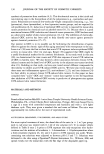
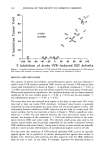
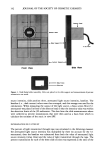
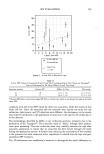
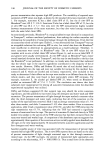
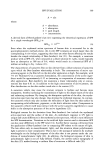
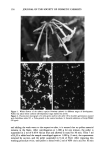
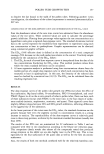
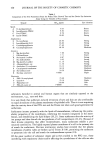
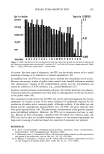
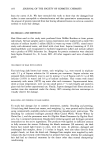
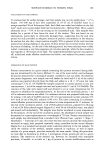
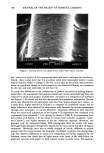
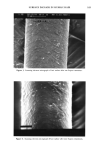
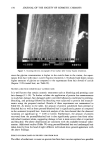
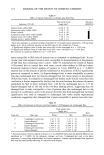
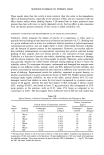
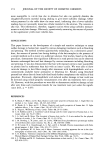
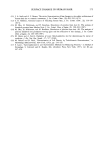
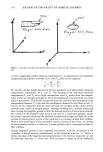
156 JOURNAL OF THE SOCIETY OF COSMETIC CHEMISTS ß ß ß 2a . , 2(b ß :.. Figure 1. White flowers of the tobacco species Nicotiana sylvestris in different stages of development. Pollen was taken before anthesis (developmental stage marked by arrow). Figure 2. Fluorescence micrograph of in vitro grown pollen tubes after 18 hr of pollen germination stained with Calcofluor white ST. a: Tube growth in the control medium. b: Growth inhibition of CetyI-TMAC (20 ppm). and adding the wash water to the respective tube, it is assured that no pollen material remains in the flasks. After centrifugation at 1,000 g for one minute, the pellet is suspended in 2 ml of 0.05% Alcian blue and allowed to stand for 30 min. Then 7 ml of H2 ¸ is added and the sample centrifuged again at 1,000 g (1 min), the supernatant removed by suction, and the pellet suspended in 9 ml of H20. After repeating this washing procedure twice, each pellet is mixed with 2 ml of 40% citric acid for 10 min

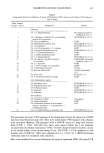
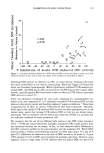
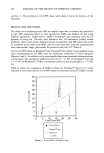
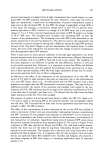
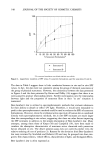
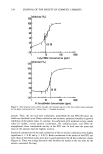
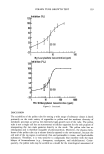
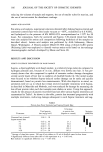
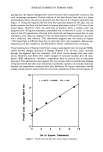
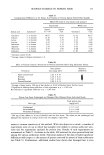
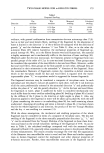
POLLEN TUBE GROWTH TEST 157 to dissolve the dye bound to the walls of the pollen tubes. Following another 1-min centrifugation, the absorbance of the colored supernatant is measured photometrically at 607 nm. CONSTRUCTION OF THE DOSE-RESPONSE CURVE AND DETERMINATION OF THE ED5o VALUE First the absorbance values of the zero time control are subtracted from the absorbance values of the test series. These corrected values are used to calculate the percentage growth inhibition. Plotting these percentage values against the test concentrations on a logarithmic scale gives a sigmoid dose-response curve. The standard deviations (vertical bars in the curves) represent the variability from experiment to experiment using each test concentration at least in quadruplicate. Graphic representations can be obtained using commercial graphic software. The ED5o (50% effective dose) is defined as the concentration of a toxic compound causing a 50% decrease in tube wall production relative to the control. Two fairly simple methods for the calculation of the ED5o follow: 1. The ED5o for each of several dose-response curves is interpolated from the data of the two concentrations bracketing the ED5o value. This method produces values from which the mean standard deviation can be calculated. 2. A linear regression analysis is performed using four concentrations chosen from the middle portion of a single dose-response curve in which each concentration has been measured at least in quadruplicate. In this case, the linearity of the selected data must be checked by a statistical test (18,19). The ED5o can be calculated from the resulting regression line. RESULTS The dose-response curves of the pollen tube growth test (PTG-test) show the effect of four surfactants, Mg-lauryl sulfate, N-cocoylbetaine, PEG-10-nonylphenol, and cetyl- TMAC (Figure 3a-d) on the in vitro growth of tobacco pollen tubes. From our data, each of these substances (except cetyl-TMAC) is the most toxic in the four classes of surfac- rants studied (anionics, amphoterics, nonionics, and quats). Their sigmoid curves have slightly different slopes between 30% and 80% growth inhibition, reflecting differences in the aggressivity of the substances. In the linear portions of the curves near the ED5o value, the standard deviations are the greatest because here even the slightest increase in concentration results in a strong increase in toxicity. The reproducibility of the dose-response curves is relatively good even in these steep portions, as shown by the maximum standard deviations (usually less than 20%). The results of the PTG test are summarized for 22 surfactants in Table I and are compared with their in vivo classification according to the Draize eye irritation assay. This comparison clearly reveals that almost all the compounds tested that produced strong irritation in the rabbit eye are also highly toxic in the PTG test. This is true especially for the four surfactants of the quats class as well as for the first six anionic surfactants. Also, the results of both test methods correlated well for the relatively harmless corn-
Purchased for the exclusive use of nofirst nolast (unknown)
From: SCC Media Library & Resource Center (library.scconline.org)