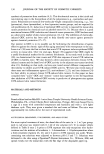
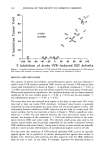
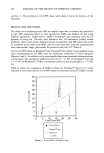
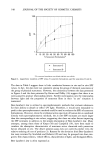
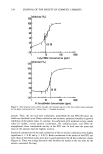
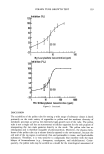
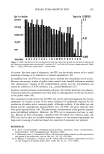
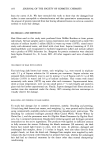
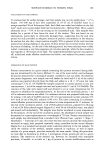
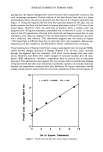
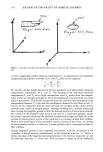
SPF EVALUATION 147 percent transmission at higher levels of light transmission has a small impact on com- puted SPF the SPF remained essentially the same. However, when only low levels of light are transmitted, a small error in measurement of percent transmission creates a huge error in the calculated SPF. At low SPFs the change is negligible at high SPFs it is very large. For example, a one percent change (49.5 to 50.5 %T) in percent trans- mission equivalent to SPF 2 results in a change of 0.04 SPF units, but a one percent change (1.5 to 2.5 %T) in percent transmission equivalent to SPF 50 results in a change of 26.67 SPF units. The standard error increases with increasing SPF, as does the variance of the measurements. The increasing error with SPF is also observable in the results reported by Cole and Van Fossen (6). The detector used in this experiment was not sensitive or precise enough to distinguish a difference among the high-SPF products because of the very small changes in percent transmission that separate them. In other words, the error of the experiment was greater than the change in percent transmission that distinguishes higher SPF products. There is some meter to meter spectra variability in the solar light radiometer (12). If the spectral response varies from meter to meter, then the results from different laboratories may not correlate with in viva SPFs or from lab to lab in vitro results. The variability of the meter response is not sufficient to explain the vast differences between in vitro and in viva results reported here. However, it is important to note that Diffey and Robson used a spectroradiometer and then applied the erythemal action spectrum via an equa- tion to their spectral readings, while the Solar Light radiometer already has the erythe- mal action spectrum built into its filter configuration. In addition to the effect of the radiometer on the determination of in vitro SPF, the source of UV light or solar simulator also plays an important role in the determination of in vitro SPF values. Sayre et al. (13) determined that the SPF obtained with a solar simulator was higher than the SPF determined in natural sunlight. This may be due to differences between the output of the simulator and sunlight with regard to the con- tribution of UVA. SPF estimates may be too high if the simulator contribution of UVA is less than that of sunlight, and Sayre et al. (14) showed that the light from the Solar Light simulator yields less UVA than sunlight. The amount of product rub-in has also been shown to affect the SPF (15). Sayre et al. (15) noted a trend in decreasing SPF as the sunscreen product was increasingly rubbed into the skin. The 30-second rub-in time used in this experiment may have been long enough to affect the SPF estimates. The effect of the concentration of active sunscreen on the in vitro SPF was studied in order to determine if there were any intra-product relationships between concentration and SPF. Sunscreen D was prepared and measured on Blenderm © at five dilutions of sunscreen formulation (the diluent was the vehicle of the sunscreen), and sunscreen G was evaluated at two dilutions. Logarithmic-linear plots of measured SPF values versus the percent sunscreen formulation were prepared (Figure 4). The curves in Figure 4 were compared to SPF data reported by Brown and Diffey (16), and both studies demon- strated that there was not the expected log-linear relationship between SPF and the amount of active sunscreen. The straight line in the semi-log or log-linear plot is that predicted by Beer-Lambert's law. It is apparent that the data in Figure 4 are not linear and do not explicitly follow Beer-Lambert's law. Kaidbey and Kligman also reported a non-linear response of SPF with respect to increasing application rates of sunscreen product (17).

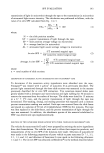
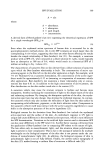
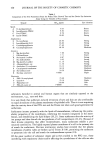
148 JOURNAL OF THE SOCIETY OF COSMETIC CHEMISTS lOO 0 10 20 30 40 50 60 70 80 90 100 % Sunscreen Formulation* ß - Sunscreen G o Sunscreen D *The sunscreen formulations were diluted with their own vehicles Figure 4. Logarithmic transform of SPF versus % sunscreen formulation used for sunscreens D and G. The data in Table I suggest there is little correlation between in vivo and in vitro SPF values. In fact, the data were not consistent among the group of chemical sunscreens or the group of physical sunscreens. However, the consistency between the data presented in Figure 4 and the data presented by Brown and Diffey (16) suggest that there is an inter-sunscreen product relationship present. Further investigation into the relationship between light and the properties of sunscreen films in their "in use" situation is warranted. Beer-Lambert's law is utilized in spectrophotometric methods that evaluate substances for their ability to absorb or reflect UV light. Therefore, it would seem reasonable to predict that spectrophotometric methods could be used to evaluate the SPFs of sunscreen formulations. However, when the erythemal action spectrum of human skin is combined directly with spectrophotometric methods, the in vitro SPF estimates are much larger than the corresponding in vivo values, suggesting that there are other factors impacting the SPF estimates in addition to the simple relationship of Beer-Lambert's law. Many attempts, among them those of Kreps (18) and Cumpelik (19), have been made to correlate the absorption characteristics of sunscreen active chemicals with protection factors obtained in vivo. The dilute solution assay does not correctly predict even the relative ordering of a set of products (3). Reasons for the deviation from Beer-Lambert's law were reviewed by Stockdale and Roberts (20) and may be grouped into four cate- gories: film characteristics, vehicle effects, characteristics of light, and biological effects. Beer Lambert's law is often expressed as
Purchased for the exclusive use of nofirst nolast (unknown)
From: SCC Media Library & Resource Center (library.scconline.org)